Wednesday, May 03, 2006

50 Million Websites and Nothing On

I'm bored with the news these days. We're still waiting for Karl Rove to finally be indicted, so this whole sorry little chimpeachment affair can finally start building up steam. Stephen Colbert completely got in the President's face and it's freaking out the squares. And this immigration thing is seriously a complete non-issue.

I'm telling you, it's crap. These people aren't here to threaten or steal or reclaim lands owned by their forefathers or suck of the public teat or any of the other bullshit they've been accused of recently by mouth-breathers. Don't people realize that you go years without really hearing much about illegal immigration, and then whenever rich, powerful people need to distract everyone we suddenly hear a ton about our dire need to seal up the borders. It's so predictable.

A guy bought a whole lot of merchandise, just over $600 worth, from the store on Monday. Apparently, a radio station was having a contest: you shop at a business that remained open during the May Day boycott and send in your receipt, and one lucky winner will be reimbursed up to $600.

For some reason, the guy chose to buy $600 worth of movies that were all released in 1971. Weird, right? I mean, the radio contest just sounds vaguely hostile to me, but why only '71 films? It did give me some good rental ideas for next week. (I've never seen Robert Aldrich's The Grissom Gang!)

What's the point of such a gesture? The boycott, lasting only one day, is all about making a symbolic point. "We're here, we matter, you would miss us if we were gone." And the racist, hateful Americans who unfortunately seem to make up the vast majority of us, responded to this symbolic effort, aimed at boosting activism and a sense of community, with scorn.

"We won't miss you dumb immy-gants at all! I'm gonna indulge my every shopping fantasy and eat a bucket full of Peanut M&M's like the consumer whore that I am in order to establish my superiority over you! See? I'm spending your monthy food budget on DVD's, just because I can, on the off chance that some jackass DJ will give me all my money back just for agreeing with his spiteful take on contemporary urban life. Take that, browns!"

A guy came in the store, a regular customer whom I chat with about movies all the time, and gave me the same attitude. His modest proposal for the immigrant problem was to massively fine and criminally prosecute any employer caught hiring illegals. I helpfully explained that this tactic has a few downsides, namely the sudden presence of many newly-unemployable Americans in most of our major cities. Not to mention the infalted cost of produce, landscaping and all the other sectors hiring the undocumented.

He seemed genuinely surprised when I suggested that the best solution may be no "solution" at all, but rather in recognizing that corporate greed, not population movement, lies at the root of this situation. Big companies (and some small companies too) don't feel like paying the lowest wage permitted by law. So they hire people off the books, generally people willing to work for next to nothing because they're not supposed to be around here.

You want to solve the "immigrant" problem? Force companies, under penalty of law, to pay all employees at least minimum wage and to subscribe to all labor laws regardless of the nationality and citizenship status of the employee. Done. I'm not one of these people who believes there are certain jobs that only immigrants will do, and if there's no longer a monetary benefit to hiring illegals, many employers will switch back to actually paying American citizens a living wage in exchange for work.

Notice that this doesn't solve for all the made-up immigrant criticisms, like that "we pay for their health care with tax dollars" crap. People aren't moving here from Mexico just make use of our clean, well-appointed emergency rooms and individual-stall showers at the YMCA. They're coming here to work.

Oh, and also, I think we should protect the border from people bringing in dirty bombs, but let in everyone who just wants to work. They're coming over here anyway, right? What's everyone so worried about? Los Angeles will suddenly be filled with Mexican people? Oh, the unimaginable horror! The fact is, the area we call the American Southwest has always had a lot of Mexican people living on it. And I don't just mean before it was a part of the Unitd States, when it actually still belonged to Mexico. I mean, since before white people first came here.

Ever see a Western? You notice all those darker-skinned guys with moustaches who get drunk and occasionally shoot at the good guys while walking around with a burro in an oversized hat? They represent the Mexicans who were here all along, as white guys were busy winning the West and scamming one another out of buried treasure or nuzzling in pup tents. You can usually spot these Mexican characters easily in spaghetti westerns because they are played by white guys like Rod Steiger sporting ludicrously fake tans.

Basically, my point is, you wouldn't build an igloo at the South Pole, move in for a few months and then start bitching about all the fucking penguins mating everywhere. Penguins live at the South Pole...it's what they do. Well, that's like Latin people and Southern California. They're here, it's fine, we all get along pretty well together, and if you've never tried any, their spicy carnitas dishes are particularly delicious.

I think I probably got a little shrill with this guy at the store, because he pretty much backed off after I countered his original statement. I wondered whether to feel bad. On the one hand, I may have come off a big short with this guy, who has always been nice to me and is a good customer. But on the other hand, he was probably walking around spouting this drivel to people all day, and I find people spreading ignorance around that way very irksome.
Where Does He Come Up With This Stuff?

Here's Andrew Sullivan, accurately (to my mind) predicting that W will not regain his popularity with the American people or his footing in the Oval Office:

Both Gallup and CBS now have Bush at all-time lows in approval numbers; and the ratings for the GOP appear to be way below the water-line for November. Things can change. But I have a feeling that Bush has now become Carterized. It is very hard to see how he can regain his footing at this late stage. After six years or so, the public knows who you are; and they have come to a judgment. With the economy now booming, who can imagine where his polling might be headed if his reckless fiscal policies bring disaster sooner rather than later?

Okay, pretty reasonable conclusions so far. Bush's numbers are in the shitter, and everything's only going to get worse from here on in as gas prices keep climbing. But check out this insane follow-up sentence:

Ironically, his main hope might be Iraq. It's possible that things will improve - and any halfway decent outcome will seem like good news given the recent past.

Has Sully been sleeping for the past few years? It's possible that things will improve? Oh, sure, yeah, we've turned the goddamn corner, they're gonna break out the welcoming fruit baskets and folk dances any minute now. What part of the the term civil war does he not understand? Things are really really horrible in Iraq, and the only way they will improve for Americans any time soon is if we get them all the fuck out of Dodge.

How will things get better for Iraqis? Um...well...you see...one thing I...Okay, fine, they won't.

Tuesday, May 02, 2006

Cross of Iron

You can always feel Sam Peckinpah's bitter alcohol-fueled rage just underneath all the action in his best movies. They vibrate with a kind of energy that only comes from what Kramer might call "unbridled enthusiasm." Some films like Bring Me the Head of Alfredo Garcia come off as, if not actually autobiography, at least allusions to real events and situations.

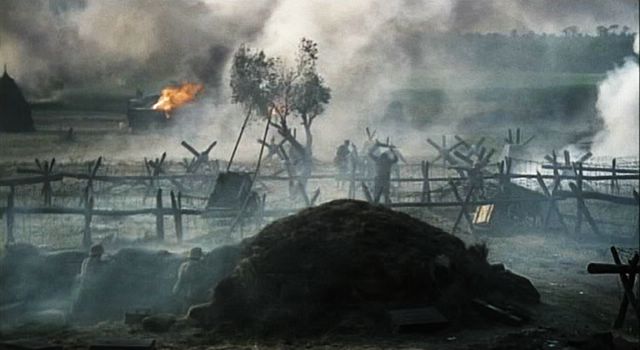
Cross of Iron, the searing and shockingly violent anti-war film Peckinpah made on a shoestring in Europe in '77, is the director's only war film. That's kind of surprising when you consider how the grand themes of war - the exploitation of the lower class, a sense of duty clashing with a sense of utter defeatism, the way repeated exposure to violence eats away at people from inside - play into almost all of his movies.

It's also one of his angriest films, one of the most angry war films I've ever seen. Peckinpah hasn't made a "prayer for peace," Spielberg's description of his similarly-violent and bleak Munich. Nor has he made a film like Sam Fuller's Big Red One, in which extreme violence is meant to provide you-are-there realism and detail. Cross of Iron, in many ways, is less about the horrors of war than the evils of exploitation. Politicians and high-ranking military officers play games with the lives of thousands of soldiers. A man's honor is granted or stolen away on a whim. Long after the cause is lost, the troops continue to die, so that beurocrats can save face.

In Alfredo Garcia, anti-hero Benny comes to identify more with the poor man's corpse that he's transporting than the rich, alive man who hired him. Similarly, in Cross of Iron, a German NCO comes to sympathize more with the poor Russian soldiers at whom he shoots than the cruel Nazi Party officials and officers who send him into battle.


The fact that it's an American director working in Europe making a sympathetic movie about a Nazi soldier makes the concept even more transgressive. Sure, it speaks to larger themes, like the limited human capacity for grisly horror, forces of conformity destroying the irrepressible human spirit and the eventual futility of all prolonged military action. But really, this is a film about the class divide, suggesting thatwhat unites people is not country or custom or language, but socio-economic status.

It's not hard to see why Peckinpah might be obsessed with these sorts of themes, the disenfranchised rising up against their so-called "superiors." His reputation badly damaged by the twin box office flops Pat Garrett and Billy the Kid and Alfredo Garcia. He had all but been pushed out of Hollywood, fleeing to Europe to raise his own money for Cross of Iron. The film itself was frought with economic troubles from day one.

None of this really shows in the film itself. The action all seems credible, some of it on a surprisingly large scale. And it's not erratic or jumbled like Pat Garrett and a lot of other late-era Peckinpah. It maybe outstays its welcome for 10 or 15 minutes, leading to a powerful and nihilistic final sequence at a train yard, but the storytelling's fluid and smooth and the emotional highs and lows all effective.

As the film opens, Stranszky, a Prussian officer (Maximilian Schnell), arrives from France at the Eastern front and immediately begins to hear about a legendary Sergeant named Steiner (James Coburn). Credited with saving the lives of several of his fellow soldiers, Steiner's nonetheless disaffected, dour and pessimistic about the war. He and the vain, self-absorbed aristocrat Stranszky will come to represent the binary opposition of all modern social conflicts - the powerful who make decisions, and the unpowerful who will live with the consequences of these decisions.


Steiner and his superior officer, Brandt (James Mason), have essentially given up on their Fuhrer's dream of the 1000-Year Reich controlling all of Europe. They focus exclusively on keeping themselves and their men alive. Stranszky goes through the motions of a loyal Nazi enthusiast, but is himself only in Russia for personal glory. He says he cannot go home and face his family unless he earns the Iron Cross for bravery.

These personal conflicts play out against some impressive and very brutal action sequences, including a fight against Russian tanks that surely inspired the final battle scene in Saving Private Ryan. More so than usual, Peckinpah trains his camera on the gory aftermath of violence. The Getaway features a lot of slow-motion shots of men being shot, with stage blood spraying out all over the place. But that's nothing compared to the lingering shots of corpses cut apart by barbed wire, of limbs being blown asunder by mortar fire, of dessicated bodies being pushed into mud by tank treads in Cross of Iron.

One scene finds Stranszky walking through a medical ward, feigning deep concern for all the wounded soldiers. He goes to shake on man's hand before discovering that it's nothing but a stump. So he reaches for his other hand, only to find that it's a stump as well. So, he gives up and moves on. Hey, sorry about that, fella, but we've got a war to win.

Coburn's really fantastic here, giving Steiner the same weary, faraway demeanor as Pat Garrett in his previous collaboration with Peckinpah. The only problem is his horrible and inconsistant accent. If you can't do it really well, and keep it up for the whole film, just don't bother. (He has some of the same problems maintaining his Irish accent in Duck, You Sucker, but his German's even worse).

Still, the scenes with him, Mason and David Warner (as another German officer) form the backbone of the film and crackle with energy. "You think I hate you less than the other officers?" Steiner barks. "I hate you all. All officers. The entire German Army." He's grown tired of being a cog in a machine, but at this point, it's all he's fit to do. His entire life consists of the act of grinning and bearing it, and his smile's beginning to fade.

Fists in the Pocket

The only real brand name in DVD, Criterion releases at this point earn attention merely by association. If they're releasing a movie, in other words, it's bound to at least be interesting. The new Criterion release of Fists in the Pocket, the absolutely brilliant 1965 debut film from Italian filmmaker Marco Bellocchio, represents the company's work at its best - a great-looking disc with interesting features (including a brief afterword with Bernardo Bertolucci) that highlights an overlooked classic.


It's a nearly impossible film to classify. What begins as a troubling portrait of a dysfunctional family crippled by a host of unfortunate illnesses morphs into, at various times, a bittersweet coming-of-age saga, a satirical look at middle-class Catholic values and a gothic horror film. The film shocked Italian audiences in the 60's upon its initial release, probably as much for its sour, nihilistic tone as any actual content, and at times it resembles the Luis Bunuel films that outraged a previous generation of Europeans. Bellocchio seems to share with Bunuel a disgust with the complacent social mores of his countrymen, and similarly reacts with surreal visions of selfishness and depravity, intended to provoke, confuse and outrage the viewer.

During the opening passages of the film, Alessandro (Lou Castel) pontificates aloud, ad nauseum, about two topics: his love for his sister Giulia (Paola Pitagora) and his desire to kill his entire family. They are wealthy enough to live in a large villa just outside of town, but suffer from a variety of ailments and deformities that, along with an unseen but apparently troubled relationship to the townsfolk, have rendered them outcasts. So his lonely days are spent chatting idly with Giulia, caring for his blind mother (Liliana Gerace) and his slow-witted brother (Pier Luigi Troglio) and popping pills to avoid painful and dangerous epileptic fits.

The idea to kill everyone makes an odd kind of sense. His older brother Augusto (Marino Mase) fits in rather well to normal society, and would probably prosper if freed from the burden of such an odd bunch of misfits. If they all were to die, leaving Augusto with the inheritance money, he could live on as a real human being.

Though Alessandro remains death-obsessed throughout the film, Bellocchio's careful not to overplay his hand. The boy's unstable, dangerous even, but not a psychopath or a caricature. This is not Patrick Bateman gleefully taking a chainsaw to prostitutes, only in black and white. It's unclear whether our hero merely enjoys flirting with death (in much the same way as he flirts with incest), as a way of proving that he is truly alive, or whether he really intends to off everyone who cares about him.

And even in the film's more amusing passages (there are several scenes of dark comedy), the eerie score of Ennio Morricone and claustrophobic cinematography of Alberto Marrama keep things unsettling. This villa is not a pleasant place to live, and if remaining there with all these invalids wouldn't neccessarily turn you insane and homicidal, it might at least alter your perspective.

Of course, as this is an Italian film, Catholicism plays a role in Alessandro's encroaching madness. His desire to kill himself and his relatives for his brother's sake, obviously, has made him a Christ figure in his own mind, but there's also the sense of religion robbing him of some higher purpose. All he knows about the universe is God, and clearly God has rejected him and his family. So what else is there behind God? Why continue to live?

It's an unconventional kind of movie, and as I said, it can be confrontational at times. Certain shots are held too long, the music (terrific and creepy though it may be) occasionally overpowers the dialogue and performances. And, of course, because the protagonist is pretty much a crazy guy, he can occasionally be kind of shrill and annoying. Castel's spastic giggle, employed throughout the film, gets old fast. Perhaps this is because it's the work of a first-time director, but Bellocchio clearly didn't set out to make a pleasant diversion of a movie. It's a film designed to shock and unsettle, and it's still successful 40 years after it was first screened. Impressive.

The Top Ten Things You May Not Have Known About Rush Limbaugh

10. Legally changed his name to Rush Limbaugh because his birth name, Herschel Goldfarb, was difficult for radio listeners to remember

9. Perfected his smooth, clear disc jockey voice by hosting audiences for years at Disneyland's Submarine Voyage attraction

8. Isn't normally attracted to men, but can't take his eyes off of American Idol super-hunk Ace Young

7. Was briefly considered for the lead role in the upcoming live-action adaptation of "Charlotte's Web" before they decided to just go with CG animation

6. Loves Sean Hannity, still unsure about the enticing yet unknowable enigma that is Alan Colmes

5. Hired an assassin to kill Al Franken, but the guy wound up turning good after losing his memory

4. Addicted to not just OxyContin, but also Red Bull, 80's softcore videos, Hershey's Miniatures and miniature golf

3. Secretly voted for Al Gore and Hugo Chavez

2. Isn't worried about bird flu despite his dramatic resemblance to Batman villain The Penguin

1. Technically, isn't personally related to Satan at all, though they keep in near-constant e-mail contact

Monday, May 01, 2006

May Day

I couldn't go to the protests in Downtown LA today, because I had to work at the video store. I wasn't actually sure of the rules for this whole boycott thing. I'm not an immigrant, but I agree with the cause, so was I supposed to be boycotting stuff all day? Because I bought lunch.

My roommate and another co-worker of ours, both of whom are immigrants (I'm guessing legal ones, but I've never requested any documentation so I can't be sure), went down there. I'm hoping they'll write up a little something for the blog here, and of course that they thought to take some pictures.

My first impression, upon reading some media reports about the event, is that the anti-immigrant racists are totally screwed. Not only because this massive groundswell of previously-ignored workers seem poised to become much more politically active and engaged. But because of the power of these ideas and images. These are families marching peacefully in the streets, asking only for respect and a chance for success in America. What kind of sicko curmudgeon do you have to be to see scores of people walking through their neighborhoods, wearing white to symbolize peace and unity, carrying young children, singing and dancing and cheering, and react with hatred?

Apparently, this kind:

But if illegal aliens all took the day off and were truly invisible for one day, there would be some plusses along with the mild inconveniences. Hospital emergency rooms across the southwest would have about 20-percent fewer patients, and there would be 183,000 fewer people in Colorado without health insurance.

That's Colorado Republican Congressman Tom Tancredo, the latest in a massively long line of Republicans hoping to rise to national prominance by appealing directly to racists. The protests and boycotts today were designed to show Americans how much all of these illegal immigrants would be missed if they weren't here.

Now, if you take a look around and decide that their presence didn't really have much of an impact either way. Fair enough. I would say that means your community doesn't have a large illegal immigrant community, and you probably should just ignore politicains when they make broad generalizations about the topic.

But Tancredo actually goes ahead and indulges in a fantasy of his own design...What if illegal immigrants really went away forever? What if, with the push of a button, he could disappear millions of his fellow Americans? Oh, the possibilities!

Also, you've got to love Tancredo faulting illegal immigrants for not having health insurance. Tom, I'd sure they'd love to have health insurance. Why don't you offer it to them, scumbag? You're in fucking Congress! The fact that all these thousands of sick people in Colorado can't get medical help is your fucking fault, not some guy who came up from Rosarito hoping to pick strawberries for $4.

Youth gangs would see their membership drop by 50 percent in many states, and in Phoenix, child-molestation cases would drop by 34 percent and auto theft by 40 percent.

This is such bullshit. How can he know any of these numbers? I'm sorry...did they start arresting every single car thief in Phoenix, and then running background checks to ensure they were all here legally? Has Tom been rapping with the kids in the street about how many gang members were born in El Salvador as opposed to one of our fine American ghettos? Or, as I'm going to officially theorize, does he just make this shit up?

Not to mention that, once again, he'd be blaming illegal immigrants for problems that existed long before they ever arrived here. It would be like delivering a pizza to Whitney Houston and Bobby Brown's house, and then having them accuse you of turning their bathroom into a crack den.

Now here's a particularly bizarre paragraph:

In Durango, Colorado, and the Four Corners area and the surrounding Indian reservations, the methamphetamine epidemic would slow for one day, as the 90 percent of that drug now being brought in from Mexico was held in Albuquerque and Farmington a few hours longer. According to the sheriff of La Plata County, Colorado, meth is now being brought in by ordinary illegal aliens as well as professional drug dealers.

Even the geography is confusing, and this is his state. So, in Durango, and the area around it, and the area around that, 90% of methamphetamines are brought in by "ordinary" illegal aliens. What makes them ordinary? If they are smuggling in meth, doesn't that make them extra-ordinary illegal aliens? I mean, is Tom suggested that every person who sneaks into America illegally brings with them a significant supply of crank? That someone traveling into America without crank would be an extraordinary circumstance?

Also, I'm not so sure I'm going to go ahead and take the Sheriff of La Plata County, Colorado, at his word. For all I know, that guy makes up shit, just like Tom Tancredo. Hell, maybe there isn't even a La Plata County, Colorado.

Tom goes on to recite a few anecdotes about specific illegal immigrants who have committed crimes, as if this kind of evidence proves anything ever. Two can play at that game:

I wish I had a button that could make all the old rich white men go away, because then we wouldn't have had an Enron scandal or an Iraq War.

Finally, check out this airtight logic:

If illegal aliens stayed home—in Mexico, Guatemala, Brazil, and 100 other countries—the Border Patrol would have 3,500 fewer apprehensions (of the 12,000 who try each day).

But Tom, if illegal aliens stayed home, we wouldn't even need a Border Patrol, so actually there wouldn't even be anywhere for them not to go and...hang on...I think I just blew my own mind.

At the end of the article, Tom makes a sarcastic remark implying that he'd like the authorities to round up the illegal immigrants as they march and ship them out of the country. It's a really well thought out plan, I must admit. I'm always walking around wishing we'd start rounding people up more in America. If I know my 20th Century history, and I think that I do, that's always a positive sign about things to come!

And speaking of brilliant wingnut plans to clean up our streets of dirty, filthy illegals, I couldn't resist bringing to your attention this brilliant piece of immigration policy courtesy of the Associated Press:

Some of the rallies drew small numbers of counter-protesters, including one in Pensacola, Fla.
"You should send all of the 13 million aliens home, then you take all of the welfare recipients who are taking a free check and make them do those jobs," said Jack Culberson, a retired Army colonel who attended the Pensacola rally. "It's as simple as that."


Yeah, Jack! Simple! First, you gather together 13 million illegal immigrants. Hey, I'm not exactly sure how you'd find them all. Probably, first, you'd make everyone show up at some pre-designated public spot to prove their American citizenship. (My humble suggestion: kill two birds with one stone and make them prove they ain't Mooslims!) Those that can't prove they belong here (or anyone who might be Mooslim) has to wear a brown star on their shirt.

Okay, so then, once all the stars have been handed out, you send around motivated groups of young people, armed to the teeth of course, to go house to house and gather all the immigrants (and Mooslims and Jews and gays and any one else that gets your dander up). Then, we send them all to the labor camps for a while. I mean, as long as we're processing all of them and providing them travel back to their homeland for free, why not get some extra work out of them first? Am I right or am I right or am I right?

Then, when we're done with them, we send 'em on home. Easy! And then, Michelle Malkin can write a book about how well it all went!

That only leaves us with the problem of getting everyone on welfare into these newly-opened employment opportunities. A few small minor snags in your thinking here...

- Those jobs often pay less than a legally-mandated wage
- Those jobs might not be located within easy access of where welfare recipients live
- Those jobs might not be appropriate for single mothers, the elderly, starving young people just starting out in the world and others who receive welfare
- You are an idiot

So, yeah, shuffling around all the employed and underemployed people all around the country to take the newly-vacated immigrant jobs might be time-consuming, burdensome and expensive. But, obviously, it has to be done. I mean, we can't have people coming to this country, working and supporting themselves and their families, can we?

Sunday, April 30, 2006

English for Mexican Immigrants

Hola and bennivenito, estundiantils. I am be your perfesser of speaking American, President George W. Bush.


Now, some of you may be wondering, "Hey, shouldn't that guy be off somewhere making important decisions? Or clearing brush or something?" I just realized, though, you're probably wondering that in Spanish, so it would sound all messed up and funny. Actually, how can you say that in Spanish...How do you say "the big tough strong cowboy-like President clears a lot of brush on his ranch?" Uh huh...

What? "Vaquero"? Whassat mean? That can't be your Mexican word for cowboy! Vaqueero? But it sounds all gay! I an'tr no vaqueero, I'll tell you that much. Never mind.

Anyway, I thought I should show up here to teach y'all how to talk more good, cause if you want to be Amuricans like me and my pappy, you got to know how to talk English real good.

I had heard the other day that some of you all foreigners has been translating our national song, "O Say Can You See," into other languages. And I want you to know that I think that is really bad and super-duper-wrong, okay, mis amigos? It's like I said the other day...

"I think the national anthem ought to be sung in English, and I think people who want to be a citizen of this country ought to learn English and they ought to learn to sing the national anthem in English."

I know that might seem hyper-critical of me...Whassat, Juan? It's "hypocritical?" Um, excuse me, Juan, but I am a white man who was born in this country. I think I know the different of me being hyper-critical and me being hypocritical. I didn't say nothing about hippos, anyway, you dumb illegal!

Anyway, I know some people might say that, just cause I don't always speak English all that good myself, that it's silly for me to lecture others about their language skills. Also, unless they don't sell newspapers in front of the Home Depot where you wait for daily employment opportunities, you'll probably remember that I spoke alot of Meixcan myself when I was running for President and even walked around waving Mexican flags. (Also, I love burritos!)

To be fair, I didn't know that was a Meixcan flag. Check out all these flags I'm standing next to right now. I can't recognize a damn one of these things accept the Amurican one. Check out this stupid flag with the leaf on it. What kind of sissy country puts a leaf on their flag? How you gonna march your soldiers into an unneccessary foreign war under a leaf flag? I bet, whatever country that flag's from, they speak French and let dudes marry each other. Am I right?

What I'm trying to say is you should all try to be more like regular, real Americans and blindly accept everything I say and do without question. Just know that, now, I have decided you foreign-types ought to learn to read and write Amurcan, cause otherwise you can't understand nothing. And I'm the Decider, so it's up to me.

So let's get started with the lesson! Everybody, take out your silly buses.

Lesson #1: The Alphubet

This is pretty much the last thing I remember learning from school, so I should be able to walk you through it real quick.

More of our Amurcan alphubet is like your Mexican one, except we got a few less letters. Like, you know that n with the squiggly thing on top of it you guys use...What'd you say, Guillermo? It's called a "tilday"? That ain't a real word, it's two words. Like in this example:

"Hey, Dick Cheney, how long into my presidency do I have to pretend to give a shit about Mexican people?"

"Till Day 100, Mr. President."

See, that's what I'm talkin' bout, you guys got to start using only real words, like me and Dick Cheney.

Lesson #2: Vocabulary

Vocabinarial skills are important because it means you know a lot of long words. Like, it turns out, when you say "mission accomplished," it means you have finished the thing you set out to do and not just that you got to fly in an aeroplane. As you learn more about speaking proper American, you'll learn how important it is to be vocabual.

Sometimes I'll say words that don't exist like "misunderestimate" and "strategery," and people make fun of me because they think me English is bad because they don't know that the President has the legal authority to make up new words. Watch, I'll do it right now...Fudgitate. It means "to make more fudgy." Like, "these brownies I made taste good, but they are not chocolately enough so I will now have to fudgitate the whole mess of 'em."

That's a word now. I'd say you should look it up when you get home, but because you are all dirty poor people, I'll go ahead and assume you don't have any books, even for decoration like at my house.

Lesson #3: Grammers and Sin Tax

I don't really remember that much from high school, cause I was involved in a lot of, um, "extracurricular activities" that kind of messed with my short-term memory and ability to remain awake for more then 15 minutes at a time. But I know one thing my English teacher talked about all the time was grammers and sin tax.

I think this means where you put stuff in your sentence. Like, in the phrase "Jesus in just alright with me," which comes from one of my favorite pieces of classical music, it sounds good but it's actually not correct. If you had proper grammers, you would say "With me, Jesus is just alright," because that way you don't end the sentence with a precipitation.

Or, to give you another example, instead of saying "I'm going to request that the CIA go over to Stephen Colbert's house and murder him, making it look like an accidental death," I would say, "Request that the CIA go over to Stephen Colbert's house and make it look like an accidental death but actually murder him, I'm going to." See how easy it is to talk good?

I don't know what any of this has to do with taxing sin, but as a Christian, I'm anti-sin anyway, so I say go ahead and tax it if it's going to make immigrants speak English.

Final Lesson: Using English the Right Way

It's important you guys know that just speaking English ain't gonna be enough to succeed in the "Estates Unidos" of tomorrow. You've also got to be careful not to say the wrong thing or to say stuff to the wrong people.

There are just a couple of simple ground rules. Think of them like The Ten Commandments in that I'd like to put them in every classroom in America, but legally I'm not allowed to.

(1) Don't ever say anything I did was wrong

I'm the Decider. Not you. If you want to decide things, you should get elected President. Although you guys were born in Mexico, so you should probably try to marry someone who gets elected President.

Anyway, since I get to decide everything, there's no good reason to complain about it after it has already been decided. (And I don't really like changing my mind, either). So why bring everyone down? Just go with it, man. Buy the ticket, take the ride, that's what it's all about on the Bushmobile. And it's a one way trip.

(2) If someone else says something I did was wrong, yell at them

It don't really matter what you yell. So so long as you yell loud enough to distract everyone until they've shut up and gone home.

(3) Don't ever say what you mean

The secret to being a great communicator, like Ronald Reagan or me, is being able to blather on meaninglessly for a really long time. Like, let's say we're in a press conference, and someone has asked me about why the troops have been going into battle using old Chevy hubcaps as protective armor. I wouldn't just say, "because we totally screwed up and didn't send armor, and most of them refused to use the plastic cutting boards we had originally sent."

I would say: "Well, that's an interesting question, young lady. Let me think about that. You see, I don't just make all the decisions myself. I mean, I do, I make decisions. I make a lot of important decisions all by myself, and it's really hard work, and I'm usually so tired that I get back to my room, watch "Spongebob" for a little while and pass right out by 7, 7:30 pm. But a lot of the time, after I make the decisions, I turn the job over to other people who then have the responsibility to actually do all the things I told them. And then they become accountable for all the stuff that I had just thought of, before 'Spongebob.'

"So, what clearly happened here was that, I told Rumsfeld or one of those other old guys to buy some armor, and then they delegated the responsibility and the troops got plenty of armor and everything turned out fine. And that's the situation on the ground that the media doesn't report."

But, I'd only say that if a young lady asked the question. Otherwise, that would seem weird.

(4) Unless you work for me, don't ever talk to reporters

Talking to reporters is wrong, because unlike me, terrists sometimes read newspapers. So if you tell stuff to reporters, terrists might learn things indirectly-like. You don't want to teach terrists things, do you? Then you can't talk to reporters.

Unless you work for me. Then it's okay, because you know what things it's alright to tell terrists and what things it's not.

Well, I guess that's all I got for you. I've worked through all my notes from my time at Yale with you, so you pretty much have the equivalent of an Ivy League education. And you didn't even pick up a trendy coke habit! No hay de que, you know whut I'm sayin'?

Friday, April 28, 2006

The Haves and Have Nots

Let's talk "Sopranos." If you're not all caught up with the latest season of the show, do not read the rest of this post, because I'm totally going to give stuff away. Oh, but at the very end of the post, I'm going to mention that I really really love the new TV on the Radio album, Return to Cookie Mountain, so instead of reading all these spoilers and ruining your enjoyment of this fine season of television, go download a few sample tracks from Red Blondehead.

Alright, with that business dispensed with, I love how "The Sopranos" never quite goes thematically where I expect. Sometimes, I can figure out where the plotlines themselves are headed. That Tony's cousin Tony, ably played by Steve Buscemi, would freak out and need to be dispensed with...I don't think that was a complete shock for anyone. Also, enjoyable though it was to watch Joe Pantoliano have fun with the character, I think we all knew Tony would have to whack Ralphie a good season ahead of time.

But the ways the show choses to explore these topics always feels fresh, always comes at things from a different perspective than I wold have anticipated. This year, it's been all about pulling back the curtain on Tony's whole world, exposing the inner demons haunting these guys in the quiet moments between acting like a hood.

Tony, the man who's always in charge, has been extremely vulnerable all season. Not only was he shot by his elderly uncle, needing to defend his position at the head of the crime family by beating the hell out of his young driver, but in the fog of his coma, he dreamed about transforming into an ineffectual businessman who has lost his wallet.

Paulie, the quintessential tough guy, is crippled by the knowledge that his mother is not who she seemed to be. Silvio, the supporting right-hand man, pines for the status and responsibility of Tony's job more than he's ever let on. And, of course, Vito forces them all to confront an extremely awkward reality - that behind their macho heterosexual posturing, a surprising number of them have dabbled in man-love both in and out of prison.

What I enjoyed about this weeks episode, in particular, was how once again we see how poorly these guys fit into the world outside their insulated little sphere of East Coast gangsterism. Christopher, used to getting what he wants through his connects to Tony Soprano and his money, doesn't have corporate sponsorship like a celebrity. His ideas, which New Jersey mooks have to tell him sound great, don't get any respect from Sir Ben Kingsley. Finally, the big career criminal, the Made Guy, is reduced to a glorified purse snatcher. The scene itself is hilarious, but the aftermath, with Chris on the plane back to his safe haven of Jersey, is kind of heart-breaking. He's got a violent streak and criminal connections, and that's enough to be a mobster, but it won't get you very far anywhere else.

James Wolcott doesn't agree, which is unfortunate, because he's a much better writer than I am.
But Sunday the Sopranos temporarily abandoned Vito to his antiquing and fobbed off an episode partially involving Christopher and associate flying to LA to pitch a film idea to Ben Kingsley poolside at what looked like the Bev Hills Four Seasons, salivating at the luxury freebies dispensed to unneedy celebrities, and, after taking extreme umbrage after getting the Hollywood brushoff, mugging Lauren Bacall for her goodie bag and burning rubber to the airport. A more egregious, extraneous expedition it'd be hard to imagine. Introducing Kingsley and Bacall into the terrarium of The Sopranos was arch and implausible (I didn't buy for a moment that Christopher would be able to nab a meeting with Kingsley), similar to the stunt casting near the end of Miami Vice's run and compounded by the cameo appearance of series creator David Chase himself near the end.

Ouch. No show wants to be compared to late seasons of "Miami Vice."

I would point out to Wolcott that the Hollywood-East Coast mob connection isn't really all that unthinkable. I've heard tales of certain film productions becoming infiltrated by mobsters, who gain access to the set through their union connections. Was the episode a bit far-fetched? Perhaps. But it's not like "The Sopranos" hasn't explored Chris' fascination with Hollywood before. Remember his stint as an advisor to Jon Favreau?

Having The Sopranos slop over into Entourage and Ricky Gervais's Extras starfuckiness made a show already afflicted with acute self-consciousness go even more meta on us. I also decline to give Kingsley and Bacall points for being good sports. Everybody in show biz is a good sport these days, poking fun at their own celebrity image, going along with the gag, no matter how lamebrain it is (Christopher to Bacall: "You were great in 'The Haves and Have Nots'"). When Hollywood stars played themselves on I Love Lucy, they weren't catering to cynicism about celebrity and autographing it with their own smirk; they presented genial versions of themselves. I prefer those antics to the hip jadedness that's become de rigueur today and winks at the audience as it winks back. All that winking has degenerated into a spastic tic.

Kind of unfair to lump "Sopranos" in with "Entourage" merely because of a one-off episode in which some stars appear as themselves. The entire show "Entourage" is built around pretending to exist in the real world of Hollywood celebrity. Without cameos and real locations in LA, there would be no show. "Sopranos" exists in a tremendously detailed world of its own creation, that occasionally intersects for the sake of humor with real-world Hollywood. Not exactly analogous. (Also, how could you make a show about an extra on movie sets without working in well-known actors? It's an obvious decision.)

But he does make a good point. The winking ironic stance is getting a bit tiresome from television. Today, I watched an episode of "Wonder Showzen" on MTV2 which, while amusing, perfectly demonstrates the ultimate result of all this po-mo self-aware cynical irony. For those not in the know, "Showzen" parodies children's programming, in particular shows like Sesame Street or Barney. In essence, "Showzen" uses the condescending, playful style of these shows to discuss human weakness, perversity and degredation. So you get "Sesame Street" style animated segments about suicidal depression, bits with puppets interviewing sad homeless people and kids saying the darndest things at Ground Zero in New York.

Some of it's funny. That bit with a kid interviewing strangers about the nature of comedy at Ground Zero in particular made me laugh a few times. But it's not really good satire, or anything else when you get right down to it. The show doesn't really have a point about children's programming, and it doesn't have anything to say about human nature that you wouldn't get from reading a depressed 16 year old's journal. It's just pure snark, disaffection for disaffection's sake, a sneer at the notion of being entertained in the first place.

"You want entertainment or uplift or insight? Screw you, dweeb!" Wonder Showzen seems to say. And I get the similarity with "The Sopranos" in some ways. Casting Ben Kingsley as himself and then pitting him against your fictional character, particularly when there are important, thoughtful storylines already going on, in some ways just calls attention to the artifice of the show instead of taking the drama seriously. It's a cop-out in a way.

So I get that, kind of, but I still thought it was a great, perceptive and entertaining episode. Thoughts?

Oh, and you should all check out the new TV on the Radio album, Return to Cookie Mountain. I'd write a whole post, but I don't really have that much to say because I've only heard it a few times. But it's fantastic. Maybe I'll write a more complete review in a few days...

I've Got Truth Fever! No, Seriously, I've Been Vomiting All Day.

Everyone see last night's "Colbert Report"? What's amazing is that, in addition to delivering a spot-on satire of Bill O'Reilly's ludicrous Fox "News" show, Stephen Colbert actually gets more real journalism done on his Comedy Central half-hour than most hosts on CNN or MSNBC.

Last night, he had on noted scumbag Bill Kristol, and proceeds to absolutely rip the man to shreds. And this is not some Ben Domenech weenie, a kid who figured out that if you spout mean-spirited enough misinformation about liberals and Muslims David Horowitz might loan you some money. This is one of the shining stars of the neoconservative movement. This is one of the Right's big thinkers.

And he gets decimated by a comedian who wrote and produced "Strangers With Candy." That's not a diss on Colbert, who's a hilarious guy with a great show. But he's a comic. Shouldn't one of the more influential political writers and editors in America be able to keep up with him for a five minute TV segment.

I agree with the suggestion made on Crooks & Liars, that Kristol's caught off guard by Colbert's incisive, direct questioning. He never goes on TV shows and gets challenged with actual information. It's always softballs and vague assaults on the other team..."Bill Kristol, just what can the Democrats do to prove to Americans they can be tough on national security."

Colbert, on the other hand, goes right after Kristol where he's vulnerable...His membership in the Project for the New American Century, the evil group of shitheads that tried to get us to invade Iraq during Clinton's term in the 90's. Essentially, this group that included Kristol along with Donald Rumsfeld, Doug Feith, Paul Wolfowitz, Dick Cheney and others wanted to set up a democracy in Iraq (it'll be easy! they'll love us!) and use it to bully around all the other Arab states in the region. As soon as they got an easily-manipulated dumbshit in the White House, they set about their plans, using 9/11 as a convenient excuse to do what they had wanted to do anyway.

Kristol never gets asked about PNAC on TV. I don't know that I've ever seen it mentioned on a broadcast. I only know about the Project for the New American Century via left-wing blogs. And yet here's comedian Stephen Colbert calling the man out on national television:

COLBERT: Speaking of thinking alike, you were a member, or are a member of the Project for a New American Century, correct?
KRISTOL: I am
COLBERT: Were or am?
KRISTOL: Were and am.
COLBERT: How’s that Project coming?
KRISTOL: Well it’s…
COLBERT: How’s the New American Century? Looks good to me, right?
KRISTOL: I think it, I…I’m speechless.
COLBERT: Really?
KRISTOL: Yeah, we’ve sort of, the Project for a New American Century, we’re one of the few people…
COLBERT: Come on, it’s a terrific New American Century, right?
KRISTOL: Well, I think we’re doing ok.
COLBERT: You, Rummy, Wolfowitz, Cheney, Pearle, Feith, all you guys, right?
KRISTOL: Well, we fought back after 9/11 and I’m proud of what we’ve done in Afghanistan and in Iraq, yes.
COLBERT: Well, this is pre-9/11, you guys had the Project in the 90s?
KRISTOL: Absolutely, and we thought we should have been fighting back more in the 90s.
COLBERT: Right, we should have invaded Iraq, you know, then you said.
KRISTOL: We should have, actually.


He's speechless. Adorable.

COLBERT: A lot of people are bailing on this whole Iraq war idea. But you’re not, right?
KRISTOL: Correct.
COLBERT: You’re still onboard?
KRISTOL: I am onboard.
COLBERT: The grand experiment?
KRISTOL: No, it’s not a grand experiment.
COLBERT: It’s not? It’s a little experiment?
KRISTOL: No, it’s an unfortunate necessity that you cannot allow dictators to kill their own people and you cannot allow dictators to threaten their neighbors.
COLBERT: Which dictator do we take down next?
KRISTOL: Well, I wish we could take down more, actually. You know, it’d be nice to…
COLBERT: Wait a second, we cannot allow dictators to kill their own people. That’s a very simple statement sir, which I support wholeheartedly. Back it up!
KRISTOL: I’m with you.
COLBERT: Who do we go after next? Iran? Come on!


I mean, is this it? Can they just stop publishing The Weekly Standard now? Kristol either has to step down or turn his position over to Stephen Colbert. His entire career's work has just been made a laughing-stock on a fake news show. How can he face people today?

Mexicans, Please Get Serious About Reclaiming California. Please.

Holy crap, have you read this?

Possessing marijuana, cocaine and even heroin will no longer be a crime in Mexico if the drugs are carried in small amounts for personal use, under legislation passed by the Mexican Congress.

Personally, I think President Bush is probably behind this. And not just because he's looking forward to a long retirement spent as an alcoholic drug addict drifting through Mexico, a la Benny in Bring Me the Head of Alfredo Garcia! But also because it's the perfect solution to his little immigration-related PR problem. Who would possibly want to leave a place where you can shoot heroin with impunity?

Under the legislation, police will not penalize people for possessing up to 5 grams of marijuana, 5 grams of opium, 25 milligrams of heroin or 500 milligrams of cocaine.

People caught with larger quantities of drugs will be treated as narcotics dealers and face increased jail terms under the plan.

The legal changes will also decriminalize the possession of limited quantities of other drugs, including LSD, hallucinogenic mushrooms, amphetamines and peyote -- a psychotropic cactus found in Mexico's northern deserts.

So, it's not exactly a perfect solution. Decriminalizing drug possession sounds like a great start on the road to a more free society, but if you just increase the penalty for dealing drugs while making their purchase consequence free, you miss out on half of the supply-demand equation. You drive demand way way up, and you drive supply down, which only makes the drugs far more expensive, forcing drug addicts to commit more crimes in order to pay for the same amount of drugs.

But otherwise, Vicente, good plan! You've obviously learned a few things from your pal Grande Mono Loco del Norte's management style.

"The object of this law is to not put consumers in jail, but rather those who sell and poison," said Sen. Jorge Zermeno of the ruling National Action Party.

I mean...what can you say to that kind of reasoning? "If you just want to have drugs, you're a consumer. But the guy who sold them to you is a dirty poisoning criminal scumbag!" Guh? Actually, it's pretty much what we say all the time in America about tobacco executives. Smokers, so long as they don't smoke anywhere in public, are just consumers, but these corporate executives who make and distribute cigarettes are vicious merchants of death!

I think hardcore anti-drug Americans ought to be concerned about the fact that pot is now legal in Canada and Mexico. I mean, that kind of peer pressure's just going to wear America down after a while. We're probably already in the process of developing a contact high near the borders, and it's only a matter of time before we start indulging every once in a while along with Canada and Mexico...you know, at NAFTA summits or State Dinners...after we've got a few drinks in us.

Look out, America...Legal weed is coming! It's not just for those with painful glaucoma any more!

Two Starring Bob Hoskins

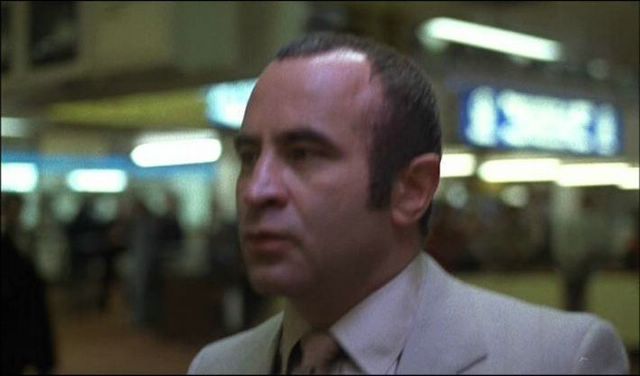
The Long Good Friday

The opening five minutes of this 1980 British gangster masterpiece are completely baffling. Shady types meet up and part. Communications are exchanged and deals are made. Cars are driven in opposite directions. But there's no rhyme or reason to the sequence. Who are these men? What are they planning? Why should we care?

And the whole time, there's this driving, pulsating early 80's saxophone music on the soundtrack (compliments of Francis Monkman). The overall effect is disorienting. We sense that we're missing something, that these are important events, the significance of which lies just beyond our grasp.

The film's anti-hero, crime lord Harold Shand (Hoskins) spends the entire film in this state. Hoskins' turn as the alternately charming and despicable Shand won him considerable acclaim back in 1980, and with good cause. Like James Gandolfini as Tony Soprano, Hoskins invests Shand with confounding nuance and complexity, creating a man who is a violent criminal but not defined by violent criminality. Far from a gangland caricature, Shand's most commonly boastful about presiding over a decade of relative peace in the London Underworld, and always treats his mistress (a fierce Helen Mirren) with respect. Misanthropic and openly disdainful of his enemies, Shand longs for the kind of respect in the community that money can't buy.


On the most important weekend of his life, when he's right on the cusp of realizing his most outsized and grandiose ambition, Shand's entire world will fall apart. He and his girlfriend Victoria (Mirren) are entertaining some American Mafiosi, hoping that they will invest in a large gambling venture on the Central London waterfront. If the deal goes perfectly, it's a chance for Shand to come out of the shadows and finally go legit, to actually become the sophisticated businessman he has always just pretended to be.

And then, at the worst possible time, bombs start going off. First, his long-time chaffeur is killed while waiting for his mother at church. Then, his best friend and close associate (Paul Freeman) is stabbed to death in a locker room. (And by Pierce Brosnan, no less!) Once his favorite pub is destroyed and more undetonated bombs are found in his casino, it's quite clear that someone is out to destroy Shand.

The more desperate the situation becomes, the more Shand turns into a mad dog. In the film's most famous sequence, he rounds up all the local hoods he can find and hangs them upside-down in a meat locker, interrogating them all together. (It becomes clear soon enough that none of the men know anything anyway).

Like all the classics of the rags-to-riches crime genre - and I include films like Little Ceaser and both versions of Scarface - much is made of Shand's hubris, how the arrogance and excess of ambition that caused him to succeed will also bring about his downfall. More than once during The Long Good Friday, people will express to Shand the significant power of his enemy, how he's embarking on a larger battle that cannot be won. I was struck by the unviersal application of the film's closing message. The fearsomeness of Harold's foes are not their strength or cleverness, but their size and their commitment to his destruction. He will not succeed because his power is based on greed, while his enemies work off of passion and true belief.

As I said, Hoskins brings a lot of different shades to Harold Shand. Sure, he's evil and ceaselessly self-serving and cruel, but he probably wasn't always a monster. He's simply grown into the role a little too well. And director John Mackenzie's final shot is mesmerizing, a seemingly never-ending close-up on Hoskins face that really summarizes the entire story in a way no dialogue ever could. Brilliant.

There was already a Criterion disc of Long Good Friday available, but Anchor Bay has just put out a new version that's cheaper, looks better and has more special features (including a director commentary!) Just so you know.

Mrs. Henderson Presents

British comedies are obsessed with nudity (like in The Full Monty and Calendar Girls) and British comedies are obsesed with cute old people (like in Saving Grace and Waking Ned Devine and every British comedy). So I suppose it was only a matter of time before someone figured out how to combine the two concepts. Which brings us to Mrs. Henderson Presents, in which an elderly widow circa WWII runs a topless revue in London.

Fortunately, director Stephen Frears manages to take what could have easily been a pedestrian trip to brain-dead High Concept Hell winds up as a fleet and entertaining comedy with a couple of dynamite lead performances.


Dame Judi Dench plays the titular Mrs. Henderson, a rich snob who discovers a love of the theater after her beloved husband dies. Still nursing the pain of losing a son to the First World War and bored with the idle life of a wealthy widow, she buys a West End theater and hires a respected producer (Hoskins) to manage the establishment for her.

At first, they have great success by running constant shows all day, one right after another. But soon, the crowds stop coming, and they have to resort to a topless act. In some of the film's most amusing passages, Mrs. Henderson must use the power of her status as well as her gifts for pursuasion to convince the uptight Lord Cromer (Christopher Guest, in a rare role outside one of his own movies) to allow her performers to remove their clothes.

And remove clothes they do. Unlike some other British comedies, that play suggestive nudity for laughs, almost all the leads in Mrs. Henderson really do get naked during the course of the film. (Well, with the exception of Mrs. Henderson herself...thank goodness...) It's nice to see that level of commitment from actors.

Martin Sherman's script does remarkably well in creating memorable personalities for Dench and Hoskins to inhabit. The characters of Mrs. Henderon and her colleague, Vivian van Damm, feel sketched in and tangible. We laugh at their sequences together less because they are filled with jokes, but because they are simply likable together.

But a lot of his transitions are awkward and he doesn't handle dramatic sequences nearly as well. The decision to turn the Windmill Theater from a music hall and into a burlesque house completely blindsides the audience. There's a montage showing the theater as a success, then a brief scene in which Hoskins explains that profits are down, and suddenly Dnech is stomping around demanding to see breasts. Another scene to set up this fairly significant change of course might have helped.

Eventually, World War II intrudes on life in the Windmill Theater, and it's here that the movie starts to go astray even further. A late sub-plot about a featured performance (Kathy Reilly) and her brief romance with a soldier feels rushed and inconsequential. And the resolution for her character is sudden, cruel and deeply unsatisfying. This whole segment of the film, honestly, feels surprisingly awkward coming from Frears, whose films are generally tight and well-calibrated throughout.

These problems notwithstanding, it's hard not to at least enjoy Mrs. Henderson Presents for for its considerable charms. Hoskins and Dench are simply great together, and when the film is focused on their relationship, it's a lot of fun.

Braffy Nominations in Just One Month

Oh, it's going to be exciting, Braffy Season 2006. I know, I know, it's early yet. We don't officially hold the Braffies, the Crushed by Inertia award for the Worst Person Alive, until July, and nominations don't hit until late May-early June...but obviously, I'm already well into the planning stages.

Here's the situation. Last year's winner by a ridiculous, retarded landslide was the Soon-To-Be-Former Pennsylvania Senator Rick "Santorum" Santorum. Basically, like another Republican leader whose name I won't mention, Rick stole the title. No one else could possibly make more asanine, insipid and flat-out evil statements in public than Rick Santorum last year. It's a mathematical impossibility. Joel Osteen, I'm sorry, but you had no goddamn chance!

Last year, I tried to nominate people from various different categories. The Worst Entertainer Alive (Toby Keith), the Worst Author (Osteen), the Worst Politician (Santorum), the Worst Masked World-Domination-Obsessed Foreign Dictator (Dr. Doom) and so forth. But this year, I think it's obvious that all the actual worst people alive come from a certain sector of the population. Namely, that sector that's obsessed with torturing and killing.

It's hard to come up with a nominee from a random area of American life - say, an annoying reality TV show host - that feels up to competing against Donald Rumsfeld. I mean, guy's a war criminal. I love to hate Tyra Banks...but come on...

That's why, I think, we'll be doing the Braffies a little different this year. Rather than one big vote for one big award, we're gonna have categories. Worst Musician(s) Alive. Worst TV Producer. Worst Advertising Mascot. Worst Wafer-Thin Celebrity Cocaine Slut (oh, man, that's gonna be a good one).

And then the big daddy, The Worst Person Alive, which will be an intense battle between people who genuinely deserve the nomination.

I don't want to give the game away, but did you guys hear Bay Buchanan say this just today?

"I think Katrina has worn its welcome.- I think the American people are tired of it."

- Bay Buchanan on CNN's Situation Room


I'd say that's exactly how I feel. "Man, will those people who we left to drown in their own filth for nearly a week just shut their stupid traps already! I'm tired of this crap! I want to hear about who's doing well on 'American Idol' and whether or not Tom Cruise and Katie Holmes baby - or TomKitten as it will surely be known - is named after the Sanskrit word for 'vaginal dryness.' I'm starting to wish all of you New Orleans people had just drowned so we could turn your stupid city into some kind of theme park or outlet mall and be done with it. I mean, 'boo-hoo, I don't have a house any more, my Uncle Chester was found several weeks after the hurricane upside-down in a barrel with one leg missing in Central Mississippi covered in his own feces, sob-sob, and I'm still not safe this hurricane season because no one's done anything to improve the Gulf Coast's woefully inadequate levee system, wah-wah.' Cry me a river, you know what I mean? We're all making sacrifices. I work in a video store in a big city called Los Angeles and there could be a terrorist attack on our store at literally any moment, but you don't hear me whining and carrying on and crying about it. No, I just bravely go about my life, and all your Hurricane Katrina so-called victims should just be quiet and take it like a man (or woman, or baby)."

Ah, yes, the wit and wisdom of Bay Buchanan. Hope she's got some extra room on her mantle next to those White House Christmas Cards...

Wednesday, April 26, 2006

My iPod is a Dell Digital Jukebox

I'm probably the only person I know who owns an mp3 player that isn't an iPod. When Apple's omnipresent device was just taking off into the public consciousness, my parents bought me a Dell Digital Jukebox for my birthday. The thinking was...my computer's a Dell, it's almost the same price, and it's approximately 8 times the size of an iPod. Bigger is better, am I right?

It works about the same, but I do occasionally get weird looks in public when listening to the think, on account of its massive bulk and large screen. It looks like I should be able to play Lumines on there, but no...Just indie pop albums and comedy CD's.

And here's what I've been listening to lately:

The Flaming Lips - At War With the Mystics


The Lips have been on a fairly incredible creative run since their 1993 masterpiece Transmissions from the Satellite Heart (which gave the world "She Don't Use Jelly"). Each album since - the infectious and radio-friendly Clouds Taste Metallic, the theatrical psychedelic freakout The Soft Bulletin and the more mellow, anime-inspired Yoshimi Battles the Pink Robots - sounds like The Flaming Lips, but takes on a personality all its own. Their 1997 experimental album Zaireeka had to be played on four different stereos simultaneously for maximum effect.

So when I say that the new album is essentially just another Flaming Lips album, I hope I'm understood. It's not that the music is bad. It sounds a lot like The Flaming Lips, only with a little more emphasis on straight-ahead guitar rock this time out instead of the more loungy, ethereal soundscapes of Yoshimi. And it's not even that the lyrics suck, at least not more than they usually do on a Flaming Lips album.

The whole enterprise just feels familiar and kind of uninspired. Some of the songs, like "Mr. Ambulance Driver" or "It Overtakes Me" sound like inferior bands riffing on The Flaming Lips style. Unlike Soft Bulletin or Clouds Taste Metallic in particular, there aren't very many solid hooks on display here either. Even the catchier, more immediately satisfying listens like "Free Radicals" or "The W.A.N.D." aren't infectious on the level of Lips classics like "Fight Test" (which admittedly cops Cat Stevens), "The Gash," "Lightning Strikes the Postman" or "Turn It On."

All that being said, there are flashes of inspiration throughout. "Free Radicals" is a pretty amusing song with lead singer Wayne Coyne showing off his highest voice registers. (Rumor has it the song's taunting former Lips tourmate and noted Scientologist Beck with its chours of "You think you're radical/But you're not so radical/In fact, you're fanatical.") And some of the instrumental or mostly-instrumental tracks in the album's second half develop into a kind of prog-rock, Pink Floyd homage, which is always welcome. (The second-to-last track is, after all, entitled "Pompeii Am Götterdämmerung.") And "Vein of Stars" is just a classic Lips tune - hallucinatory and melancholy at once.

Mercifully, the whole album's better than lead-off track (and, unthnkably first single) "The Yeah Yeah Yeah Song," surely destined to be one of this year's most annoying songs not written by the Black Eyed Peas. I mean...Wayne...what the hell, man? If your name is not Dean and/or Gene Ween, don't mess around with the sped-up chirpy voices, please.

Destroyer - Destroyer's Rubies

It's a bit early in the year to start talking favorite albums, but I'd say this album's leading the pack four months in. I've heard Dan Bejar before as a guest on all the New Pornographers albums, to which he tends to contribute one or two songs. ("Jackie" off of Mass Romantic is a personal favorite). He doesn't consider himself an actual member of the group, and he wasn't present on the one occasion I've seen the band perform live, preferring to focus most of the time on his solo musical project, Destroyer.


I've become very involved with the latest release from the Vancouver musician, Destroyer's Rubies, a significantly great, a collection of 10 gorgeously expressive, intense, wiry pop songs. There's definitely a Dylan-esque quality to Bejar's rambling, jangly, narrative song-epics, and also a few songs that remind me of Jeff Buckley's oddly intimate tone. (Not that I'm saying he's neccessarily on par with to these two legendary artists, but the album's phenomenal 9.5 minute opening track "Rubies" pretty much invites the comparisons.) And Bejar's distinct warble has all the personality of The Decemberists' Colin Meloy or Sufjan, but additionally an angry, sharp intensity, off-set by the lilting and graceful piano accompaniment of Ted Bois.

Every song here is terrific, but early favorites include "3000 Flowers," "European Oils" and "Painter in Your Pocket."

(Preview "Painter" as well as "Looter's Follies" over at Very Good Height.)

The Fiery Furnaces - Bitter Tea

Sigh...I'm starting to lose my patience with Matt and Eleanor Friedberger, the siblings who together comprise the creative core of The Fiery Furnaces. They are capable of writing and performance immaculate, other-worldly and ridiculously infectious indie rock, but insist lately on bizarre studio experiments that at best make the music less approachable and at worst make it excruciating and unlistenable.


Following two amazing releases, the bouncy, schizophrenic Gallowbird's Bark and the children's book inspired theme album Blueberry Boat, The Furnaces have retreated into a coccoon of self-aware, navel-gazing art school myopia. Last year's Rehearsing My Choir found the duo perofmring with their elderly grandmother speaking over all the songs. Even charming Fiery Furnace originals like "We Wrote Letters Every Day" or "Guns Under the Counter" are marred by an overly-elaborate narrative structure (the album recounts their grandmother's life story) and this old woman's voice-over popping up at odd intervals.

Though their new album, Bitter Tea, doesn't include any actual old people rambling in the middle of songs, the Furnaces have designed an all-now torment for fans just trying to hear actual songs. Now, in the midst of all the music are a lot of BACKWARDS LYRICS and RANDOM SOUND EFFECTS! Seriously. You're listening to a perfectly enjoyable song, and all of the sudden backwards vocals start coming in at random moments and interrupting the melody, along with annoying little synthesized noises. Why? It's certainly not pleasant or melodic.

Some songs survive the backwards carnage. "Police Sweater Blood Vow" is a straight-ahead funky rock song that could have come off Gallowbird. "Benton Harbor Blues" is a fun little story-song that sounds like a holdover from the Blueberry Boat or EP days. But most of these songs are annoying. Some, like the title track, might have been good songs without all the over-production jackassery. Others, like "The Vietnamese Telephone Ministry" were probably annoying to begin with.

I've seen these guys play live twice, and they rearrange all the songs and rock them out, proving that they haven't lost their ability to sound like a real band. So why diddle around endlessly in the studio and mess up the recorded versions of all their songs? Are they trying to force people to check out the live shows in order to hear the "real" Fiery Furnaces? Do they not realize that the human voice played backwards on a loop gets irritating and pointless quickly? Are they just jerks? I honestly don't know...

The Islands - Return to the Sea

A few years ago, 2004 I believe, these French-Canadian weirdos called The Unicorns came out with a crazy pop confection called Who Will Cut Our Hair When We're Gone?, an upbeat, goofy album about the fear of dying. (This was back when only 90% of the cool bands were from Montreal).

They did a tour of the US, and I saw them at the Knitting Factory, and the show basically sucked. The crowd was full of rude fratboys, the band was seemingly so upset about playing in LA that they gave a half-assed performance lasting less than 45 minutes. It was not a great experience.

Then, they announced they were breaking up and forming a hip-hop act called Th' Corn Gangg. Then, nothing. And now 2/3 of the Unicorns, J'aime Tambour and Nick Diamonds) have come out with an album that sounds a lot like The Unicorns, mixed themselves in J'aime's bedroom. Everybody got that?


Still obsessed with death and Brian Wilson, still writing an average of 3 great melodies per song, but evidencing some newfound interest in calypso, Return to the Sea finds The Islands taking off where the Unicorns stopped. Therefore, it's a tremendous LP, fun the first time you hear it but gaining nuance and complexity with each repeat because the songs are so clever and dense.

The early Islands tracks that leaked online, "Abominable Snow" and "Flesh," were obviously constructed around solid hooks, but were really rough and didn't prepare me for how slick and polished the final product would sound. Return to the Sea is every bit as lush and sweeping in design as its title would imply. And, of course, it's also very weird.

Songs like "Humans," "Volcanoes" and the grandiose, extended opener "Swans" hint and deep and troubling mysteries beneath their bouncy, effervescent exteriors. In this way, some of The Islands stuff kind of reminds me of the Masters of Creepy Indie Rock, Xiu Xiu, and I mean that in the best way possible.

The Passenger

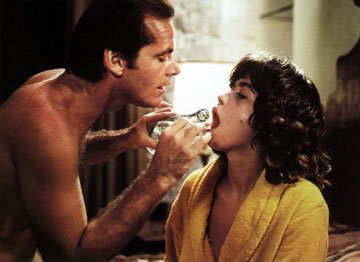
Michaelangelo Antonioni's 1975 The Passenger is a mystery film in which many puzzles are presented and none solved. In North Africa, a freelance reporter named David Locke (Jack Nicholson) finds a dead man in the room next to his own. Rather than reporting the incident, he assumes the man's identity and decides to keep his appointments.

Why would Locke want to escape his life so desperately? Looking at the IMDB page for the film, I see that both of the authors who have submitted plot descriptions provide their own reasons for Locke's decision, but none are provided in the film. I suppose, like the ennui that haunts the idle rich of the director's L'Avventura or the paranoid obsession driving the photographer hero of Blow Up, it's some unspeakable, indescribable desperation deep within the soul. Perhaps Locke simply hoped that the new guy's identity would be more enjoyable than his own, rather mundane, existance.

Without missing a beat, Antonioni (who co-wrote the film with Mark Peploe) moves on to another conundrum. Locke keeps all the appointments in the dead man's book, and it soon becomes clear he's some sort of arms delaer in the midst of a large deal with some shady characters. We're denied, however, any suggestion of what objects might actually be in negotiations, or what if anything Locke is actually supposed to be doing for the gentlemen with whom he meets.

Finally, Locke encounters a girl (known only as Girl, and played by Last Tango in Paris vet Maria Schneider) who decides to come with him as he keeps his appointments with destiny. Who is this girl? What is she doing wandering around Europe with mysterious strangers who admit to assuming false identities? Could she secretly be involved in the arms negotiations and even the dead man's death?


Antonioni pretends for a while that there will be answers. Unlike a lot of his other films, which drift along, contemplating the meaning of life while characters pose in front of imposing architecture, The Passenger unfolds mainly like a traditional thriller. It's probably the director's most accessible work. And yet, at heart, it's another of his explorations into the pain of boredom and the sad inevitability of life and death.

Even after it becomes clear that he's in over his head with this new identity, and that he can't control the forces that threaten him in this new life, Locke doesn't waver from keeping up appearances of becoming this different man. Why keep meeting up with gangsters and killers if he has no real business with them? Now that he's faked his own death, why not disappear somewhere far away and start over? It's almost as if Locke has an appointment with death, and he's just pausing for a brief period to have a love affair and explore scenic Barcelona.

The movie could really be interepreted in any number of ways. It feels specific and detailed, but also ambiguous. Clearly, it's analyzing the nature of identity, how a few small traits and ticks and pieces of identification essentially add up to a person. Locke and this dead man are basically interchangable commodities. So long as they provide that which is expected of them, show up at the right places at the right times with an ID card, no one cares if it's the actual same man.

And who is "The Passenger" of the title, anyway? David, who rides around Europe on another man's reputation, taking a vacation through some stranger's life? Or The Girl who joins him on his adventure? Because when we become romantically involved with someone new, it is almost like creating a new persona in which to reside, a unique entity unlike the you you'd be if you were still alone.

Despite giving a performance that embodies some of the excitable, passionate qualities for which he's known, Jack Nicholson does a remarkable job of maintaining this emotional distance. Never once betraying why he might choose to give up on his entire life (save for a frustrated road trip to get an interview with a guerilla leader early in the film), Nicholson plays Locke as a tormented man but not a whiner nor a particularly melancholy sort.

He's inhabiting a new identity, and genuinely does seem to adapt his behavior to his new personality. Only after he's spend some deal of time with the Girl do his old David Locke ways seem to reappear.

And then there's the famous final shot...By my count, it's nearly nine minutes in length, an astounding technical achievement that additionally manages to tie together all the ideas circulating throughout the film. Nicholson lies on a bed in a motel room in the foreground. The camera looks out a window, then moves through the window as we watch several mini-sequences play out on the street. No action is actually shown on screen, but the entire conclusion to the movie will play out in the audio, and everything's clear enough.

Perhaps, this final moment seems to suggest, we the audience have been the passenger all along, watching Locke adopt a senseless new identity and romance a sexy stranger for our entertainment. And, finally, Antonioni says no more and denies us any sort of satisfaction or closure. Or maybe it's jsut supposed to be an incredibly cool shot. Either way, I'm impressed.

Elevator to the Gallows

Louis Malle made this impressive, tightly-coiled 1958 thriller at the tender age of 24. To say the least, it's a precocious directorial debut, gracefully mixing Hitchcockian suspense with some of the more experimental, intimate flourishes that would become the hallmarks of the French New Wave a few years later. The story of twin murders gone wrong on a single Parisian night, the movie lacks some of the emotional insight of later Malle films (or those by his mentor, Bresson, whom he claims directly influenced Gallows) and struggles for resonance in the final few moments that never quite arrives. But overall, it's hard to fault such a great-looking and well-plotted noir. Oh, and did I mention that the soundtrack features original music by Miles Davis, recorded in an improvisational session two years before Kind of Blue?


That's Jeanne Moreau, one of the great all-time French actresses, as the murderous Florence. Along with her boyfriend Julien (Maurice Ronet) plots to perfect crime - he will secretly murder her husband, his co-worker, secretly at the office, right before end of the work day, then leave the building with plenty of other people around as alibis.

It's a fascinating role, in that the plot pivots around her character but provides her with nothing to actually do until the very end. Julien stupidly forgets some crucial evidence back at the crime scene, and on the way to retrieve it, becomes stuck in the elevator. He'll spend much of the remainder of the film in this elevator, while two rebellious kids (Yuri Bertin and Georges Poujoulin) make off with his car and commit a nefarious homicide of their own.

While all this action goes on (including an amazing sequence in which Julien attempts to escape his stories-high prison cell), Florence wanders the streets of Paris looking for her beloved, wondering if her husband has been killed and what's to become of her. These are, quite simply, phenomenal sequences of filmmaking. Malle's cinematographer, Henri Decae, had already shot one of my all-time favorite crime films, Bob le Flambeur, with Jean-Pierre Melville 3 years before, and would go on to collaborate on Truffaut's 400 Blows and several Chabrol films. His black and white compositions in these street scenes, isolating nightscapes with harsh, esxtreme and occasionally unflattering light on Moreau's face, are stunning and expressive.

And I'm not the kind of guy to throw on free jazz and groove out for several hours, but the Miles Davis tracks perfectly compliment Moreau's panicked, half-crazed energy. (The film's original title, Frantic, refers to her mental state throughout.) The entire film's well-made and intense, but it's these moments that will likely stick in my memory.

As I said, the only real fault I can find in the film comes at the very end. Without giving anything away, allow me to say that certain films end on a perfect little moment, the ideal coming-together of everything that has come before. Has everyone seen The Taking of Pelham 1 2 3, where Martin Balsam sneezes at the very end at it gives the whole game away, and Walter Matthau opens the door and gives him that look. Like he just figured out the entire movie in that one second?

Elevator of the Gallows sets up a scene just like that. It's the moment when the jig is up, essentially, and ironically it's also the first time we'll ever see the film's main couple together. And yet, the moment just doesn't come together. It's a sensible conclusion, in that it naturally follows all that has come before, but it's not a great closing, one of those dazzling cappers that sticks with you months later. Perhaps this is asking too much, but when a movie builds to a moment like that, how else are you to judge it but the parameters it has set for itself?


Anyway, I still thought this was a pretty tremendous little movie, clearly influential to the New Wave (particularly in helping to launch the career of the iconic Moreau) and even to contemporary filmmakers. (Woody Allen's Match Point, in fact, treads on similar territory in spots, and shares a similarly pessimistic take on the nature of love).

Monday, April 24, 2006

Kirk Cameron Will Devour Your Soul

Hey, what are you doing for the next half hour? If your answer didn't involve "knee surgery" or "trial for manslaughter," cancel your plans and watch this video instead. In it, Kirk Cameron and some guy named (I swear) Ray Comfort are going to not only convince you there's a God, but tell you how you can brainwash enlighten your friends by spreading the Good News about his son Jesus!

They're both extremely enthusiastic and seated in front of a serene backdrop, like in an infomercial. But they only product they're selling is fervent, creepy evangelism! Ray starts with that old teleological argument for God's existence, one you may have heard before if you had any loopy Jesus kids in your high school.

In Ray's example, say you find a soda can on the sidewalk. (Ray holds up a soda can painted red, white and blue, like the flag, which isn't the design for any soft drink I've ever seen. What does America-flavored soda taste like? Apple pie? Bald eagle? Huddled masses yearning to breathe free?) Anyway, if you found a can of America Drink on the ground, would you assume that it was made in a factory somewhere, or that it sprung up magically out of the earth?

Obviously, you'd assume it was made in a factory. Therefore, there's a God.

Seriously. That's what Ray Comfort argues (in an accent that at first seems Australian, then American, then just like Ray's a douchebag). Cause the world's a complicated place...You know, like a soda can. So it must have been made by somebody. And seeing as it wasn't Coca-Cola bottling, it must have been THE BIG GUY UPSTAIRS, right?

Ray demonstrates this amazing insight with a banana. You really have to see this part for yourself. It's priceless. He claims that God placed a tab at the top of a banana to make it easy for a man to open it without, and I quote, the contents squirting out into your face. Um, Ray, isn't that just where we pulled the banana off of the tree where it was happily growing? God didn't put that there...Chiquita Corporation did, you silly bastard! Also, and I hate to break this to you, God didn't make the little sticker with the dancing girl on it, either.

Then, as if this weren't enough, he notes that the banana is tapered at the top "for ease of entry." Ease of entry where, you sick bastard? You don't need a banana to be slightly curved to fit it into your mouth!

Okay, so Ray's not exactly Thomas Aquinas with the theological wisdom. Cut him a break...He might be nervous. He's sitting next to Kirk Cameron.

The whole video's just chock full of idiocy. The whole next section is about how to make an atheist "backslide," how to prove the existence of God to people. I must admit, as a non-believer, I was curious. Perhaps, in addition to being one of the finest actors of his generation, Mr. Cameron would manage to save my soul.

Nope. It's just more of the same teleological crap. If you see a painting, some guy painted it, and if it's all blurry or full of young ballerinas, it was a French guy. Therefore, because you see a universe, some dude fashioned it with his mighty God-head, or some such thing. Blah blah blickidy blickidy blah.

Do I need to debunk this for you? Really? There's lots of ways. You know what...I'm going to give my readers the benefit of the doubt and not explain to you why it's a load of horseshit. If you're still curious on how reasonably sane people easily debunk the teleological argument for God's existence, just Google that or e-mail me. Here's the wiki to get you started.

I'm not going to summarize the entire video. Allow me, in closing, to say that it's also really really gay. The guys are always touching themselves, even rubbing their bodies. I've already discussed the lengthy section about how bananas are perfectly curved for comfort and insertion. And then Ray says that he's interested in physical fitness, "as you can tell from my physique." Now, I'm fine with whatever lifestyle choice suits Kirk Cameron. He could marry eight dudes and a monkey in an official Pentacostal ceremony and I wouldn't give a shit. I just thought these guys were supposed to not like the gay guys. Or maybe they're trying some radical new evangelical policy wherein they convert the guys after convincing them that Christianity is really all about man-on-man love. Come on, you know it isn't that off-base.

[With massive thanks to The General]

Sunday, April 23, 2006

Aeon Flux

Realizing, I guess, that there's no reasonable way to affordably bring Peter Chung's animated creation to life, director Karyn Kusama and producer Gale Ann Hurd have completely altered the aesthetics of Aeon Flux. Bearing little to no actual visual resemblance to the decade-old MTV series it proposes to reimagine, Aeon Flux nevertheless succeeds in capturing the spirit of Chung's enterprise, that initially found life as a series of nihilistic shorts on the network's "Liquid Television."

Screenwriters Phil Hay and Matt Manfredi have captured the deadly serious, montone delivery of the show's characters, the confusing 180's in narrative and the obvious references to anti-totalitarian literature like "1984." But is this a good thing? It kind of feels like all that made "Aeon Flux" the show worth watching has been left behind for the film, and all the pointless exposition and inscrutable characters with never-explained motives have remained intact.

The show was never particularly memorable for story in the first place (almost all of those shorts ended with Aeon dying without even completing her unexplained mission), but was enjoyed by stoners everywhere for its bizarre animation and ingenuitive visual invention. Chung's world was a freaky, cyberpunk dystopia in which everyone was muscular, androgynous and into leather, so who cares what's actually going on in the 20 minute cartoons? Just get to more suggested nudity!


An above-average genre film probably could have arisen from the raw materials of Aeon Flux. A futureworld in which a tyrant named Trevor Goodchild (Marton Csokas) rules a repressed populace through brainwashing and fear provides a reasonable, if somewhat familiar, setting. Sexy chicks who kickass in tight spandex are all the rage these days. The central twist, though reminiscent in some ways to The Matrix or Dark City, provides for a more thoughtful and melancholy conclusion than most blockbusters. And as I said, the screenwriters clearly have an imagination fruitful and perverse enough to channel Chung; telepathic brain implants, retinal microscopes and surgery to replace one's feet with an additional set of hands are all inventions wacky and invasive enough to imagine existing in the world of Aeon Flux.

In some ways, it's the character of Aeon herself that keep the film from succeeding even on those modest terms. Former model and Oscar winner Theron doesn't make a strong case as a credible action heroine here. Like Angelina Jolie in the Tomb Raider movies, it's a good casting idea and a reasonably-good resemblance to a previously-existing character that simply doesn't work at all. Like Jolie's take on Lara Croft, Theron seems confused in how to approach the character, and never once seems to actually get inside the head of this larger-than-life cartoon. Is she aware of her sexuality and using it to her advantage, or is her sexiness merely a byproduct of ambition, single-mindedness and athleticism? Does she think of herself as a massive hero-badass, or just a simple girl caught in an out-of-control situation? Why does she have to seem so bored all the time, even when jumping through a field of dagger grass while evading dozens of guys in silly helmets with shotguns?

Kusama (whose only previous film, Girlfight, was an indie with no large-scale action whatsoever) employs far too many cuts during the action scenes, and even artificially speeds-up some of the shots to make Theron seem faster. I don't know for sure if this is compensating for Theron's inability to "sell" her character's agility or toughness.

This is both a failure in terms of performance and physicality. Of course, Theron can't really jump around and contort her body like Aeon. It's a fantasy of human movement, not realism. But we simply never believe she's a badass. The fights seem fake, the stunts flowery and ridiculous, and the visceral impact of the hits connect even less than the punches.

Really, she has no presence in the film at all. Possibly as an homage to the cartoon, all the characters, save Johnny Lee Miller's villain, speak and behave in the most monotone, stoic manner possible. Again, it works in brief animated form, when all the viewer's really focused on is the design, but the technique just saps all the energy from a feature-length film. Miller, as Goodchildn's scheming younger brother Oren, gives the film's most scene-chewing, bellicose performance, which also makes him the only even marginally interesting character. Too bad he has so little screen time and such bad dialogue.

In all honesty, bringing Aeon Flux to the screen in a live-action film was pretty much doomed to fail. Like Judge Dredd or the Super Mario Brothers or even Howard the Duck, this was an idiosyncratic work that happened organically in another form, and trying to squeeze something so peculiar and unexpected and of itself into the format of a mainstream Hollywood blockbuster movie is a fool's errand, destined from the first to come out watered down and unsatisfying. Far more mystifying than the forgettable final product is what could have motivated the genesis of such a concept in the first place.