Tuesday, June 20, 2006

Rodents of Unusual Size? I Don't Think They Exist...

So vile are Sean Hannity and Rush Limbaugh, they kind of steal the spotlight away from other right-wing radio assholes equally deserving of our scorn. For example, this Dennis Prager column from Townhall may just be the stupidest thing I have yet read in 2006.

Before I even get into the column, see if you can wrap your head merely around Prager's thesis:

He wonders aloud why liberals, in general, seem more concerned about global warming than conservatives.

One would think it's pretty easy to answer this question. If you want to know why liberals are concerned about global warming, just ask some of them. Or even go see Al Gore's new movie. Or read a newspaper article. And if you want to know why conservatives aren't concerned about global warming...well, just think about that for yourself, D.P. You're a conservative and you're not concerned about global warming. You must have a reason, right? Other than the fact that you want to hang on to this lucrative Townhall.com writing gig, surely a mere stepping stone on your path to...um...somewhere. Maybe Ben Shapiro's apartment for warm Tang and microwavable taquitos (which we proud native English speakers call "zesty corn chip flavor wraps.")

Once you've considered both sides, simply compare and contrast. BAM! You've got yourself a column.

Unfortunately, this journalistic approach, in which two perspectives have been weighed and then a statement made about their relative validity and logical sense, wouldn't really play too well to the drooling yahoo readers of Townhall.

"I discovered something interesting. Liberals are afraid of global warming because it will create huge shifts in the delicately-balanced ecosystem that could cause a refugee problem, starvation and death on a previously unknown scale, threatening the very survival of our species. Conservatives aren't afraid of global warming because Big Powerful George Bush told them everything would work out alright because he's watching out for them and would never let the bad atmosphere do anything naughty. I mean, he's the Deciderer, so what's Nature going to do if he's already decideded to save America from global warming?"

Instead, Prager produces this piece of mindless dross about the Liberal Deficiencies that make them inherently afraid of global warming. Even though it's, like, totally made up or something.

The usual liberal responses -- to label a conservative position racist, sexist, homophobic, xenophobic, Islamophobic or the like -- obviously don't apply here. So, liberals would have to fall back on the one remaining all-purpose liberal explanation: "big business." They might therefore explain the conservative-liberal divide over global warming thus: Conservatives don't care about global warming because they prefer corporate profits to saving the planet.

But such an explanation could not explain the vast majority of conservatives who are not in any way tied into the corporate world (like this writer, who has no stocks and who, moreover, regards big business as amoral as leftists do).

Before I even get into the real meat of Prager's piece, he makes a few completely bogus assumptions right here in the opening paragraphs that must be cleared up. Issues like global warming can not be simplified into binary oppositions. Politicians may have aligned on this issue according to party lines, but that's because they are nearly all corrupt liars more interested in keeping their jobs than in honesty or the future of their nation. Individual Americans have their own opinions about the environment, near as I can tell, and it's not always as easy as pinpointing their spot on the political spectrum.

I'm sure there are plenty of liberals who find the threat of global warming overblown. Likewise, I'm certain there are conservatives worried about the environment and the future of our species and the threat of carbon dioxide emissions to our habitat. The only reason to transform the diverse American electorate's opinions on this matter into a black-or-white party-line vote is because you want to make this a partisan issue. "If you're a conservative, you don't care about global warming. Okay? Everybody got that? Cause I won't mention it again."

Also, Dennis assumes that people accuse conservatives of being sexist, racist, homophobic and xenophobic (which covers being an Islamaphobe, making Dennis' paragraph redundant) to earn political points. But no politicians or staunch Democratic partisans ever say stuff like this about conservatives. Outspoken progressive writers and activists and bloggers do. And they're not trying to make political hay out of these issues. They genuinely think conservatives are racist, sexist, homophobic and xenophobic bigots. (I know I do...)

Finally, Dennis assumes that the use of anecdotal evidence in a column about global warming has any meaning at all. "Well, I don't like big companies and I don't believe in global warming. So there!" What an asshole.

No, the usual liberal dismissals of conservatives and their positions just don't explain this particularly illuminating difference between liberals and conservatives.

This is the one line in Dennis' column with which I fully agree. (Well, this and the byline. I have no doubt Dennis Prager really wrote this stupid piece of shit.) I would say this is a particularly illuminating difference between two ways of seeing the world. Those who see what they want to see because the big strong Cowboy in Command told them so and those proud few Americans who continue to embrace reality. It takes a certain kind of chutzpah to ignore the opinions of every scientist and expert in a given field and then to write a column explaining why everyone else is screwed up.

So now Dennis goes into the body of his column, in which he advances The Top Six "Explanations" for Why Liberals are Afraid of Global Warming. From the home office in Sioux City, Iowa. ("Because it's happening," unfortunately, doesn't make the cut, nor do any jokes about Joey Buttafuoco.)

The Left is prone to hysteria. The belief that global warming will destroy the world is but one of many hysterical notions held on the Left.

As Amanda at Pandagon rightfully points out, no one believes global warming will destroy the world. Many believe that it will cause the human race untold amounts of suffering. Big dif.

As noted in a previous column devoted to the Left and hysteria, many on the Left have been hysterical about the dangers of the PATRIOT Act and the NSA surveillance of phone numbers (incipient fascism); secondhand smoke (killing vast numbers of people); drilling in the remotest area of Alaska (major environmental despoliation); and opposition to same-sex marriage (imminent Christian theocracy).

Get this...Prager's writing a series of columns about the "hysterical left" without noting the irony that his enthusiasm for the topic could easily be viewed as its own form of...hysteria. Is enthusiasm among progressives for issues they see as massively important to the future of our nation really so abominable that it requires not one but a series of columns? Who's being hysterical?

I would like to point out, however, that I also think people make too much of second-hand smoke. Because, as I said before, the notion that Americans are divided into two diametrically opposed camps is childish. Everyone knows there is diversity of opinion about all of these topics. That's why we're constantly polling Americans to see what they think. Otherwise, it would just be an even split down the middle on every issue.

How ludicrous, by the way, is it to imply that it's the liberals who are hysterical on the same-sex marriage issue. We just think dudes should be allowed to have weddings. It's the opposition to this rather reasonable request that are constantly invoking the Bible and screeching about family values and attempting to amend the freaking Constitution. How twisted can his logic possibly get?

The Left believes that if The New York Times and other liberal news sources report something, it is true. If the cover of Time magazine says, "Global Warming: Be Worried, Very Worried," liberals get worried, very worried, about global warming.

Yeah, those stupid libruls. Reading newspapers and magazines and digesting the information contained within. When will they learn that you can only trust everything you hear on Fox News and all other forms of media are to be ignored?

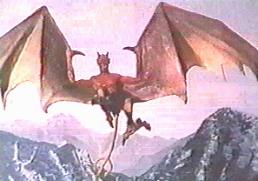
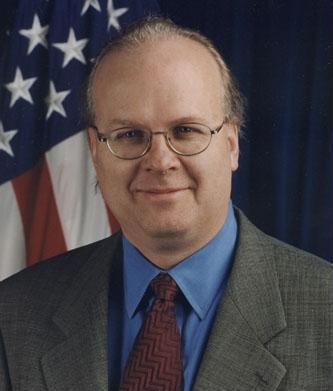
Holy shit, I'm only 1/3 of the way through Dennis' list and already I feel drained. Maybe I should start slamming Red Bull or something. Otherwise, I'll never make it. Sorting through all these contorted arguments is like navigating the Fire Swamp. (And now that I think about it, Dennis Prager does kind of look like a Rodent of Unusual Size.)

Observe:



Uncanny.

It is noteworthy that liberals, one of whose mottos is "question authority," so rarely question the authority of the mainstream media.

Dennis, are you high? So-called liberals criticize the media constantly. Like every day. Ever been to Media Matters? Bothered to stop by and read anything on Firedoglake or Eschaton ever? Eric Boehlert has just written an entire BOOK on the subject called Lapdogs that's available now. Jon Stewart's a guy who has regularly been cited as a liberal and he hosts a DAILY SHOW devoted exclusively to skewering the mainstream media.

Also, is he trying to say that people shouldn't question authority? Ever? How does one even go about becomign so firmly entrenched in the bullshit establishment? You hear urban folk tales about The Man, but you never expect to actually see him attempting to keep his brother man down right in front of your face in real time.

The Left believes in experts.

Bear in mind, folks, this list is meant as a collection of The Left's faults. Those more liberal than Prager are wrong to trust people who know what they are talking about. Because there's always a chance they'll tell you something you'd rather not know, and then where are you? Fucked, that's where. This is why we need more Ten Commandments and less Evolutions in our schools, people!

Of course, every rational person, liberal or conservative, trusts the expertise of experts -- such as when experts in biology explain the workings of mitochondria, or when experts in astronomy describe the moons of Jupiter. But for liberals, "expert" has come to mean far more than greater knowledge in a given area.

No, that's still pretty much exactly what that word means. Also, someone who used to be pert and perky but is no longer so.

It now means two additional things: One is that non-experts should defer to experts not only on matters of knowledge, but on matters of policy, as well. The second is that experts possess greater wisdom about life, not merely greater knowledge in their area of expertise.

Okay, the second charge is totally bogus. No smart people on either side think that just because someone is a good accountant or physicist or golfer means they're a better person. That's just stupid. (This is why, by the way, I'm not really swayed by the whole Einstein-believed-in-God argument against atheism. I mean, yeah, he came up with astounding formulas and new ways of seeing the universe, but why should I trust him to know about something like the nature of God? He was just a regular old man who was abnormally great at math and physics.)

As for the first charge, of course you should defer to experts in matters of policy when that policy is in their area of expertise. I don't mean you should just do what scientists say all the time, but if you're facing a question like, "Do we need to prepare for global warming" and all the scientists say "Yes!," you should fucking do it, idiot. That's why we have scientists. If you're just going to ignore all the people who have spent years studying this shit, why make anyone study it at all? Just put all those smart men and women to work in our vast sunscreen factories. Trust me, they'll come in handy.

People who don't confront the greatest evils will confront far lesser ones. Most humans know the world is morally disordered -- and socially conscious humans therefore try to fight what they deem to be most responsible for that disorder. The Right tends to fight human evil such as communism and Islamic totalitarianism. The Left avoids confronting such evils and concentrates its attention instead on socioeconomic inequality, environmental problems and capitalism.

I'm stunned...I'm just stunned to see Prager essentially lay it all out on the table like this, so unaware that he's giving the whole game away. His professed side, the so-called Right, fights invisible boogeymen like evil dirty communists and even eviller, dirtier Mooslims, while his rivals worry about things that are really happening, like inequality, the destruction of our environment and the economy.

I wonder if he showed this column to anyone before publication. I've never been convinced Townhall.com has an actual staff of proofers and editors, because much of the writing that comes out of there resembles the rantings and jabberings of the criminally insane. I just don't think even most conservatives would agree with Prager's points here. Would they want to admit that they're focused solely on these invented monsters? Haven't we all figured out by now that the Russians were never truly an evil empire but just another proud nation trying to hold on to as much power as possible, using our same kind of rhetoric to bully the rest of the world? Is it really so much more important to puff out our chest and frighten the browns than to focus on the health and well-being of our own people?

Like I said, I'm stunned. I read this paragraph with mouth agape. How could he so freely admit to this? Doesn't it make him feel silly to concede that the other guys worry about starving children and racial inequality while he continues to wet his pants about that time five years ago when some unhinged cult members attacked us?

Global warming meets all three of these criteria of evil. By burning fossil fuels, rich countries pollute more, the environment is being despoiled and big business increases its profits.

Again, Dennis doesn't actually argue against any of these things being true. He basically concedes that rich countries like America pollute the rest of the world and that we're willing to spoil the environment for everyone so we can get even richer. He doesn't say these conclusions are wrong. He just insists that liberals are wrong to think this way.

The Left is far more likely to revere, even worship, nature.

I don't worship anything or anybody, so speaking as an impartial non-believer, it's a lot less insane to worship nature than it is to worship a dead Jewish guy. Nature you can see, it's all around us, and we depend upon it for life. A dead Jewish guy is just a dead Jewish guy.

As for revering nature, doesn't everybody? Does Dennis Prager walk around with active contempt for nature. "Fucking trees! Get out of my face! Look at that faggoty potato! Gawsh, all these plants and animals make me want to retch! Why can't we just pave over everything!"

Again, I would guess that most conservatives would disagree with Prager here. I have known several very conservative, very religious Republicans in my day, and all of them loved nature. In fact, some of the most active, outdoorsy people I have ever met are also some of the most conservative. This is why, in order to prevail in the fight against the environment, Prager and his nefarious ilk must try and spin this as a partisan issue. Because the environmental cause appeals, in some way, to everybody. We all share this planet and have a stake in its survival. His only hope is to convince rabid partisans of the Right that they have to reject the future of their species out of party loyalty.

A threat to the environment is regarded by many on the Left as a threat to what is most sacred to them, and therefore deemed to be the greatest threat humanity faces. The cover of Vanity Fair's recent "Special Green Issue" declared: "A Graver Threat Than Terrorism: Global Warming."

Here's that simple reality problem again. A threat to the environment is obviously a threat to something sacred for humans. It's our home. If the Earth can no longer sustain our kind of lifestyle (and it's only a very delicate balance that allows us to survive in the first place), we all die. That's it. Then, even the horrible threat of Islamofascism won't matter, you dunce.

Also, it's clearly a larger threat than terrorism. If scientists are right and the seas are going to begin rising and flooding coastlines around the world, millions will die and be displaced and millions more will starve to death. No amount of terrorism could possibly match these numbers. It's not physically possible.

Conservatives, more concerned with human evil, hold the very opposite view: Islamic terror is a far graver threat than global warming.

Keep repeating that to yourself, man. Maybe it will come true.

Leftists tend to fear dying more.

Now this is just idiotic, that the fear of death could be determined by party affiliation or political outlooks. Everyone's afraid of dying in some way and people deal with the notion of their own mortality in all sorts of different ways. It's one of those extremely personal issues that has nothing to do with how you vote. Man, what a ridiculous fool, to even suggest such a thing.

(I'd also add that it's not the Left that declared 9/11 "changed the world," it's not the Left that insisted we must fight a series of wars to protect ourselves, it's not the Left that's obsessed with buildilng walls across all of our borders, it's not the Left that constantly rattles on about the defense of marriage and it's not the Left that's obsessed with End Times prophesies. But these points aside, I don't feel like a fear of death is something that can be correlated to party affiliation. I'm just saying, even if you did feel that way, a case could be made for either side.)

One day, our grandchildren may ask us what we did when Islamic fascism threatened the free world. Some of us will say we were preoccupied with fighting that threat wherever possible; others will be able to say they fought carbon dioxide emissions. One of us will look bad.

How, exactly, has Islamic fascism threatened the free world? Don't they have to do something to us first? I mean, a small group of them teamed up to kill a few thousand people in the World Trade Centers. (By the by, they didn't kill a few thousand Americans as people often state. They killed a few thousand people from all over the world who happened to be in America at the time. Few of the other countries represented by people in that building have reacted by declaring war on Muslims.)

But all these so-called Islamofascists haven't done anything else to us except defend the country we invaded. It will take some extremely crafty revisionist historians to spin this one into a victory over the pernicious threat of Islamic Fascism. (Not that this won't happen, if the world survives long enough to take stock of this present situation. I'm just saying it will require creativity when it does happen.)

And again, Dennis' own words betray him. "We were preoccupied with fighting that threat wherever possible." Is he admitting that all the other awful stuff happening in America and around the world on Bush's watch is a result of him focusing exclusively on the threat of terrorism? Not sure that's really a case any big time Republicans want to see made, even in a wasteland like Townhall.

Finally, on the off chance I have grandchildren, I'll be proud to say that I tried to do something about the horrible threat of Global Warming, even though now it's too late and we all have to have our skin removed in a painful procedure at the age of 13 to survive in the scorching 200+ degree heat, or else move to that equally hot but somewhat less expensive colony they've got going on Mercury, where a large geodesic dome that blocks out the sun alleviates the need for an epiotomy.

Hell's White House

Does it seem odd to you that, when politicians and journalists and public figures discuss the Iraq War, no one ever suggests actually changes we could make that might improve things? I mean, the Democrats have announced their new plan to end the war and I agree with almost all of it, but it's really just a randomly-chosen deadline as opposed to an actual course of action. Essentially, near as I can tell, Democrats want us to keep doing the stuff we've been doing - the stuff that doesn't work - and then leave in 6 months.

I'm all for leaving, don't get me wrong. Unfortunately, we're not in a position to correct our error, so we should just have the decency to step aside and then try to make it up to Iraq some time in the future when we can actually do something other than make things worse by establishing permanent bases there (which is what upset Osama in the first place!), torturing and slaughtering innocents and getting our fellow citizens killed.

So it's an underwhelming proposal, but it is a proposal. That's more than the White House, the guys who started this thing in the first place, have offered. The Republicans tell us we should calm down because we're being very un-Dude and call it a day. I mean, even Nixon had a fictional secret plan. They could give us that much.

Maybe they send Condi somewhere to pretend like she knows what she's talking about even though her only actual experience in foreign policy consists of studying the Soviet Union as an academic and starting botched wars. Why is this woman considered an expert on Middle Eastern affairs? If I had a book report due on One Day in the Life of Ivan Denisovich, she'd be a good source of info. But asking her to speak intelligently about the current conflicts going on simultaneously in Iraq is like asking Dick Cheney to teach a class in gun safety.

I've had no choice but to come up with a plan of my own. I think we should send Hell's Kitchen star, Chef Gordon Ramsay, to the White House to whip those guys into shape. For those of you unfamiliar with Chef Ramsay, here's a file photo in which he's stomping his archrival, Chef Boyardee.


Ramsay's a pretty angry guy, so I think he'd fit in well at the White House. The cruel nature of his bullying and taunting kind of reminds me of our President, who has brought the frat boy shenanigans of National Lampoon to the Oval Office. Bush insults blind men and gives everyone around him demeaning nicknames; Ramsey calls all fat men "big boy" and tells a young man with long curly hair that he looks "like a ponce." These guys could seriously relate to one another in some meaningful ways. (Hell, Bush might even think he's an interesting cat!)

Ramsay would be great in the White House because this is a man who knows how to get people organized and motivated. He just screams at them until he's hoarse, much like a drill instructor or obsessive, alcoholic stage father living vicariously through his daughter. He calls them donkeys, tells them that they're worthless and that they've given up and always, always, reiterates that they are stupid. I think the Bush White House needs this kind of strict discipline.

And of course we should air the entire thing on Fox. "Hell's White House."

"You call this a foreign policy speech, you worthless sack of crap! Tear it up and start again, because I'm not releasing it to the public in this condition. Would you deliver this speech? Would you? You loathsome impudent muppet! I wouldn't trust your policy proposals any more than I'd trust you to guard my liquor cabinet. I heard that, even though you always wear stupid hats and fake being a cowboy, you're actually afraid of horses, which is why there are never pictures of you riding even though you own a blooming ranch! Get the hell out of here right now and make it better or I'll shut down this entire war. We really need a victory tonight, and you're giving me nothing, because you're an idiot. Get out of my face."

Equinox

Quick, what's the worst film ever released on Criterion DVD?

Did you guess Michael Bay's Armageddon? Well, you were right, until today. Now it's Jack Woods' 1967 creature feature Equinox, a hilariously awful sci-fi spectacle made for less than $7000 by some aspiring special effects designers. Because one of these guys, Dennis Muren, went on to work on George Lucas' original Star Wars trilogy, because they clearly influenced Sam Raimi's landmark Evil Dead and because they managed to create Ray Harryhausen-esque stop motion effects on such a low budget, the movie has some historical import. (Yes, I know that Raimi denies having seen Equinox before making Evil Dead, but the similarities in plot and even specific shots is fairly undeniable.)

Anyway, aside from its place in the history books, taken strictly as a movie, the movies' distinctly terrible. Unwatchable, even.


The Criterion set includes two versions of the movie - the 1967 original feature directed by Woods with assistance from Muren and a 1970 version tightened and cleaned up for mainstream release by producer Jack Harris. I watched all of the '70 edition and bits and pieces of the '67, and though both look extremely cheesy, are poorly dubbed and atrociously acted, the later version is clearly the "better" film. At least it seems to make sense and attempt to cohere into some kind of actual narrative.

As they so often do, four young people wander into a mysterious wooded preserve. A creepy park ranger (Woods himself) leers at them. They look for their friend, a certain Dr. Waterman, whose house has apparently been destroyed. They see a weird castle in the distance. They enjoy a nice picnic lunch.

It's around this time that you start to wonder...What the hell are these young people doing in the woods? Why hang around if Dr. Waterman isn't there to greet them? Can't they tell something strange and unpleasant is going on, with the sinister park ranger and the castles appearing from nowhere and the bizarre Book of the Dead calling to them from within dank caverns? Why am I watching this retarded piece of trash? And will he ever get to the freaking point?

We spend what feels like hours listening to these idiots rattle on about where to enjoy their tasty bucket of Kentucky Fried Chicken. It's interminable. I know that 90 minutes of solid effects shots wouldn't be possible with the limited means at Woods' and Muren's disposal, but couldn't they have come up with something more interesting for these people to do than wander around a wooded area arguing about where to eat lunch and whether they should split up into groups? The resulting film is more boring than an amateur production of "Rosencrantz and Guildenstern" are dead performed entirely in Esperanto.

So, apparently, this Waterman guy read from the Book of the Dead they have found (shades of Evil Dead here, for sure, although most of this stuff can be traced back to the writings of H.P. Lovecraft) and unleashed a demon who then started creating monsters to roam the countryside. I don't know why...Because he's a demon...That's what they do, I suppose. Create monsters. Cackle. Hide books. Then, a bit of lunch. Then, more cackling. It's a pretty full schedule, really.

For $7000, even in 60's money, they did come up with a few really impressive effects shots. There's a lot of great matte work, which has become a lost art in this era of fast-and-cheap CG backdrops. (Is it ironic that the creator of this handmade movie would become associated with the film series which would pioneer the use of digitally-animated backgrounds, the Star Wars prequel trilogy? Or just coincidental?) And some of the monsters (some!) look pretty sweet.

Others look like this:


Remember to avoid the Noid, kids. He wants to ruin your hot, delicious pizza.

The good people at Criterion need to hook up with the fine men and women behind "Mystery Science Theater 3000." Imagine, an entire series of low budget cheesy sci-fi and horror films with optional commentary by Crow T. Robot and Tom Servo...It would really up the Equinox rewatchability factor, I'll tell you that right now.

Monday, June 19, 2006

The Hills Have Eyes

Alexandre Aja, whose previous forgettable horror entry was the French hit Haute Tension, updates Wes Craven's forgettable cannibal freak movie without actually bothering to update anything. Save a few additional bits of gory mayhem and a barely-there sub-plot about nuclear blasts in the New Mexico desert, what you have here is a surprisingly straight-ahead, faithful remake of a movie that was itself fairly generic and unimpressive.

The main appeal of the Craven original is the title, anyway, so why not just take that and a bare-bones story outline and reimagine a completely separate movie? It would certainly provide more freedom than the structure adhered to in Aja's film, which spends at least a half hour replicating the opening of every horror film from the last several years. Say it with me now...

A family on vacation, lost on a desert side road, runs into car trouble and finds themselves stranded. As they nervously attempt to find a way out of their predicament, they are set upon by a family of crazed mutant cannibalistic hill-people who hack several of them to bits and kidnap a baby. Then, in a twist similar in many respects to Craven's film before Hills Have Eyes, The Last House on the Left, the surviving family members head into the hills themselves to rescue their loved ones and exact revenge.

Aja adds a tiny bit of backstory to this framework but not nearly enough to set his film apart from either the prior movie or any other entries in the recent glut of retro slasher flicks that rip off the set-up of Tobe Hooper's Texas Chainsaw Massacre. In the new version, the mutants in the hills are not just inbred but the victims of governmental malfeasance. When the military tested nuclear bombs in these hills, this one family of miners refused to move out and thus suffered the consquences of the radioactive fallout.


As an idea, it's not all that bad. Mainly, it enhances the theme of the original film, the cyclical nature of violence. The vacationing family is a peaceful, suburban sort until they are terrorized, and then they too turn into manaical, plotting, bloodthirsty killers, albeit against their will. Aja has indeed made this idea more explicit - we actually see the violent act that created the film's sociopathic villains - and tries to turn the entire climax into a blunt visual metaphor.

Our characters fight to the death in model homes filled with creepy mannequins. It's an extremely obvious metaphor for the violent rage that lies behind the picture-book image of contemporary American life. Too obvious. The entire sequence comes off kind of silly and overblown, particularly the sidelong visual references to Sam Peckinpah's Straw Dogs, a movie that really explores the depths of depravity lurking deep within the seemingly-civilized American male.

But this stuff comes late in the film and never really makes much of an impact. By that point, there's been so much frenetic, over-the-top torment and blood spray, so many children have mourned their butchered bretheren, neither the filmmakers nor the viewer has the patience or energy for motif development.

I mean to say that this is not merely a standard run-of-the-mill gore-filed horror movie, the sort of thing where a director could devote a portion of the movie to an activity that doesn't involve vivisection. We meet the cast, headed up by Kathleen Quinlan and Ted Levine as the parents, with a bunch of unknowns playing their children and X-Men 2 and 3 vet Aaron Stanford (he's Pyro!) as their put-upon son in law, and then Aja basically gives upon even trying to tell a story and just presents his audience with well-filmed sequences of beatings, tortures, rapes and gruesome slayings. The make-up effects, by the KNB team responsible for the Kill Bill movies as well as this year's significantly better and more enjoyable Hostel, are extraordinarily detailed and largely effective. I even liked the designs on the mutant family, who despite being played by a variety of film veterans like Billy Drago and Desmond Askew, aren't given any screen time at all to develop as anything but an unseen meance.

I'm left with the same feeling I had after Haute Tension. Aja's pretty good with a camera. Though I'm starting to get tired of this oversatuated/filtered lens bullcrap, I can't deny that this movie looks pretty cool and has its own kind of frenzied, exuberant style. But these films rely on bloodletting exclusively as entertainment, exclusively, and though I enjoy horror films, I just need a little bit more to maintain my interest. 60 minutes or more of sheer uninterrupted cruelty and I start to get numb to it all.

I think I finally understand this recent obsession with 70's horror remakes and updates. Until now, I had been assuming that the studio executives just liked the famous titles of these old movies - Texas Chainsaw Massacre, say, or The Omen - and figured that even if not everyone remembered the actual movies, they knew they were famously great movies and so an update would have some sort of intrinsic appeal.

But that's not really accurate. The target audience for these films are far too young to even remember the original movies. The original Wes Craven Hills Have Eyes came out the year before I was born, in 1977. I've seen it because I'm a fan of these kinds of films, but the primary demographic at which they're aiming these movies isn't 27 year olds like me. It's 16 year olds who are going to sneak into the theater and then buy the unrated version on DVD. Those kids don't know from Hills Have Eyes. Remaking it gives them a way to produce a film that's already been a success once, so unless it gets royally fucked up the second time around, their investment should pay off. As an added bonus, any old farts who fondly remember the original may be more inclined to come check out the new one than they would to shell out $12 on some unknown horror commodity.

Which means that the entire idea for Aja's film would be to tinker as little as possible with the successful formula of the first film. And on that level, it's Mission Accomplished.

Sunday, June 18, 2006

It's Been a Leon Time Comin'

This post is based on actual events. The names have been changed to pronouns to protect the innocent.

I took off early from work on Friday afternoon to pick up my father from his office in Koreatown, so that we could sit in interminable Los Angeles traffic together. Normally, he would take the train home from work at around 4, but we got an earlier start because the entire family was going to see Leon Russell perform in San Juan Capistrano that night.

The entire ride home, my father compared the time we were making in the car to the pace he'd be travelling in the train. Would we possibly beat the train back to Orange County? Or would the train make better time, thus confirming once and for all the absolute correctness of his preferred commuting method? At one point, near the end of the 90 minute, 55 mile sojourn, it seemed as if the train might actually cross right over the freeway while we drove. This was before Dad realized that we had left Los Angeles several hours before the train, thus invalidating the entire experiment and rendering the point moot. That disappointment aside, we still did alright by getting home in 90 minutes. Glaciers move faster than traffic on the 5 freeway on a Friday afternoon. You'd get to your final destination faster riding in a rickshaw pulled by comic legend Dom Delouise than travelling by car.

Anyway, after a brief respite from the road, both of my parents and I piled back in the car to head to the well-hidden Coach House, a building so poorly-identified and difficult to find, I half expected to see Dick Cheney running a shadow government in there. On the plus side, had Dick Cheney really been in there, he could have just shot me in the face, thus sparing me the next 5 hours of discomfort.

But now I'm getting ahead of myself. Let's backtrack. My parents, brother, brother's girlfriend and I found ourselves in the Coach House of San Juan Capistrano because of the recent release of George Harrison's Concert for Bangladesh on DVD. We play it a lot at the video store, and I remembered that my parents had the old LP mixed in with their rather sizable collection of Old Fart Rock. So I bought the disc for my Mom on Mother's Day. Right away, she was excited to see Leon Russell, who apparently had been a favorite of hers back in what Leon calls the "Just Say Yes" era.

I had heard of the guy, but mainly via his performance of the Rolling Stones' "Jumpin' Jack Flash" in the Concert for Bangladesh. I would later find out that he's primarily famous as a session musician, sitting in for recordings with a large variety of music legends from Bob Dylan to the Rolling Stones to George Harrison to B.B. King to Eric Clapton to Willie Nelson. I, um, obtained an early Leon album for my folks online and grew to appreciate it myself.

While watching the DVD, I theorized that Leon was dead. I don't know why I thought this...It's just what I thought at the time. Of course, I was wrong, but what's creepy is that Leon's fellow Concert for Bangladesh performer Billy Preston really did die only a few days later. Dum-dum-dum!

Of course, Leon is very much alive and making albums with weird pictures of himself on the cover. Sometimes with tiny dogs.


And when I let my parents know that Leon's latest tour would be coming through Southern California, tickets were purchased with great and immediate haste.

Which brings me back to the Coach House, so called because the seating is as comfortable as the Coach section of a commercial aircraft, and the food's nearly as good.

The Coach House is one of these venues that wants to feed you a meal and drinks when you come to see a show. See, they don't make a lot of money on the actual box office - the performers get most of that scratch. They need you to wolf down overpriced martinis and week-old shrimp cocktails to start turning a profit.

We were told to arrive between 6 and 7 p.m. for dinner, and I filed in with the 'rents at around 6:30. My brother and his girlfriend followed soon after, detained because of some kind of horrific Laguna Beach traffic jam. (That's the sort of mishap that never bedevils those charming kids on "The O.C.," who never have time to sit in traffic with all the unwanted pregnancies and lavish pool parties.) In my case, "dinner" was to consist of a plate of chicken fingers and 5 Heinekens. Someone at my table ordered a plate of vegetables coated in cheese sauce that looked like a leftover prop from a John Carpenter movie.

If I had to choose two words to describe the ambience of The Coach House, I would probably choose "redneck hellscape." Or possibly "shitkicking inferno." The place was so goddamn hot you'd think the opening act was The Human Torch. You could tell the drinks were watered down because they evaporated before they reached your table!

So it's hard to enjoy a conversation and a meal, because the entire time you're sitting there, it's like being locked inside The Wicker Man. But, you know, I like to think of myself as an easygoing sort. I'll sweat bullets and drink my beer for a while waiting for a concert to start, it's cool...

But this was not cool. There were not one, not two but an ungainly three opening bands. The first act was a guy playing an acoustic guitar while his friend played drums. (No, I'm not going to remember any of the opening act's names because they were bad and pissed me off.) The songs weren't so horrible musically. A bit generic, but not horrible. What ruined it was his reliance on the lamest, most trite, cliche "folk rock" lyricism imaginable. The Fiery Furnaces can pull off a song composed of nothing but place names, but I don't want to hear any more scruffy, unkempt singer-songwriter guys telling me they took the 5:14 from Shreveport down to Aberdeen. It's lame, guys, alright? Even if you've been to all those bullshit podunk cities.

The next act was another two guys, one of whom seemed to think he was Frank Black. He'd wail in this inappropriately high registers, sometimes clashing brutally with the song's actual melody. I liked these guys the best out of all the opening acts, cause at least they were peculiar and interesting. By this time, I'd just about had it with the Coach House. It was around 9:30, meaning I'd been there approaching three hours, meaning that I had already sweat through all my body's excess water and was moving on to vital tissues and hemoglobin. When the third opening act took the stage, I would have left if I hadn't arrived in a car with my parents. As it was, I went to the outdoor smoking lounge for some fresh air.

This last band was horrible horrible horrible. It was like watching Big and Rich's weenie younger cousins. Um, Little and Broke. Yeah, that's the ticket. Imagine eight middle-aged guys from Orange County all dressed like Garth Brooks pretending to be the bar band from behind the chain link fence in Roadhouse. Okay, now imagine them sucking even more than that band you just imagined. That was these guys. I've got a great new name for them, if they don't like Little & Broke. Rascal Asshats.

(Bonus CBI points are available for anyone who can name the Roadhouse band in the comments without looking it up.)

One the only band to challenge Black Eyed Peas for the title of Worst Band Alive left the stage, it was finally time for Leon. Which is a good thing too, because I really couldn't handle seeing any more 55 year old wrinkly broads with stretched-out, faded tattoos dancing around with their hastily-sculpted fake boobs hanging out for all to see. 25 in one night is about my limit.

Once Leon and his band actually took the stage, things picked up briefly. Although the vibe didn't actually get any hotter, as this was physically impossible.


I didn't take that photo above. It was too dark inside for my cell phone's camera to work. But it accurately conveys what I saw of Leon Russell, jamming on his keyboard at the side of the stage. Wisely, he doesn't focus exclusively on his own material. Despite the astounding length of his career (starting at age 14 playing backup for bands in his native Oklahoma), Leon's only had a few great albums on a handful of hits of his own. He's far more legendary for his performances in tandem with the biggest names in rock, and accordingly, he plays a lot of covers during his live show.

I think his cover of Dylan's "It Takes a Lot to Laugh, It Takes a Train to Cry" was the evening's highlight (he also took on "A Hard Rain's A-Gonna Fall"), but Leon's take on the Rolling Stones' "Wild Horses" and his Ray Charles covers were also pretty terrific. He got to a few of his own songs as well, including the modest hit "Hummingbird." The years have been pretty kind of Leon's voice, which was always really gravelly and deep anyway, and his new band does a pretty good job of reinventing these well-worn classic rock standards. Thanks to the Coach House's crackerjack sound team, the music was distorted and difficult to hear for the first few songs, but this was soon straightened out. And much credit to Mr. Russell, who interrupted the show to inform the cheap bastards to turn on the air conditioning, a request they promptly ignored.

We wound up leaving early, not because of dissatisfaction with Leon's performance, but because it was near midnight and I had to work the next day and my brother was sleepy and my Mom didn't feel well. I think she probably caught malaria or something. I felt kind of bad, considering how much dough the entire experience must have set back Moms and Pops. We all had a pretty good time, but you never want to leave a show early when you've already been sitting there for four hours. Trust me, I know. I've left more shows early than most have attended. I'm a coniesseur of leaving shows early, so you can take my word on this.

Petulia

So many films tell stories about free spirits crushed by the mundane realities of the modern world, it must be because this is how screenwriters and directors view themselves. The destruction of anything rare and beautiful is, of course, one of the eternal themes in all of the arts, but movies in particular have always lionized Outsider status. Perhaps it's because film, a visual art form based around color, angle and movement, allows for striking metaphorical imagery of alienation. Even the loathed Garden State knows enough about film narrative to play into the concept - the professionally sedated Zach Braff blends into the wallpaper, literally disappearing into his surroundings.

In the 1960's in particular, for obvious socio-political reasons, you got a lot of films waxing nostalgic about the ultimate Non-Conformists bucking "The System" in some kind of deeply-meaningful, even existential, principled stand. It's the idea behind much of One Flew Over the Cuckoo's Nest, of course, and Easy Rider and many many many other films. (Even The Trip!)

Richard Lester's 1968 masterpiece Petulia takes the notion a few steps farther. Initially a lightly-entertaining screwball riff about an uptight recent divorcee (George C. Scott) and a kooky young married woman (Julie Christie) who bond over some half-seen, grim circumstances, the movie eventually descends into a cold, vaguely sinister allegory about artificiality and emotional distance. What begins by celebrating the eccentric Outsider archetype becomes a critique on the very notion of a counter-culture. In a world so far gone, so removed from reality and insulated from experience, Lester can't find room for true freedom. It has been innovated out of existence.


There's just a ton going on in this film. I've watched it twice now in one evening (if only to get the taste of Nacho Libre from out my head) and have been attempting to digest it for the past few hours. Lester's compelling, almost unsettling ideas about modernity and the loss of interconnectedness that goes along with it come at a heady clip. In a move reminiscent in some ways of Robert Altman, Lester fills his sonic canvas with background noise and barely-heard conversations.

Often, side discussions between extras will intrude upon the main action, and generally they reflect negatively on the speaker, including barely-masked hostility, bloodlust, schadenfreude and old-fashioned racist bigotry. These small touches within larger scenes create a general sense of mounting aggression; boredom, anger and violence underline every human interaction in this world. (In one sequence, a father tells his sons about prisoners excaping Alcatraz, a story they have already heard before, and Lester cuts immediately to another father telling his sons the same story. It's just a rote speech, given by every parent to every child taking that ferry, told so many times it has lost all actual meaning.)

Lester dices up the story and mixes up the order. By keeping major events clearly defined (including a car accident, the dropping off and returning of a tuba and a violent beating), he keeps the film from getting too confusing while slyly taking advantage of the achronological storytelling. Rather than using the narrative jumps to enhance the suspense or build up a sense of mystery, Lester simply rearranges events according to tone. As the film opens, we get a general sense pretty quickly about what has actually happened with all the main characters. It's just that we first see the relatively happy or benign parts of the story, before peeling back alyers to reveal the lies and betrayals and accidents behind all those initial actions. We begin to discover that these people we've been following and relating to are, in fact, a bunch of frauds incapable of living the lives they've pretended at for a while.

Stuffy physician Archie (Scott) meets the comely Petulia (Christie) at some kind of odd hotel party in San Francisco. The conservative suits hang out in one half of the room while the hippies and long-hairs groove on the other side to Big Brother and the Holding Company and the Grateful Dead (both of whom actually appear in the film). Though she's married, Petunia seduces Archie and convinces him to take her to a bizarre motel embedded in a parking garage, where everything is automated and there don't seem to be any flesh and blood employees.

This meeting, as it turns out, was not the beginning of Archie and Petulia's story, and we'll go back in time to witness how they really came to enter one another's lives as well as going forward to see what impact they will eventually have. Unfortunately, it turns out to be very little. At the end of the film, Petulia will tell Archie first that when she's dying and re-running her life in her head, she won't think of him at all. A moment later, she retracts her statement and issues a Hallmark card sentiment: "I'll never forget you." I think she was being more truthful the first time.

Petulia has decided that Archie needs her desperately and Archie has decided that this affair with a wacky but beautiful free spirit will provide the perfect segue into his newfound bachelorhood. Neither one is being honest with one another, but then again they are never honest with themselves, so perhaps this is too much to ask.

Lester pulls off this barely-controlled chaos with the aid of editor Antony Gibbs and particularly cinematographer Nicholas Roeg. In his own films, Roeg would use the same technique, telling stories out of order and even cutting between different times within the same scene. As in Don't Look Now (which also starred Christie), occasionally we gain insight into character's psychology by zipping back in time to witness their memories, but often Lester and Roeg are creating mini-montages, stringing together seemingly unrelated material in order to create unexpected or ambiguous revelations.

(Why cut, for example, to a prior car accident when Petulia and Archie first leavethe hotel? Is it to imply that Petulia is considering the circumstances that led to their getting together that night, or is it a dark glimpse of unfortunate events to come? And why skip an entire love scene, going right from the exhiliaration of a first kiss to the regret-fueled anxiety after one partner has already fallen asleep? Is Lester sarcastically implying that Archie is a bad lover? Or would Petulia, because of her background and currect emotional state, respond to any affection this way?)

I've barely scratched the surface and this review is already getting pretty long. I haven't talked about the repeated images of individuals touching one another and how Lester visually communicates the roadblocks that technology places between individuals attempting to share any kind of intimacy. (In one brilliant, brief shot, Archie and Petulia try to have a conversation from passing streetcars). I haven't discussed Joseph Cotton's small but tremendous role as Petulia's controlling father or Richard Chamberlain's stark, scary work as her husband David. And as you'd expect from a Lester film, each scene is filled with smart little asides and dashes of dark humor that really highlight all these ideas and more that I didn't get to describe. Like the indoor greenhouse Archie receives as a gift, with little light bulbs the installation man says work better than the sun. Oh, and I didn't talk about the borrowed shots from Vertigo, also filmed in San Francisco, and how Lester plays with a lot of Hitchcock's favorite themes in a sidelong, more cynical fashion.

Petulia i s just that kind of brilliant film, where you could go on talking about its brilliance for hours without ever running out of things to say. I've read a few reviews online declaring the film "dated," and I suppose this is accurate if you consider a dated film to be anything definitively "of its era." Petulia was definitely make in the late 60's, no doubt about it. One look at the outfits will reveal that much. But the concepts don't feel outdated. In fact, the notions of simulation and artificiality and how they relate to violence, both interpersonal violence and aggression between nations, comes up often in Lester's film and couldn't really have more topicality in 2006. The end of the human community not only means that we all exist in our own worlds, unable to truly comprehend where anyone else is coming from, but it also means that we lose a good deal of our compassion and ability to sympathize with others. It makes identifying and eliminating enemies that much easier.

Nacho Libre

In moving beyond the low-low-budget Sundance find Napoleon Dynamite and into the world of mainstream Hollywood filmmaking, Jared Hess and his co-writer and wife Jerusha have made a few fatal errors. In retrospect, it's clear that the success of Dynamite stems from its essentially sweet nature and its modest ambition. A movie that defines low-key, idiosyncratic comedy, Dynamite presents a world of freaky weirods that oddly endearing. I felt like leaving the theater after 5 minutes when I first saw it, but then when it was over, I kind of wanted to see it again right away.

Perhaps Hess' childhood friend Jon Heder, who played Napoleon, was really the great comedian behind that particular nation-wide phenomenon, or maybe Hess just can't connect emotionally to the world of Mexican wrestling as he did with a coming-of-age story set in Idaho. Whatever the reason, Nacho Libre is a completely embarrassing mess, the kind of movie people will recall in 10 years when asked if they've ever walked out in the middle of a movie.

"I don't think so, I usually stick around to...Wait, we did leave Nacho Libre. After about 3 scenes. I think we snuck into something else that was playing...Maybe that animated one with the escaped animals...No, the other one...No, the other one..."


Some critics have called Nacho a "children's film." This is being kind. It's not that anything in the movie has been specifically designed with children in mind. (In fact, it's general air of crude misanthropy and reliance on violence for humor is exactly the tone you would want to avoid in a kid's flick). It's just that these kinds of doody and fat jokes only work on 8 year olds. And that's only if you get them all cranked up on Pixy Sticks and extra-large Dr. Peppers.

The entire movie is like a bad, offensive "Saturday Night Live" skit gone horribly awry. Fat, stupid Ignacio (Jack Black) works as the cook in the Mexican monastery/orphangage where he grew up. After a beautiful nun (Ana de la Reguera) comes to stay at the orphanage, Ignacio dreams of impressing her by becoming a Luchador, one of the masked wrestlers who make all the money and get all the girls. To realize his ambitions, he joins forces with a feral idiot (Hector Jimenez) who eats tortilla chips off the ground. Eventualy, he will become the famed Nacho Libre and take on the most famous and evil Luchador in all of Mexico, Ramses (Cesar Gonzalez).
The script, written by the Hesses and Mike White, methodically avoids the charm and carefully-observed humanity of Napoleon Dynamite. Those characters were quirky, but it was clear from the start that they were also meant to be lovable. Napoleon is a liar and an oddball and a whiner, but we also see that he's reacting to a lifetime of frustration and loneliness, and we root for him to come out of his shell and begin to relate to those around him.

No one in Nacho Libre is in the least bit likable. Some characters, like Nacho himself, are downright unpleasant, but most have no personalities at all. Many of them are fat and exist only to be the subject of cruel, bullying humor. (For no good reason, a fat woman is required to crawl through a amkeshift hole in the wall in order to chase a man. Get it? She's horny because no one will touch her because she's so disgustingly fat!)

The fat jokes are constant and eventually hugely unpleasant, particularly when the target is the overweight orphan Chancho (Darius Rose). What kind of a man would make an entire film poking repeated fun at a fat kid? I'm certain there are circumstances in which a shot of a fat child would be funny, but to constantly resort back to such a cutting, mean-spirited ploy for cheap laughs is not only bad filmmaking but kind of makes Jared Hess a bad person.

Where did this judgemental side come from? It's nowhere evident in Napoleon Dynamite, an extremely laid-back and accepting kind of movie. That's a film speaking to the pleasure of discovering the eccentric personalities of your friends and family, of accepting people for who they are and loving the peculiarities that make us human. Napoleon and Kip spar in the beginning, only to come to a mutual fraternal understanding by the end. Napoleon even finds a way to make the school appreciate him, to rise above his classmates abuse and earn their respect through his courageous sacrifice on behalf of a friend.

In Nacho Libre, everyone's poor and fat and gross and ugly and stupid and pompous and full of shit. No one is redeemable. An entire sub-plot concerns Nacho's attempts to forcibly convert his atheist trainer and friend. In fact, an argument in favor of faith is just one of the actually interesting themes Hess brings up only to dismiss in favor of more fat jokes. A case could even be made that the film is racist, depicting Mexico as a large dirt-ridden impoverished slum in which everyone is a sweaty rube with horrible hygeine. If Hess has any real love of the country of Mexico, the Mexican people or Lucha Libre, it's not evident from this film, which comes only to mock these individuals and their culture.

During the film's many unfunny and tedious wrestling matches, there are repeated shots of a grizzled old man with a crazy eye by the side of the ring. Why do we return to him again and again? He says nothing at all except occasionally yelping "Nacho!" He serves no function for the story. He's not involved in any running gags or large ensemble jokes. He's just funny looking. Jared Hess thinks old Mexicans look amusing and he likes showing them in close-ups to get laughs from superior-feeling whites.

I hated Nacho Libre and I don't even really want to talk about it any more. It's unpleasant and dumb and not funny at all and it's sheer desperation made me feel uncomfortabler. Jack Black's a gifted comedian, and he tries his best to lighten things up by flopping around all over the place and singing his patented wacky songs, but I'm not sure 100 Peter Sellers clones would be up to the job of salvaging this wanktastrophe. Is this film worse than Date Movie? That will be one of the chief questions to consider when compiling my Bottom 10 of 2006.

Friday, June 16, 2006

If This Votes A-Rockin', Don't Bother Knockin'

If you've noticed a downturn in the number of political posts on Crushed by Inertia, you really should get a life beyond reading this blog. But nonetheless, you'd be more or less accurate. I find that I have fewer and fewer sarcastic things to say about the news as it gets increasingly dire and hallucinatory. I know that our political system has always, at least during my lifetime, been teetering on the cusp of total insanity. But I think some time during the last 3.5 years, we went completely over the cliff, shattering every last bone in our bodies on the rocky crags of Lovecraftian horror-madness below.

It started slowly. Weird fringe beliefs - apocalyptic fantasies, long-simmering regional prejudices, eliminationism - were suddenly finding their way into major newspapers and cable TV shows. There was a time, 9 years ago, when Ann Coulter was fired from MSNBC for slandering veterans:

Kurtz also told Extra! that MSNBC had confirmed that Coulter was let go after making such a comment to a disabled Vietnam veteran.

In the MSNBC NewsChat segment, in which Coulter debated Bobby Muller, president of the Vietnam Veterans of America Foundation, her exact words to the paralyzed veteran were: "No wonder you guys lost."

She was interrupting Muller's point about the role that landmines played in the Vietnam War: "In 90 percent of cases that U.S. soldiers got blown up--Ann, are you listening?--they were our own mines."

Today, she says far more offensive things than that, specifically denying the heroic veteran status of guys like John Murtha and Max Cleland and John Kerry, as well as, disgustingly, denying the authenticity of the grief of 9/11 widows.

And not only does she appear on MSNBC, she's Jay Leno's invited guest on The Tonight Show! On regular ol' NBC. Why on Earth would NBC want to have Coulter on a nightly entertainment show? She's about as entertaining as...well, as Jay Leno. I guess they've got me there.

(I, for one, was disappointed that Coulter's fellow guest, George Carlin, didn't say anything to her about her hateful brand of rhetoric. She's exactly the kind of brain-dead sycophantic TV talking head that Carlin attacks frequently in his stand-up. I think the George Carlin of 20 years ago would have said something...But I guess he felt it wasn't an appropriate venue. Maybe she'll come on his next HBO special.)

You see my point. The whole nature of public debate in America has changed. The tenor of the entire thing. When I did team debate in high school, the issues taken up were controversial "public issues of the day." And it was always important stuff - immigration, universal health care, China's Favored Nation Status. But we never debated the sort of issues that come up today. It seemed like, certain things were just understood, certain bedrock American principles respected, and then lets argue about the smaller things about which the Constitution is not fully clear. Like abortion and euthanasia and welfare.

There are some Bush II-era disturbances that have seemingly upset this delicate balance on a more permanent level. That just denigrate our national conversation, remove a lot of the dignity this country has managed to somehow preserve after decades of inept, vicious and greedy foreign policy. Here's a short list:

(1) The "unitary executive" theory: I can't think of a larger threat to American democracy than the President claiming to be above the law and the seat of all governmental power. The President can't create the law single-handedly and can't operate above the law. I shouldn't have to tell anyone that this was the entire point of the country in the first place. It's almost as if no one remembers their Montesquieu!

But it's not only that Bush as King violates everything American about America. It's that he's using this power to undermine the very fabric of our society, and no one seems able to stop him even though the people kind of know what's going on by now.

How, you may ask, is he undermining the very fabric of our society? Well, let me just skip ahead to:

(2) Torture: See, this shouldn't even be on the table. We've kind of agreed, all of us civilized people, that torture is bad. In fact, however hypocritically, the United States has historically spoken out against torture on an international level. We kind of scold other countries, like China and Russia, who still brutalize their own citizenry. The fact that we're now openly torturing people, and a lot of Americans are speaking up in favor of the practice (or at least willingly turning a blind eye), means we've already lost this war. I don't care how many "al-Qaida leaders" you guys want to blow up, the fact that the whole world's seen us dragging around terrified bloody Muslim guys means we lose. We're officially worse than the 9/11 hijackers to the rest of the world. That was one day five years ago. We've been doing this horrible shit ever since.

I think torture's one of those things that makes good people turn away from being politically aware altogether. If our government can just decide to start torturing people, and there's nothing we can do, why bother voting or seeking out real news and information? Doesn't actively participating in the political process make you complicit in some way in these crimes?

But torture isn't the thing that keeps most people away from the polls. I know, that's still laziness and a generally disaffected attitude. Also, this next item:

(3) Rigged elections: If you can't convince people that their vote will be counted fairly, they won't bother to vote. I mean, this makes me want to give up, too. From Skippy the Bush Kangaroo:

the brad blog keeps digging up more and more people who are questioning the results of california 50 race, where francine busby lost by a mere 4000 votes to bilbray. the fact that most of the diebold election machines were taken home and stored in cars and garages overnight before the election might have something to do with people's questions.

Did you just read that? The voting machines were stored in individual's cars and garages? Can you fucking imagine?

I work in a store. I've never once taken the safe home with me for the night, for storage purposes. Do any of you who work with sensitive materials during the day bring them with you at night in your freakin' car? Any engineers taking your work home with you? Hey, it's only top-secret plans for a new radar system. What could go wrong? Just throw it anywhere, I'll deal with it tomorrow!

As Bill Paxton would say, "Game over, man! Game over!" One the elections are just assumed to be fraudulent, you've got yourself a despotic regime, my friend. Have fun with that. If anyone wants me, I'll be sneaking across the Mexican border, to a nation where at least the drug laws make sense.

Wednesday, June 14, 2006

President Bush Sinks a Bit Deeper Into Senility

Is this guy a world leader or a cartoon character? I mean, in this exchange with the Los Angeles Times' Peter Wallsten, we're talking Clouseau-like levels of buffoonery here...

Bush: You gonna ask your question with shades on?
Wallsten: Yes...
Bush: But there's no sun out here.
Wallsten: It depends on your perspective.
Bush: Touché.


Wallsten is blind. Oops.

Neil Young: Heart of Gold

A few years back, I saw Neil Young and Crazy Horse play at the Greek Theater here in Los Angeles. I didn't even realize, to be honest, that Neil had a new album coming out. I just saw that they were coming through town and figured that my brother, father and I would probably enjoy going to check them out, as we're all fans of their 70's brand of jammy blues rock as featured on albums like Everybody Knows This is Nowhere.

It turns out, Neil did have a new project - the themed Greendale LP - and proceeded to perform the album in its entirety, along with live actors and elaborate sets, as the main set of the concert. My reaction was mixed. Though I think the Greendale songs are overall pretty good, and the band sounds great, and seeing a theme album acted out by Russ Tamblyn (seriously!) and others was kind of a trip...I would have still rather seen a greater variety of Neil Young songs from random albums throughout his extensive and impressive career.

He did do a really ripping encore that included most of the "live" half of the Rust Never Sleeps album, so I didn't go home disappointed. This is just how Neil operates. He assembles a group of musicians he knows, records an album and then takes that same band around the country to play the songs for live audiences. It seems to have worked well enough so far.

Weakened with age and health concerns (he had recently been diagnosed with an operable brain aneurysm), Neil gathered together some of his favorite long-time collaborators to record the wistful, occasionally maudlin country album, Prairie Wind. Jonathan Demme's superior concert film, Neil Young: Heart of Gold, combines footage shot over two nights at Nashville's Ryman Auditorium, with Neil and his fellow Prairie Wind musicians showcasing the album's songs and dipping into his back catalog. The DVD came out yesterday and is mandatory viewing for any fans of Neil Young or country-rock in general.


Demme previously shot the Talking Heads' Stop Making Sense, quite possibly my favorite concert film of all time. (Although that's tough to say, because Monterey Pop and The Last Waltz and Ziggy Stardust and the Spiders from Mars all make a strong case.) As in Stop Making Sense, Demme sacrifices some measure of energy and immediacy to give the viewer a real sense of the meaning and significance of this performance. In his previous film, the idea wasn't so much to make you feel as if you too were in the crowd watching Dave Byrne in his oversized suit as it was to capture the esesence of this band, to document why, at that moment, it was worthwhile to pay attention to "Girlfriend is Better" instead of some other, more radio-friendly number.

Similarly, I wouldn't neccessarily call Heart of Gold a "best seat in the house" kind of experience. It's more focused on Neil Young's personal journey, taking some time off from music before realizing, perhaps to his surprise, that he had something more to say. Demme attempts to use these two concerts as a description of the process of aging, how you hang on to the fascinations of your youth but continually adapt them to fit the preson you've become.

For Neil himself, it seems like the idea of collaborating with his old friends was more enticing than the actual act of making music. He's understandably excited to be back on stage at the venue that hosts the Grand Ole Opry, playing Hank Williams old guitar, with Emmy Lou Harris and his wife Pegi and guys like Grant Boatwright and Spooner Oldham and Larry Cragg, the man with perhaps the most appropriate last name of all time. Sometimes, the chummy good vibes are a bit too much, in fact. I could have done without a few of the mid-song smile exchanges between Neil and wife Pegi, who provides background vocals. I mean, come on, are you guys making a concert film or a wedding video here?

The music itself is pleasant enough, if a bit folksy for my tastes. Prairie Wind the album had some highlights, and they stand up really well in the live format, particularly the dreamily optimistic "It's a Dream." Of course, it's unintentionally ironic that, just as this performance appears on DVD, showing Neil's most laid-back, romantic side, a new album has just been released showcasing his tendency towards bitter, angry hard-rock. So it's nice, while watching something like the treacly empty-nest lament "Here for You," to remember that this guy can still write a blazing arena anthem called "Let's Impeach the President."

After the Prairie Wind segment, the band performs a number of Neil's classic countrified selections, including "Old King" and "Harvest Moon." Though I've grown to appreciate Neil Young over the years, I never liked him as a child when my Dad would put on his music. "Old King" is the one song that I still can't really stand, lo these many years later. It's just so lame and, I'm sorry, really artificial. I usually find Neil's attempts to adopt the cowboy persona kind of charming, but that song just ain't workin' fer me. Plus, the plinkity-plink guitar refrain annoys the crap out of me. For all you songwriters out there, "Old King" has one valuable lesson:

Never begin a song with the line: "I had a dog and his name was King." It makes it sound like your song was written as a 5th grade in-class assignment.

Neil also solos on "Needle and the Damage Done," which is a great song but kind of clashes with the honeyed sentimentality of the rest of the setlist. Regardless, with the surround sound bumping in my living room, it all sounded great.

But what impressed me just as much as the musicianship was the filmmaking. It's just shot and edited so seamlessly and so handsomely realized, full of Demme's patented tight close-ups and strange, akimbo angles. You're forced to pay attention to the melancholy behind the songs rather than focusing on Young's occasionally Hallmark-esque lyricism.

I just have one final concern...What the hell is going on with Emmylou Harris? A few years ago, at like the Johnny Cash funeral and those performances with Elvis Costello, she looked fine. But did she have some bad plastic work done in the interim? Or was she in some kind of car accident? She looks scary. (That's her on Neil's right. To his left is his wife, Pegi Young.)


And here's a better look at her, close-up, just so you all get what I'm talking about here...


When this woman, who appeared to be aging quite gracefully, become The Joker? And why wasn't I informed?

Tuesday, June 13, 2006

The Pit of Ultimate Darkness

A few years ago, I got into a heated argument about the comedian Ray Romano. Not about whether or not he's funny. I think we all can agree that he's not. It was about whether or not it would suck to be Ray Romano. In all honesty, I feel some measure of pity for that guy.

Sure, you have a lot of money, but the rich guy thing gets old pretty quickly. I think. I mean, I wouldn't know from experience...If I have enough money left over at the end of the week to get the double Fatburger instead of just the regular, it's a delightful surprise. Seriously, it's an ugly scene in my checking account. My current financial picture looks like it was painted by Francis Bacon.

But just from observations I've made working and living in some high-class communities, most rich people aren't any more satisfied with life than their middle-to-lower class counterparts. My theory is that, basically, once you have enough money to live with a reasonable level of comfort - in a decent neighborhood without having to work two jobs and never having to seriously worry about putting food on the table - you've topped out at money-related happiness. The extra millions on top tend you make you spoiled, paranoid, miserly and ultimately empty inside unless you're particularly good at remaining level-headed and grounded.

So I doubt Ray Romano's many many millions of dollars give him much comfort. And sure, he's got a lot of fans. But the guy's basically a joke. No one will take him seriously at anything he wants to do ever again. No one wants to see him act any more, that's for certain. He and Kevin James have a movie debuting on DVD this month in which they play traveling meat salesmen. It could be the next Welcome to Mooseport! And Ray was once kind of cool, so it's not like he's just some yokel satisfied with getting famous off a mediocre comedy product. He was on "Dr. Katz" so many times, he was practically a cast member, and some of his old HBO half-hours or whatever were actually kind of funny.

It's a sad story...He still goes around doing stand-up comedy tours, but let's face it, his popularity has already peaked. If I were Ray Romano, I'd sit around and feel sorry for myself. Most people never get a chance to realize their dreams. They get to have that illusion, that unrealized fantasy of fame and wealth and noteriety. But Ray's already lived the dream, he's literally done everything a young comic would ever want to do...and now he's got memories and a nice house and all the time in the world. Yikes.

Like a failed "American Idol" contestant. Most shitty singers go through their whole lives thinking that they didn't make it because they never got that break. It just didn't happen for them. But Ryan Starr doesn't get to feel that way. Sure, she got a few other reality show gigs out of it, a bit part in a Skinemax movie or whatever. She's probably richer than she otherwise would have been. But she knows that she's not famous any more because Americans just don't like her. We had a chance, got to know her personality a bit and then mutually decided that she wasn't good enough to be notable. Yet we continue to obsess over Nicole Ritchie! It can't be a good feeling.

Maybe it's a pessimistic world view, but for a lot of ambitious people, I get the odd feeling that success is a losing proposition. Ray Romano won the game of life, he hit the Hollywood jackpot. Long-running syndicated massively popular sitcom. Seriously, if you ever get a chance to get into some gig on a long-running sitcom...just know the money's really great in that field.

But when I see Ray Romano on television, I don't think, "Oh, there's that delightful Ray Romano. What an inspiration to us all!" I think, "Ugh, this guy sucks, change the channel."

Which brings us to Karl Rove.


Having once again managed to dodge the painful and very public comeuppance that's been chasing him for years, Karl Rove will not suffer legal consequences for the outing of CIA agent Valerie Plame. How disappointing. I was hoping for swift, severe justice for Mr. Rove, possibly involving a lengthy stay at Guantanamo and definitely involving the participation of TV's "Cops" reality program. (Or, if they are unavailable, the cast and crew of "Reno 911.")

How does he do it? Karl's not just one of the most evil men in America, but unlike his fellow villains, he's defiantly unsubtle about being evil. He kind of reminds me of Kevin McDonald's old character, Sir Simon Milligan, from the old "Kids in the Hall" show, who hosted a talk show devoted to villainy along with his manservant, Hecubus. So, in this scenario, Karl Rove would be Sir Simon and George Bush would be Hecubus, played on TV by the hilarious Dave Foley.


ROVE: Oh, manservant Bush?
BUSH: Yes, master.
ROVE: How many of our secret illegally-detained political prisoners did you kill today?
BUSH: None, master.
ROVE: None! You call yourself an evil manservant?
BUSH: I made sure that three of them killed themselves!
ROVE: Eeeeeeeeeeevil!

Rove just represents a slightly different example of the same Romano phenomenon. Here's a guy who always wanted to be a political operative. And not only did he succeed in rising to the top of the Republican Party, but he has ushered in a new era in American politics based on his own crooked, irredeemable design. Could even the self-aggrandizing Mr. Rove how much success he'd have impugning the characters of political opponents and rigging elections?

So here he is, working with perhaps the most powerful and corrupt political administration in American history, getting off scott-free after publicly smearing a diplomat by leaking secret information about his wife's activities with the CIA...and yet he's a laughing stock, a figure of public disdain and ridicule, and one of the most hated men in America.

Maybe Karl doesn't care about being despised as long as he never has to go to jail, but I sure wouldn't want to swtich places with Karl Rove. Not only because I wouldn't be able to live with myself, knowing that I was directly responsible for the numerous daily crimes of the Bush administration all over the world. But because the combination of extreme fame and a dastardly reputation wouldn't be a lot of fun if you ever wanted to go outside or do anything.

See what I mean? Today he's the big winner, but in another way, every day he wakes up and still has to be Karl Rove. Poor bastard.

The Clod Squad

The only explanation I can come up with for this photo is that Orlando Bloom has slipped Claire Danes a mickey.


Maybe she just had to get really tanked to go out spend an entire evening with Orlando Bloom. I needed to do some heavy drinking just to get through Elizabethtown, and that's only two hours long. An entire social affair must feel like a cryogenic hypersleep voyate to Jupiter.

Why's he looking at the photographer like he's never seen a camera before, by the way? Perhaps he's just wondering how he's going to steal the film, so no one will have evidence that he's drugging popular starlets before taking them home and giving them a right proper rogering?

Running Scared

The quote on the front of the Running Scared DVD reads "It makes Kill Bill look like Sesame Street." As Quentin Tarantino himself might say, that's a bold statement. It's also fairly inaccurate, in that Running Scared and Kill Bill share only the most superficial of qualities - a delight in flamboyant violence and a densely-packed international cast of thugs who cuss like sailors. Wayne Kramer's crime thriller far more closely resembles another Tarantino-scripted genre piece, the Tony Scott-directed True Romance.

In fact, the Scott comparison, overall, is far more accurate. Kramer cribs many of his favored camera tricks and set-ups directly from Scott, particularly the recent T.S. epics Man on Fire and Domino. Add in a touch of Guy Ritchie's gangster riffs and a dash of David Fincher's steely, fluid eye candy and you've good a decent sense for the visuals in Kramer's feature. Like all those movies, Running Scared is a frenetic, adrenaline-fueled journey through a seedy, corrupt circle of sociopathic criminals occupying a crude, nihilistic universe of endless cruelty.

Though it's never as sly or fun as Lock, Stock, I will say that the movie's far more enjoyable than Scott's recent work (or, really, anything he's done since True Romance.) Kramer's aesthetic sense may not extend far beyond what other "hip" directors have already done, but his writing is sharp, occasionally very funny and best of all unexpected. The story of low-level mobster Joey Gazelle (Paul Walker) and his overnight search for a hot pistol always manages to find a new spin on this old-fashioned material. The result, at 121 minutes, gets a bit tiring by the end, but always remained watchable and even a bit disarming. An overall more enjoyable experience than I expected by a good measure.


I'll dance around the plot a bit, because most of the fun of the film is slowly realizing just how far Kramer's going to push these dire, grisly scenarios. What begins as a straight-forward chase movie - with Joey's own compatriots, a crooked cop (Chazz Palminteri) and the Russian Mafia all gunning for him after he loses a vital piece of evidence - develops into a crushing, dark night of the soul that comes to seem inescapable.

After a dizzying opening scene, in which Joey and his partners are held up by corrupt cops in ski masks, Kramer takes his time in developing his haunted, miserable characters. Joey and his beautiful but hard wife Teresa (Vera Farmiga) are raising their son Nick (Alex Neuberger) in a rough neighborhood. Nick's best friend, Oleg (Cameron Bright, who plays the kid in Birth and X-Men: The Last Stand and every other goddamn movie that doesn't already feature Dakota Fanning) lives right next door with his former Moscow prostitute mother (Ivana Milicevic) and vile, abusive stepfather (Karel Roden).

Roden's character exudes pure malice and tips you off early what kind of scenarios will follow. A maniac who worships John Wayne in between beating his wife and burning his stepson, he will eventually be transformed into a sympathetic character. (You may remember Milicevic, by the way, from her appearance on "Seinfeld," in which she played the beautiful wife of the pro shop clerk who sold Jerry an expensive racket and then turned out to stink at tennis. I kept thinking about this during the movie, which was kind of distracting, but not really Milicevic or Kramer's fault).

Complications arise after Oleg shoots his stepfather with Joey's gun, the same pistol used to murder police officers earlier that day. Oleg takes off, and of course Joey has to find him before anyone else, so he can reclaim the evidence and make this whole unfortunate situation disappear. Otherwise, it's lights out for our anti-hero.

Kramer rides this simple premise for all its worth. I was reminded in an odd way of Harold and Kumar go to White Castle, a movie that developed a charming comic universe out of the most straight-forward of scenarios. Running Scared is certainly not the same heedless, silly good time kind of movie, but it does build up an impressive number of strange, beguiling sequences.

A few elements I particularly appreciated:

- Kramer actually gives Joey's wife Teresa some stuff to do. For a while, the movie actually uses them as dual protagonists, cutting back and forth as Joey goes after the missing gun and Teresa hunts down the missing boy. Teresa's adventure in particular kind of steals the whole film, and would work just as well divorced from the larger story as a short film. Farmiga's really terrific in these scenes, turning this woman whom we've previously seen only as a dutiful wife and mother into a ferocious vigilante. She'll next appear in Martin Scorsese's The Departed, so apparently she's already on to bigger and better things.

- None of the characters fall back on obvious cliches. Even the Italian mobsters, possibly the most difficult kinds of characters to provide distinctive personalities at this point, feel a bit more natural and complete than usual. When in doubt, Krmaer just makes someone stand out by being brutally insane, which tends to keep you on your toes.

- Appropriately for its subject matter, the movie is violent. And not just in a "lots of people get shot" way. In a Verhoeven-esque splatterhouse kind of way. Many of the film's primary relationships revolve purely around violence - a guy will walk up to another guy and just start beating the shit out of him. There's so many gushing arterial sprays, the fake blood guy deserves billing above the title. Fortunately, the violent scenes are creative, with Kramer attempting to seek out new ways to crush skulls that haven't already appeared in 100 similar movies. Whether or not he fully succeeds is open to debate, but you've got to give it up to the guy for trying.

I fear we're reaching the breaking point for this whole branch of the crime genre. These quirky hard-edged darkly comic ensemble gangster stories just don't have the shock value or spark of originality they did when Pulp Fiction was playing Cannes. To get the same effect as the 90's incarnations, Kramer has to go way way way over the top. As I said, I appreciate the effort, and he comes up with a film that's really watchable and sporadically really enjoyable. It certainly puts the tired Layer Cake to shame. And I didn't even hate Paul Walker as much as usual, so he's doing something right. But it will take a lot more than some snazzy scene transitions and shotgun blasts to the chest to revitalize this particular strain of movies. Sidelong Tarantino references may not be totally out of line, but I'm not exactly ready to declare this guy next-in-line for the King Geek title just yet.

Sunday, June 11, 2006

You Know Who Else is a Black Star?

In the post immediately below this one, I really let Mos Def have it for his irritating performance in 16 Blocks. As I say in that column, Mos' turn as Eddie Bunker clashes with the rest of the movie. He feels ridiculous, over-the-top and out of place.

After tonight, I may be ready completely reverse my opinion. Now, what you're about to read is a theory, only a theory. But if I'm correct, 16 Blocks might just represent the greatest subversive counter-cultural attack by a mainstream artist in at least a decade. If not more.

But now I'm getting ahead of myself. Let's go back in time a little bit to the year 1935. Much like in the Hollywood of today, studios banked on popular film franchises to draw audiences to theaters. One such series featured Swedish actor Warner Oland as Chinese detective Charlie Chan, operating out of Honolulu, Hawaii.

Though based entirely around oversized "exotic Chinaman" tropes, wearing silly slant-eye make-up and dispensing faux-Oriental proverbs constantly, Oland's Chan isn't as offensive as you might expect. Chan is always seen as intelligent and capable, and operates on the same level as the aristocratic white characters. This doesn't forgive the lapses into racism, of course, but it does keep the film a bit more palattable and less pernicious than some other examples of 1930's cinematic stereotyping.

Far more unsettling is the performance of Stepin Fetchit as "Snowshoes," an African-American servant who has migrated to Egypt. Yikes. The character fulfills just about every venemous, hateful prejudice held by whites against blacks throughout American history. He's lazy. He's extremely stupid. He's cowardly. He's horny and out of control around women. He's amotivational and inclined to drink and use drugs to excess. And he speaks in a long, slow drawl slurring together all his words, which he explains away as a Mississippi accent but which sounds more like the early stages of a stroke.


There are two ways, I suppose, to see Fetchit's performance in this film, which is almost exactly like his supporting turns in all his 20's and 30's projects. One would be to view the performance directly, calling it as it appears. Fetchit made a lot of money and won his fame by portraying the worst lies about his people, depicting himself as a child-like stooge, helpless without his white masters. (White characters speak to Snowshoes as one would a dog. "Go give this to Miss Arnold! Get out of here, you!")

But there have been other arguments made about Fetchit's turns in these films. Rather than playing a bug-eyed simpleton like other black caricatures in films at the time (as in Raoul Wash's dreadful High Sierra), Fetchit's characters exist in a world of their own. Is this really just slothful idiocy, or is there an intelligence working behind the scenes, using the appearance of idiocy to foil white oppressors? Some have suggested that Fetchit's antics were designed to make him less servile, not more. Whereas a typical submissive black character, an "Uncle Tom," would just do what he's told all the time, a somewhat more wily black character, a "Coon," might feign ignorance bordering on retardation as a way of avoiding the worst kinds of humiliation.

Of course, this is not my theory. It's even included with the guy's IMDB biography, and Kevin Smith played with the notion with his character of Hooper X in Chasing Amy (who, you'll recall, has written a comic book called White Hating Coon.) Plenty hae argued that Stepin Fetchit (real name: Theodore Perry) was quietly subversive and ahead of his time.

But I think I'm the first one to say the same about Mos Def in 16 Blocks. It took watching Charlie Chan in Egypt for me to realize how much of his performance Mos based around Stepin Fetchit. There's the slurred, difficult to understand manner of speech coupled with an inane chattiness. The wide-eyed naivete coupled with cowardice (at least, in comparison to all the macho white men in the movie). The big goofy grin, the child-like sense of hopefulness, the gangly physical comedy. It's all there.

And then I thought about the actual role Eddie Bunker plays within the larger film. He's a prop, a pawn in the midst of an important battle between white men. David Morse leads a team of crooked cops from which Bruce Willis is a defector, and these two fight it out with the actual criminal in question, Mos Def, just kind of awkwardly hanging around. Several scenes feature Willis actually lugging Mos Def along through the movie as one would a duffel bag.

And though he's not a racist caricature in the 1930's style, he does fit the stereotypical contemporary profile of the "American black guy." Eddie's an ex-con, a product of the foster care system with a sister whom he's never met.

Is Mos Def commenting on this role he's been given or just falling into an unfortuante pattern? Is he really so sly, to play the part as a commentary on the shitty, stereotypical supporting roles forced on black actors? Something to consider...We're talking about an intelligent, historically conscious, literate guy here. A guy who's almost assuredly aware of Stepin Fetchict films and has probably watched a few.


Consider, also, this coincidence. Both 16 Blocks and the Charlie Chan Box Set come out on DVD this Tuesday. AND THAT'S NOT ALL Mos Def also appears in the fascinating and exceptionally entertaining documentary, Dave Chappelle's Block Party which also comes to DVD this week! Dante, are you trying to tell us something?

Aside from the scheduling, what makes Block Party particularly interesting are its insights into race and fame, the responsibilities and considerations and decisions forced on black men when they become rich celebrities.

In following around Dave Chappelle in the summer of 2005 (a few months before he wigged out, cancelled his massively popular Comedy Central show and fled the country), Michel Gondry captured not only a fun musical event, but a portrait of a man navigating the awkward and unfamiliar terrain of sudden fame and outsized expectations. He seems to sense that he'll be judged by how he reacts to new found significance and wants to be remembered as something besides the guy who said "I'm Rick James, bitch."

What exactly he wants to be remembered for is uncertain, as the only thing Block Party seems to set out to do is entertain, maybe expose some new people to some great music. At one point, Mos Def brings out Fred Hampton Jr. to discuss the legacy of the Black Panthers that feels odd and out of place in such a feel-good atmosphere.

(As well, I'm not certain as to the effectiveness of shouting the names of random political prisoners you'd like to see released. How about making an impassioned plea on behalf of one prisoner in particular? In the few minutes Hampton Jr. and Mos Def spend chanting, they could be speaking about a prisoner who's been wrongfully jailed. If the movie's a big hit, then potentially millions of people will hear your case!)


Taking what turned out to be an indefinite break from the pressures of creating hilarious television, Dave Chappelle organized a free surprise concert in Brooklyn featuring an all-star line-up of popular, thinking man's hip-hop. In addition to chart-topper Kanye West and a reunion of 90's mainstays The Fugees, the show features Common, Dead Prez, a Black Star reunion with Mos Def and Talib Kweli, Jill Scott, Erykah Badu, Big Daddy Kane and The Roots.

(The Roots are always welcome at these sorts of shows, as far as I'm concerned, because live rap songs just sound better with a band.)

In one scene, Dave invites an older white woman from his neighborhood in Ohio to the concert, even offering to pay her way to New York. She says she doesn't like rap music. "But I like you!" she enthuses. Another lady who works behind the cash register at Dave's local convenience store confesses that she's always wanted to talk with him but has been too shy. Despite his best efforts, only a smattering of white people wind up at the concert, as Dave notes in a comedy bit before adding that there are even fewer Mexicans.

There's a lot of comedy, which is hit-and-miss. A long sequence finds Dave and Mos Def practicing a vaudevillian-style routine with Dave telling extremely old jokes. Some are funny, most aren't, but the whole thing just kind of goes on and on. I was expecting a concert film, but this is really more of a documentary. I would have liked a lot more footage of some of the sets, particularly Common, who is hardly even seen in the film, and Dead Prez, who seemed very interesting and whom I know nothing about. Even with the extended music option on the DVD, you only get to see a few complete songs out of the entire show.

I bring up Block Party at the end of this thing about Mos Def both because he's in the film and because race is constantly on Dave Chappelle's mind throughout the film. It's not neccessarily that he resents his fame or his new fans, but it does seem like he's tired of being shoehorned into one specific joke or show or idea. There's an undercurrent of fear, possibly that he'll be silenced or softened by Hollywood, that he'll lose himself to his Comic Persona. In one sequence, he gets really riled up talking about Dead Prez, and how their lyrics are too controversial and blunt to get on the radio.

"People don't want to hear that the White House is the crack house," he rants to the camera.

So, to offset the encroachment of big business into his comedy, he runs in the opposite direction. Not in terms of the size of the event, perhaps, as this project is not nearly small-time. There are some heavy hitters in attendance, and of course the whole thing is being filmed for a big-screen documentary film by the (white, French) guy who made Eternal Sunshine of the Spotless Mind with Jim Carrey. But it's certainly a personal project, something more about Dave Chappelle and his specific interests and opinions than a half-hour of sketch comedy.

By now, we know that this sort of side project wasn't enough to keep Chappelle satisfied, and he eventually left his post as America's Favorite Funnyman to go to South Africa and convert to some weird religion or something. As of right now, he's back and still doing stand-up comedy, as I understand, so hopefully he's found a way to keep the balance.

And now, we bring it back to 16 Blocks. What if Eddie Bunker is Mos Def's version of the Block Party? (Yes, I know he was at the actual block party, but bear with me here...) What if he's blowing off steam, satisfying himself with taking this nothing stupid role for a paycheck by letting anyone who's paying attention know that it's a ridiculous joke. He's stranded in this brain-dead cop thriller playing the Stepin Fetchit role, the defiant "coon" who refuses to play by the idiot rules of the white guy's genre.

I have no idea, I'd like to repeat, if that's really what he's doing. I'd certainly invite anyone else's thoughts on the subject.