Saturday, September 02, 2006

United 93

Watching Paul Greengrass' 9/11 re-enactment United 93 is a lot like being punched in the gut. Actually, allow me to rephrase that. It's a lot like being punched in the gut repeatedly for about 2 hours while a guy films you, then having that guy show up at your house 5 years later to screen all the footage. What sickness so pervades the American character that we feel the need to lovingly recreate our national tragedies in this way?

Popular films have always chronicled the real events of our history. That's obvious. As the most immersive, immediate and compelling of all our popular arts, it's only natural that a lot of our shared history would find its way into our movies. But the idea was more about presenting historical information with a certain perspective, using a recreation of a iconic moment as part of building a larger case.

The propaganda films of WWII illustrate this concept perfectly. There weren't a lot of films that dryly re-enacted the attack on Pearl Harbor, or that gravely dissected the tactics and calculations behind the Doolittle Raid. These films were a recruitment tool, a declaration of war and a deliberate attempt to sway an uneasy public. Whether or not one agrees morally with the purpose and method of such propagandizing, there can be no debate about the ultimate goal of these sorts of pictures - getting young people to enlist and getting everyone else to conserve aluminum and buy war bonds.

So what, may I ask, is Paul Greengrass' and Universal Studios' purpose in bringing the world United 93, a minute-by-minute account of how, on September 11th as part of a coordinated attack on America, some very angry, very psychotic and very devout Muslims hijacked an airliner and then failed to hit their intended (and unknown) target?

It's not informative. Because none of the film's "characters," from air traffic controllers to military commanders to dazed passengers, have any idea what's going on, nothing concrete about the day's events can be gleaned. The sceanrio plays out just as you'd expect. Odd, unexpecting and violent things begin happening. Everyone gets upset and panicked. Then, fiery death.

It's not entertaining. No, I take that back. If you are Osama bin Laden or a member of Al-Qaida, I suppose there's a small chance you would find the film entertaining. The operation, after all, was a complete success, so it might be a pleasant, nostalgic memory to revisit, much in the way a filthy Jew devil might enjoy looking back over a Bar Mitzvah video. Everyone else will probably find it extremely unpleasant.

It's certainly not insightful. I don't feel like Greengrass really has a lot of say about 9/11. It appears for a brief time that the film will be critical of the government's response. No one can get through to Dick Cheney or George Bush. There's no planned course of action in this situation, so no one has any clue of what to actually do once they know the planes have been hijacked. The military reaction in particular seems lackadaisical. They can't get fighter jets into the air in time to intercept the planes, and no one is even around to answer urgent phone calls.

But these sorts of side observations are never developed. They hang around the margins. The focus remains squarely on retelling the story of United Flight 93 exactly as it might have happened, beat by painful beat. I'll ask again...What's the point of such a brutal exercize? To paraphrase the Brotherhood of the Cruciform Sword..."Paul Greengrass, why do you wish to make the first big studio 9/11 movie? Is it for Todd Beamer's glory...or for yours?"
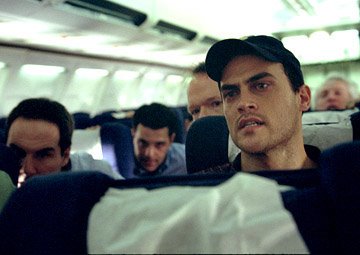


There is something deeply neurotic about a society that needs to recreate tragic moments exactly as they occured in motion picture entertainments less than 5 years after the events themselves. I suppose it's an understandable impulse (more on this in a moment), but I would think it does us more psychic harm than good.

To be honest, we don't do a very good job of remembering September the 11th. We seem to keep making the same mistakes that led up to that horrible day. We continue to ignore the real threats against us while focusing our energies on boogeymen and infighting. We have yet to enact any realistic measures to keep our citizenry safe, spending this money instead of elaborate and failed foreign wars of conquest. The sense is that our government is less organized and less capable of responding to a crisis now than it was five years ago. (Certainly, the response to Hurricane Katrina did not bode well for anyone).

So, we pretty much ignore what's really important about September 11th, and spend our time memorializing, shedding crocodile tears and cynically exploiting the tragedy for personal gain.

To my mind, we shouldn't make a weepy movie about United Flight 93 and how it crashed because of mean old terrorists and how it's so sad because all the people on that plane were so nice and they just wanted to relax and enjoy their airline food without being explodeded. It is sad those people died. I'm sure most of them were good people. And they definitely did do a brave thing, bum-rushing the terrorists and possibly saving the lives of others by taking down that plane before it could be used as a projectile weapon.

But it doesn't serve their memories to make them into posthumous movie characters. (I'm sure their families and friends remembered them just fine without a Hollywood movie, and the rest of us didn't know them in the first place.) It doesn't somehow make their deaths more sensical or worthwhile to see them dramatized. Actually, it serves the purposes of...the terrorists.

For 2 hours, we go into a theater and we become terrorized, all over again. For some reason I'll never understand, we subject ourselves to al-Qaida's evil plot purposefully. We spend $12 on a ticket and then buy popcorn and a soda to compliment the experience. That's the experience of watching this movie...It is harrowing. It is sickeningly unpleasant. It is like being punched in the gut. It's a second victory for those who want to make Americans afraid and upset.

Of course, I have to be fair. United 93 has this effect because it's rather expertly put together. Greengrass' style is far more suited to this kind of realism than, say, the secret agent theatrics of The Bourne Supremacy. There, his jerky camera and his intrusive close-ups and his jumpy, stacatto editing just seemed like unneccessary window dressing, distractions from what might have been an otherwise highly watchable (if cookie cutter) spy thriller. Here, these same techniques, along with largely improvised performances, give the film a rare naturalism. Solid performances from a large ensemble of actors, playing nameless faces in a crowd rather than characters, on top of Greengrass' matter-of-fact documentarian pose, combine to make the hijacking sequence grueling, almost to the point of being unwatchable.

So, yes, it's well made. I find myself making the same argument about United 93 that I made about another extremely well-realized and unneccessary historical recreation, Ridley Scott's Black Hawk Down. Interestingly, these are both films by British filmmakers in which recent, tragic events in American history, both involving failures on the part of the U.S. Military, are recreated in the most exact physical detail possible.

Okay, so here's the case as simply as I can make it, hopefully without getting too overtly Freudian, because I know that's out of fashion these days. These films allow us to recontextualize their respective events. The 9/11 attacks were intensely traumatic. It has justly been called one of the darkest days in all of American history. Of course, among the worst elements of 9/11 was the surprise and the mystery behind it. Anyone who was awake and watching TV that morning (as I was) remembers the baffling nature of these events.

Who is attacking us? Why? Will there be more of these hijackings? Why is the President still reading that book about the goat?

Bin Laden's plan worked because it played on our worst fears, it used our own technology and complacency against us and it kept us guessing. But now, in this film, we get to recreate the events on our own terms. Sure, the Towers still blow up. But this time, we know it's coming, we in the audience. Hell, we even know it's coming before the air traffic controllers do this time. We watch them fumble around confusedly, struggling to come to grips with the knowledge we've already had for years. It's no longer surprising, and thus we feel comforted.

Because 9/11 can't happen twice. It already happened and now we control it and we can do whatever we want with it. It's ours and our definitive film version can now comfortably stand in for unknowable, frightening reality.

That's why, to my mind, Greengrass inserting some real footage of the World Trade Center blowing up is so odious. He confers on to his film that level of reality. He conflates a fictional (if precise) retelling with the real events of that day. He makes United 93 the new "official version," our nationally agreed-upon sense memory of that fateful plane ride.

It's all here in this press photo:
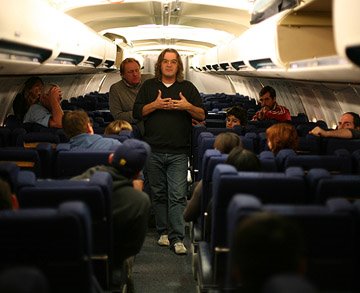


United 93 has now been hijacked for a second time. At first, it was Saudi nationals storming into the aisles with box cutters, slamming down stewardesses and sealing off the cockpit. Now, it's Paul Greengrass, rebuilding an exact replica of the plane in a soundstage and then stomping around, making himself its master. Notice how, in that photo, all the other passengers are obscured by seats. They are the faceless throng, those without identities. The Murdered. But the centerpiece of that image, the subject if you will, is director Paul Greengrass, towering over the heads of those he eulogizes, offering a stylish exercize is self-aggrandizement designed ot highlight his talents as a filmmaker. See how elegantly and cleanly I have reimagined this tragedy? Aren't these swooping, nauseating angles impressive? Don't you admire my subtlety and restraint? I Am The World Trade Center!

I mean, thank goodness we have the director of that Matt Damon sequel to tell us all how to feel about the most discussed and important moment of our young century. We certainly couldn't figure out how to mourn the dead of Flight 93 on our own.

The few actual observations he even bothers to make amidst all the flourishes, the insights about what's actually happening on 9/11 and on Flight 93, are contradictory and confused, particularly when he attempts to extend the scope beyond a straight-forward, interpersonal level. He cuts back and forth between the terrorists praying to Allah in the cockpit and the passengers praying to Jesus in coach. Is he really trying to make a connection between these two groups? "Well, you know, even though those guys are killers and these guys innocent passengers, everyone loves God."

It's not just the egotism of a man who wants to tell this story over again that disgusts me. It's his attitude towards the material. There's a lot of talk in our popular discourse right now about being a "defeatist," of cutting and running from terror or what have you. As you can probably guess, because it's coming out of the mouths of our President, Vice-President and Secretary of Defense, it's all horseshit. Wanting to leave Iraq is being a realist, not a defeatist.

But Greengrass' film does actually strike me as defeatist. It gives in to terrorism. It accepts that we all must live in fear and dismay, that this could happen to us and we should be extremely agitated and disturbed about it. I mean, why else depict it in fetishized and exacting detail, if not to freak everyone out all over again? It happened once to people just like you. Look, they have portable music players and laptops! There are families waiting for them at home! They like a good omelette!

That's not really the message a healthy society would take away from 9/11. Yes, there are evil terrorist bastards who want to kill us. I can fit that neatly into my handy mental spreadsheet entitled "Reasons I Might Die At Any Moment" and go on living my day like normal. I don't panic every time someone mentions colon cancer even though it's extraordinarily frightening and unfortunate. I would definitely lose in a fight against a ninja, but it probably won't ever come to that, so I can watch ninja movies with impunity. Granted, a terrorist attack on Los Angeles is more likely than a ninja attack on yours truly, but still, what happened on 9/11 doesn't need to dominate our daily lives in the way that it has for the past five years.

In a movie that genuinely explored the American experience of being attacked by al-Qaida, all this horrible shit would go down, and then after a while it would be 9/12. People would wake up, get dressed, watch TV, eat breakfast, have sex, drive around, go bowling, shoot up heroin and begin to go about their lives again. It was a weird week, but we got through it, right? And that's the real story. United 93 crashes into a field in Pennsylvania, then some guy takes out the trash and plays Grand Theft Auto for a few hours, then someone in Cleveland robs a convenience store, then an old guy in a nursing home has a heart attack and dies of natural causes. Life goes on.

In Greengrass' film, 9/11 took place in a vacuum. Before, everyone was happy and content. Afterwards...well, there is no afterwards. This awful thing happened. The End. It was a complete anomaly with no context. Some crazy men gathered together one morning and laid out a plan of attack on the United States. Many died, some with bravery and others in silence. These are their stories.
Thursday, August 31, 2006

Todayborday is Labor Day

Yeah, I know, Labor Day's not until Monday. But, you see, I've been tagged. Tasked by PSoTD to discuss what Labor Day means to me as a holiday.

My first thought is...not much. I work retail and have for the bulk of my employed life. If you work in a store, you don't get Labor Day off. In fact, it's usually twice as crowded with doofuses in white shorts and loud Hawaiian shirts fumbling with your stock, hauling around their screaming, grab-happy children and asking questions so stupid, you'd think they were auditioning for the Teen Jeopardy Tournament. So I typically wind up doing more work on Labor Day than I would otherwise, making it not just an empty, meaningless holiday but actually kind of a cruel, federal governmentally-sanctioned joke at my expense.

The whole enterprise just reflects our bullshit society, how only one segment of the population is deemed worthy of attention and respect. If you work in some office as a cubicle jockey, if you're an executive or middle-management type, there's this whole day set aside to commemorate your efforts. "Oh my word, you've been filing? Extensive data entry as part of an ongoing reorganizational project? You had to take an extended lunch meeting at Dorcia and now you don't have time to work out before getting back to the office for your afternoon conference call with Leo in New York? OH MY GOD YOU'VE GOT CARPAL TUNNEL SYNDROME? You need a legal, annual holiday so you can watch more televised athletics!"

But a huge segment of the population - people who also work hard and frequently aren't paid as well for the work that they do - don't ever get Labor Day off. You think all the firemen get to hang out at home with their families and have barbecues? Of course not. Because what if one of those office drone schmucks or mail carriers lights herself on fire during her family barbecue? Someone's got to go put her out, right?

Ditto the cops, the people who work in stores or entertainment venues, bus drivers, flight attendants, soldiers, Hewlitt-Packard's Bangalore Customer Service and Relations call center staff...They don't get shit. When's our holiday? We could call it "WE'RE CLOSED Day." Or, int he case of city employees, "SAVE YOUR OWN STUPID LIFE Day."

I mean, here's the reality: For most Americans, there's only one real holiday, and it comes twice a month...It's called fucking payday, and if they really wanted to "honor the workers," they'd give us another one of those once a year come September. Yeah, but you're right, better to give executives who already get three weeks a year paid vacation on top of company-sponsored conferences and retreats and extra day to hang out with the fam...They've earned it!

I'm all about the spirit in which Labor Day was founded. It's hard to even believe at this point in our history that organized labor and unions were ever respected organizations, considering the smear job corporatists have been running against them for my entire lifetime.

Seriously, since I was a child, the concepts of labor and organized crime have been entirely conflated in my head. Unions are, by definition, corrupt sub-Mafia organizations, so obviously they should be done away with completely. That's the attitude now. Ask someone under the age of...hell, probably 40, about unions and all they'll come up with is "Jimmy Hoffa" and "lazy Teamsters." Rich Americans have convinced everybody else that they deserve to be poor and they deserve to be downtrodden and that to unify and fight back is a pointless, futile pursuit. The only hope is to lie and cheat your way to the upper eschalon so you can begin shitting on the little guy. And the message has stuck cause rich white guys have a kickass PR Department.

And that's why Labor Day itself has become a cruel charade. It no longer exists to "honor the workers" or to commemorate any great gains made by the working class. It's just another hollow yearly summer ritual - the last insufferable pool party before the insufferable kids return to their prisons reformatories conformism factories schools for another round of consumerist brainwashing.

Perhaps This is Why Keith Cannot Be Killed By Conventional Weapons

From Keith Olbermann's show tonight comes this amazing commentary. I swear, this is the best takedown of Donald Rumsfeld I've seen on television. Ever. Bra-fucking-vo, K-Greasy. Way to be.


You should really watch the whole thing, but here's a highlight from the complete transcript at Keith's Blog:

That, about which Mr. Rumsfeld is confused is simply this: This is a Democracy. Still. Sometimes just barely.

And, as such, all voices count -- not just his.

Had he or his president perhaps proven any of their prior claims of omniscience — about Osama Bin Laden’s plans five years ago, about Saddam Hussein’s weapons four years ago, about Hurricane Katrina’s impact one year ago — we all might be able to swallow hard, and accept their “omniscience” as a bearable, even useful recipe, of fact, plus ego.

But, to date, this government has proved little besides its own arrogance, and its own hubris.
Mr. Rumsfeld is also personally confused, morally or intellectually, about his own standing in this matter. From Iraq to Katrina, to the entire “Fog of Fear” which continues to envelop this nation, he, Mr. Bush, Mr. Cheney, and their cronies have — inadvertently or intentionally — profited and benefited, both personally, and politically.


And yet he can stand up, in public, and question the morality and the intellect of those of us who dare ask just for the receipt for the Emporer’s New Clothes?

In what country was Mr. Rumsfeld raised? As a child, of whose heroism did he read? On what side of the battle for freedom did he dream one day to fight? With what country has he confused the United States of America?

Read the whole speech. It's thoughtful and it actually includes real historical information and facts. Can you believe this thing aired on MSNBC?

[My thanks to TRex at the essential Firedoglake for the link.]

Wednesday, August 30, 2006

The Unrentables: Jake Speed

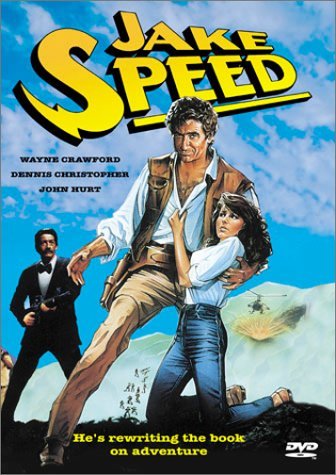
With the surname Speed, you kind of have to give your kid a cool name like Jake. Francis Speed? Not so much. Todd Speed? Umm..not quite. But Jake Speed, yeah...Now you've got something. Two years after Robert Zemeckis' Romancing the Stone, some B-movie and direct-to-cable filmmakers thought..."Why not me?" And now, 20 years later, I have to suffer the consequences.

THE UNRENTABLES: VOLUME #3
Jake Speed
Director: Andrew Lane
IMDB Rating: 4.6


The name's Jake...Speed Jake. No, wait, I messed that up.

We open in France, where a couple of thugs rush into a slumber party and start beating the hell out of random women. Two girls escape through the streets of Paris to the strains of absolutely abysmal '80s New Wave rock, but one, a blonde in a UCLA sweatshirt, is captured soon after.

It turns out that this last girl, Maureen (Becca Ashley), has a wily old senile grandfather (Leon Ames) with a plan...He wants to phone up pulp novel hero Jake Speed to save his beloved granddaughter. The cantankerous old guy's full of helpful advice like that. "Call a fictional character for help! Nuke the bastards! The trail's gettin' colder 'an a witch's tit!" He's not unlike Donald Rumsfeld, really.

Maureen's siter Margaret (Karen Kopins) bails on a neighbor's party filled with Furries - everyone's dressed as their favorite animal - to sit in her room and cry about her lost sibling. Wah...someone kidnapped by sister in France...Wah...I'm a featured player in a movie called Jake Speed earning second billing after some dude named Wayne Crawford! (This whole subplot feels ripped off from Ghostbusters. Margaret's nerdy neighbor and his lame party is very reminiscent of Sigourney Weaver's nerdy neighbor Rick Moranis and his lame party.)

Margaret is contacted by an assistant to Mr. Speed (Dennis Chrstopher), who turns out to be a real guy. Co-writer/star Crawford kind of looks like the love child of Bob Dylan and Dustin Hoffman. So, you know, the ideal action star. Unfortunately, he's apparently inherited the acting talent from Bob's side of the family. Speed tells Margaret that her sister's been kidnapped by white slave traders in Africa.

"Are you ready for an adventure?" Speed's assistant asks. That's the kind of question you only ask if you're already sure to get a yes. How embarrassing to contact a mysterious woman in a bar, as her if she's ready for an adventure and then hear back that she really just stopped by to meet up with some friends and have a Cosmopolitan, and she's ready to head home now.

Margaret's friend at this point brings up an excellent point. If you were randomly contacted by a stranger who claimed to be a character in a series of popular novels...would you just believe him or her right off the bat?

"Hi, nice to meet you, I'm Jack Ryan. I believe you may have read something about me? I.D.? No, I don't have any I.D. I'm a secret agent. Just call Tom Clancy! He'll tell you..."

But Margaret doesn't want to listen to "reason." She's not interested in whether the man she met is "really Jake Speed" or "some insane sex offender who is flying her to Africa so that he can enslave her nude in a bamboo cage to be jabbed and prodded repeatedly with crudely-sharpened spears until such time as she is fed to an oversized ape in order to appease the Monkey God." Come on! It's time for an adventure!

Suddenly, we're in Africa, which in the world of the movie consists entirely of small dusty villages in which small children try to sell you watermelons. And of course, the whole place is poised on the brink of revolution!

Prissy Margaret wants to get started looking for her sister, but of course that silly rapscallion Jake just wants to play poker with the natives and dick around. If he didn't want to be bothered finding her sister, why fly her to Africa in the first place? She was all set to believe he was fictional. Speaking of fictional characters, the movie does this really annoying thing where it keeps referencing other mythical pulp adventure heroes. There's throwaway allusions to Remo Williams, Doc Savage, Allan Quartermain...Who does Lane think he is? Alan Moore? It's like he wants desperately to be clever but just can't manage to actually get there.

From here on out, the thing starts playing like a dinner theater production of Indiana Jones. Unfortunately, they're going with the Kate Capshaw-inspired love interest character and the part of the hero is being played by some hapless, squinty bozo. Oh, and the kitchen just ran out of Salisbury Steak.

"Guess I better shower first, huh?" she pouts, arguing that Jake wants to sleep with her more than he wants to find her sister. "Good idea," he responds. "Let's shower together!" This is what passes for banter in Jake Speed's world. The novels about him must have been written by Bill O'Reilly.

During a firefight in the street, Jake smashes his jeep into a shop window. The resulting stunt man shot is perhaps the most hilarious thing I have seen in an Unrentable yet. The guy looks nothing like Wayne Crawford. He kind of looks like Ed Asner. I'm not sure an infant would be fooled by this effect. The other characters in the film seem confused when it happens.

Leaving the car accident, Jake and his love interest head over the hottest club in town. As if that opening New Wave song weren't bad enough, at about the halfway point, musicians at the club are recreating that song "Maniac" with authetnic native African instruments. Getting into a brawl shortly thereafter, Jake becomes quite possibly the first hero in a PG film ever to say the line "I'll tear off your head and shit in the hole." He then threatens to sell Margaret into sexual slavery, until she gets out of it by claiming to have a variety of STD's. Hilarious.

Barely escaping with their lives following a near-fatal breakaway glass incident, Jake and Margaret take off running through a variety of cheap sets. People keep running up to them and trying to shoot or explode them, but I couldn't figure out why. They haven't done anything. They're not any closer to finding Maureen siter. It still hasn't even been explained how Jake knows Maureen was taken by white slave traders from Africa in the first place. All we saw was that she was kidnapped in Paris. Wouldn't this occur to Margaret to ask at some point? When they weren't being randomly shot at, perhaps?

At about the hour mark, I've begun to realize why Jake Speed feels so boring and pointless. It has no story or logical progression. We just follow around Jake, who always seems like he knows what he's doing, as he zips around Africa having random side adventures. There are no clues, there is no bad guy, nothing of note happens. Jake just wanders into a barn or a hotel or a village somewhere, Margaret starts to have a panic attack, then black guys with guns show up and a lot of squibs go off. Then the whole thing repeats itself.

Jake and his associate keep implying that their present adventure will soon after become its own book. Sort of a Jake Speed novelization-within-the-movie meta kind of thing. I can't imagine what reading a book with this story would be like.

"Hey, let's wander around this inexpensive set for a little while, Margaret."

"Okay, Jake. I hope no squibs go off while we're down there."

Margaret and Jake walked slowly down the alley. Then a fat guy ran after them with a shotgun. He seemed to aim and fire the gun properly, but Margaret and Jake were magically unharmed. Then they kept running, then it was poorly shot and dark for a second so it was unclear what was happening, then there were some explosions. Jake seemed vaguely uninterested.

So, Margaret ditches Jake and his life partner in the desert and hauls ass to the British Consulate, hoping to get the hell out of Dodge before the peculiar sporadic revolution really gets going in earnest. There, she finds out that "Jake" and "Desmond" are really notorious con artists. I know...It's shocking that they didn't turn out to be those made up guys. Shocking.

"I can't believe it," Margaret says. "They were really nice." Yeah, all they did was bring you to Africa under false pretenses and then continually place you in the immediate path of exploding tanks. She's a pretty easy sell on what constitutes "being nice." I bet she voted for Bush both times.

For God knows what reason, Margaret decides to go back to Jake and the Not Terribly Fat Man, somehow finding their secret hideout in the desert despite only having been there once before and afterwards getting lost in the desert. (Peculiar, as well, that their hideout is made entirely from lumber, despite the fact that it's in the middle of the goddamn desert and there's no trees around. Did they ship in all the materials from Canada or something?

Unfortunately, the evil British consulate guys tail Margaret and thus find their way to the ever-elusive Jake Speed. Curses! His brilliant plan to wander around aimlessly and not find anoyne's sister has been foiled! Once again! He's so upset, he even calls one of the goons "ass ears!" Oooh, take that, evildoer! You'll rue the day you tangled with the maniacal wit of one Mr. Jacob Speedowitz! (I'm just assuming that's the real name. It could also be Speedberg or Spederman.)

Finally, FINALLY, with 15 minutes in the film remaining, John Hurt shows up as the actual bad guy, the slave trading bastard Sid. He's selling off the lovely and angelic Maureen to two creepy Arab guys in fezes. (How else would you know they're dirty Arabs?)

Hurt's trying his best, but most of the lines he's been given don't make any sense at all.

"What have you done with my sister," Margaret sneers.
"Relax, toots," Sid replies. "We should be feeling so good!"
"You scum-sucking pig!" Margaret responds.
"How old are you pussycat," Sid retorts (?)

What a comeback. Sid, you are the king.

I will say this...Hurt's got one sinister-looking creepy grin going. It makes several featured appearances during his brief scenes.

So he ties up Jake and Margaret, knotting the rope conveniently in the crotch so we can get a cheap blowjob joke. Whooo-eee. With that bit of business on top of some bad Arnold Schwarzenegger impressions and shenanigans concerning Sid's wacky gay assistant (Maurice!)who's always trying to clean the rug...Let me just say, the last 10 minutes of this bad boy is a regular cavalcade of comic pranksterism. Like Porky's 2, just not quite as arty.

Hurt closes things out with the film's best monologue. Okay, the film's only monologue. "I'm a bad guy, Jake. I do anything I want. I lie. I cheat. I steal. I kill." So, I guess there are two characters in the film based on Rumsfeld. Maybe the original ending was that John Hurt and the Grandfather are the same person, and they just reshot the scene because it was too confusing.

Tuesday, August 29, 2006

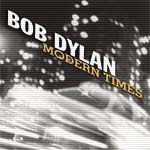
Bob Dylan's "Modern Times"

A new Bob Dylan album is an event. Maybe not every Bob Dylan album ever. There's some good '80s discs, but I wouldn't say that any time Bob released an album during my youth, it was a cause for excitement. (Not that I would have been aware back then either way, the bulk of my musical tastes being defined by my mother's tape collection...A lot of Sting, Genesis, Peter Gabriel, Whitney Houston, Elton John and Terrence Trent D'Arby...)

But America's greatest living songwriter has been on a role lately. His well-received autobiography Chronicles and Martin Scorsese's extensive PBS documentary No Direction Home have cemented his position among the great American icons of the 20th Century. With the universally lauded Time Out of Mind and the breezy, old-fashioned Love and Theft, as well as a near-constant touring schedule, he's making music more relevant and compelling now than any time since the 1970's.

So while Modern Times, Dylan's 31st or 44th album depending on how you count, doesn't break any new ground or indicate any sea change in his sound, it's nonetheless a terrific, stirring and accomplished collection of 10 new songs. Absolutely 100% worth the wait, and almost assured a spot on my eventual Favorites of 2006 list.


Amanda Petrusich at Pitchfork calls the album a "companion piece" to Love and Theft, and in terms of the album's production and style, that's absolutely accuarate. Like that 2001 effort, Modern Times is an incredibly tight, well-played collection of throwback 1950's rock-and-roll songs. None of the guy's old folk-rock trappings are evident in the new material, none of the spazzy surrealism that marked his classic '70s efforts. He's turned back the dial to the era of his own youth, experimenting in the sounds that first inspired his own generation to explore this music.

Many trakcs are straight-up rockabilly, at times eerily reminiscent of Chuck Berry or Carl Perkins. But other early branches of rock music make brief appearances - lilting ballad "Spirit on the Water" reminded me of that old George Jones country-rock tune "She Thinks I Still Care" and "Workingman's Blues 2" sounds exactly as you'd think a song named "Workingman's Blues" would sound.

Two of the tracks are new arrangements of traditional songs. In "Rollin' and Tumblin'," a driving adaptation of a song previously recorded by Muddy Waters, Dyaln contemporizes some of the lyrics. ("Some lazy slut has charmed away my brains.") The stomping drum running behind Dylan's wheezy vocals on the 19th century ballad "Nettie Moore" seems to signal some impending apocalyptic doom. When it finally lets up during the sweeping chorus, it's the most beautiful moment on the album.

There's a interesting, anachronistic level running through Modern Theft that differentiates it somewhat from its predecessor. Opening crowd pleaser "Thunder on the Mountain" references Alicia Keys, indicating there's at least one modern artist who has caught old Bob's attention. I'm fairly certain the tremendous "The Levee's Gonna Break" conflates Dylan's life story with a hurricane-ravaged New Orelans. (Seriously!)

If it keep on rainin'
The levee gonna break
Some of these people gonna
Strip you of all you can take

I can't stop here
I ain't ready to unload
Riches and salvation might be
Around the next bend in the road

Audacious? Yes. A bit self-obsessed? I suppose...But that's why he's Bob Dylan and you're some schmo reading my blog. No offense.

The best track might be the epic closer, "Ain't Talkin," kind of an dystopian Ennio Morricone spaghetti western riff in which Bob is "walking through the cities of the plague." It's nearly 9 minutes long and completely awesome.

Ain't talkin', just walkin'
My mule is sick, my horse is blind
Hot burning, still yearning
Thinking 'bout that gal I left behind

Sweet.

The Loneliness of the Long Distance Nutter

Angry, bloated, alcoholic loser Christopher Hitchens appeared on Bill Maher's show this week. It was a considerably humiliating display. They really shouldn't put this guy on TV any more. Not because he's persuasive in any way, but just because it's sad and pathetic. Like those old Judy Garland TV shows where she's singing duets with Mel Torme and doing mime routines set to "Send in the Clowns" on a fifth of gin and a mason jar full of barbiturates.

When he wasn't just busy pretending to be a Middle East expert or flipping off the audience, Hitchens was lying about Iranian President Ahmadinejad. Check out the gruesome spectacle here, if you must.

So, okay, before I go any further, I'd like to take out a little Troll Insurance...I'm sure some snarky neocon will show up here before long to accuse me of having a man-crush on Mr. Ahmadinejad, so let me just say that, for the record, I don't think he's a great guy or a hero or anything like that. (Now, Hugo Chavez...) Maddy strikes me as an authoritarian scumbag. You would think he and Bush would be able to work out a compromise as they have so much in common.

Everyone clear? I don't want to have to explain this easy-to-understand point in the comments. (1) Ahmadinejad is probably a bad guy and (2) we should under no circumstances go to war with his country.

Okay, on to Christopher Hitchens and his booze-fueled half-truths...He said on Maher's show, as part of a general case against Islamofascimomuslamonazis, that Ahmadinejad wanted to "wipe Israel off the map." He repeated this claim forcefully. Iran intends to destory Israel. Fact!

Unfortuantely, as Juan Cole pointed out months ago when Hitchens first started making this claim, it's totally bogus. Here's what the guy actually said:

The phrase he then used as I read it is "The Imam said that this regime occupying Jerusalem (een rezhim-e ishghalgar-e qods) must [vanish from] from the page of time (bayad az safheh-ye ruzgar mahv shavad)."

Ahmadinejad was not making a threat, he was quoting a saying of Khomeini and urging that pro-Palestinian activists in Iran not give up hope-- that the occupation of Jerusalem was no more a continued inevitability than had been the hegemony of the Shah's government.

Whatever this quotation from a decades-old speech of Khomeini may have meant, Ahmadinejad did not say that "Israel must be wiped off the map" with the implication that phrase has of Nazi-style extermination of a people. He said that the occupation regime over Jerusalem must be erased from the page of time.

So, he never said anything like "wipe off the map." He used an idiomatic phrase that roughly translates as "vanish from the page of time." That's a little different, no? It doesn't so much indicate a threat of physical violence so much as a recalibration of power in the Middle East. Every leader rallies his country by promising a recalibration of power in their favor. What's he going to say? "I intend to be weak and ineffectual! Iran will never again be a player on the world stage!"

In fact, since early this year when this meme started popping up in the media frequently, I've been trying my best to follow the situtaion with Iran. (I don't always succeed cause, let's face it, I'm kind of lazy). I'm pretty sure that's where these desperate warmongers are turning next. (Although Max Boot here pines openly for a war with Syria...These guys are like kids in a candy store. They can't decide which sovereign nation they'd like to decimate next!)

Now, I might have missed this speech, but I have never heard Maddy directly threaten violence against Israel or the United States. Ever. If I'm wrong, someone direct me to the article. That's always the media's analysis - well, here, he's openly declaring war on the West. But in my experience, it's never what he actually says.

The guy talks tough, no doubt about it. But didn't we start it up with him? Not the other way around? We were the ones declaring his country part of an "Axis of Evil," right?

I bring this up today because the guy gave a press conference yesterday that's reported on here by Reuters.

Iranian President Mahmoud Ahmadinejad voiced defiance on Tuesday as a deadline neared for Iran to halt work the West fears is a step toward building nuclear bombs, and challenged US President George W. Bush to televized debate.

Ooohhh...Defiance. When I was a kid, during the Cold War, we expected world leaders to respond to us with defiance. Now it's a call to arms.

In a press conference, Ahmadinejad condemned the US and British role in the world since World War II but made no direct mention of the international nuclear confrontation.

“I suggest holding a live TV debate with Mr. George W. Bush to talk about world affairs and the ways to solve those issues,” he said.


That monster! He wants our president to go on television and defend his own actions! Forget everything I said...Bomb that Motherfucker! That's the most un-American shit I've heard since the latest Dixie Chicks single.

The Iranian president said the creation of the State of Israel was based on a “myth,” alluding to past statements he made on the Holocaust.

Unfortunately, I don't have a translated copy of the speech, so I can't tell what the context was here. But just because he's saying that some aspect of the creation of State of Israel is based around a myth doesn't mean he's denying the Holocaust. (Yes, I know, he's said that the Holocaust was exaggerated in the past...That's one of the reasons I called him a bad guy earlier...But being a Holocaust denier doesn't make someone an immediately viable target for US military action. Hell, it doesn't even prevent someone from becoming an award-winning filmmaker.)

I'm just saying that reporter Dudi Cohen is conflating what could easily be seen as two separate, independant claims. Perhaps Ahmadinejad means that the concept of Israeli historical claims on the city of Jerusalem are based on a myth. I wouldn't really put it that way, myself, but I pretty much believe the same thing. I mean, Jews have no more concrete, historical claim on Israel than White Europeans have on the United States. I mean, yeah, we're here now...But there were other folks around when we got here. And the Bible is not exactly a realistic way to go about divvying up the planet. You're better of using Sid Meier's Civilization to determine borders and international boundries.

There are two separate issues here...The Holocuast provided the inspiration for a Jewish homeland, but has nothing to do with locating that state in a place previously occupied by Arab Muslims. Jews needed an international safe haven as a bulwark against future genocide attempts. Fine. But why does it need to be in Jerusalem? I hear Amsterdam is a lot of fun...Why not settle there? Dude, legal weed!

This isn't really the biggest issue I have with this article, but it does strike me as a little deceptive. I have no way of knowing if Ahmadinejad was talking about the Holocaust at all. An actual quote would have been nice, instead of quotations around the word "myth" and Cohen's conjecture.

A few days ago Ahmadinejad inaugurated a plant for the production of heavy water located in Arak, some 190 kilometers southwest of Tehran. The president made it clear that Iran would not ‘give up its right to develop its nuclear program,’ adding that the program does not pose a threat, not even against Israel.

“We do not threaten anyone, even the Zionist regime, which is the enemy,” he said.


This statement is far more mild than what comes out of our own White House. We threaten countries all the time. In fact, we've already threatened Iran openly. (The U.S. has expressed a possible desire to go around the U.N. Security Council militarily should the body refuse to place restrictive economic sanctions on Iran.)

Washington, which already imposes unilateral sanctions on Iran, has suggested it could consider action outside the Security Council with other like-minded countries.

This is the classic Bush-Rove war instigation tactic. It's the exact same strategy they used to push the Iraq War on an unsuspecting nation. Spend months gearing everyone up for war, then pretend that the person you keep threatening to attack is on the offensive. "All we did was repeatedly call out Ahmadinejad, promising to bomb his country just like we did the country right next door, and now he's getting all angry! Can you believe this guy?"

Look, I'm not saying I have the solution to this entire problem. I'm just saying that we shouldn't let the guys who created the problem make it worse because we're afraid. I don't love the idea of a nuclear Iran. But I know for a fact that us going over there and starting another war won't make things any better. Look at what the last war did!

The Iranian democratic movement had been making gains in the years leading up to our failed Middle East adventure. They still seemed poised to make some kind of impact in that country's political landscape. (Rallies for progressive candidate Mostafa Moin drew as many as 10,000 people in 2005).

In fact, Bush has few bigger fans than the radical Iranian "Death to America" clerics. He might just salvage repressive authoritarianism with all his threats and bluster. So, again, I'm not saying the situation with Iran gives me no pause. I'm saying that it would be better to foster a progressive, democratic grass-roots movement in the country rather than blowing everyone up and then fighting an insurgency for several years. Becuase we're clearly not very good at actually exporting this democracy thing. It's much easier for us if it's arleady there to begin with.

Future Unrentables: The Sentinel

The Sentinel is exactly like those overblown action movies made for the USA Network or TNT. Add in a few breaks for Axe Body Spray commercials and a tiny, half-visible station identification logo in the lower right hand corner and Clark Johnson's film would perfectly replicate the experience of watching late-late-late night television due to insomnia/depression/cocaine addiction.

This is straight-up television-style storytelling, by which I mean it looks cheap and tends toward uninspired melodramatics in place of anything interesting or cinematic. Johnson has worked mainly in television (he currently directs episodes of "Sleeper Cell," "The Shield" and "Law and Order: Special Victims Unit"). His only previous feature film was the woeful 2003 adaptation of the S.W.A.T. TV show, memorable only for Oliver Martinez's bellicose offer from the trailer - "100 million dorrars!"

As in that film, Johnson directs completely bland, anonymous sequences and then, ever 20 minutes or so, throws in something visually jarring and elaborate, to remind you that you're watching a movie and not a "24" rerun. After a dull opening montage of Secret Service agent Michael Douglas arriving for work, Johnson swings upward for a long CGI tracking shot across the roof of the White House. Not only is the entire set-up totally pointless, but he does a poor job of covering the cuts in what is clearly intended to look like a single shot. Maybe the "La Femme Nikita" TV spin-off (which aired on...wait for it...the USA Network!) was a more appropriate fit for this guy's talents...


It's not only Johnson's fault that The Sentinel veers wildly between boring, stupid and stutifyingly boring. George Nolfi's clumsy script, literally teeming with bad political thriller dialogue and Secret Service jargon, isn't doing anyone any favors. The writing frequently reminded me of those really awful military techno-thrillers that creepy old white guys write for other, even creepier old white guys to flip through while on the can.

"Stock Smithson entered the coordinates into his jiggerator and waited. Once more, he realized he should have trusted his gut. The launch codes and the microlaser were in the possession of Torvald Hammsher, former Danish Resistance Front defector, ex-assassin for the Church of the Zoroaster and all-around son of a bitch. His only hope would be to hijack the XRP-98, rip apart the particle-thermalized security interface and haul ass to Turkmenistan. Provided it wasn't already too late."

So, okay, fine, it's not entertaining. But it is based on a novel (by Gerald Petievich), so it should at least have a decent twist ending. Right? Right?

As it turns out...hell no. Using the process of elimination, it's pretty simple to figure out the bad guy within the first ten minutes. I won't blow it here, in case any of you have any desire to see this shitkicker and are not terribly clever. But I will say this...Only one character doesn't ahve to face suspicion and scrutiny for the film's central crimes. This person is your villain.

I say "central crimes" because, unlike the clearly inspirational In the Line of Fire, an attempted assassination on the President is only one of the movie's many subplots and tangents.

Secret Service agent Pete Garrison (Michael Douglas), like Clint Eastwood's agent before him, became a legend after saving the life of a sitting President. (He's the one who dove in front of Reagan, thereby ruining John Hinckley Jr's chances with Jodie Foster.) Now, he spends his days teaching the next generation how to protect the President. That is, when he's not schtupping the First Lady (Kim Basinger, trying to channel HilRod) on the side.

This novel must have been written with Michael Douglas in mind for the inevitable film version. Who else would be believable as a retirement-age Secret Service agent giving it to the President's wife? He's the ideal combination of capable elder and perv. Unfortunately, this means that the driving romantic relationship in the film is between Michael Douglas and Kim Basinger. Someone might want to do something about that...I just don't think there should ever be a love scene involving actors whose combined ages equal more than 100. Really, I think 80 ought to be the rule, with a few notable exceptions. I know Kate Bosworth wouldn't be realistic as the First Lady, but cut us a break here. You've got Eva Longoria in the movie. Let's put her to some actual use!

Anyway, after about 45 minutes of general mucking-about and pseudo-intrigue, the plot kicks into motion. Someone's planning to kill the president, there's a mole inside the Secret Service and Garrison's being set up to take the fall. Heading up the case is the extremely Jack Bauer-esque David Breceknridge, coincidentally played by TV's Jack Baeur, Kiefer Sutherland. I really hope Kiefer enjoys playing this elite hardass character, because I predict he'll be doing a lot of it over the next few decades.

Along with his sexy new trainee Jill (desperate housewife Eva Longoria), David becomes quickly convinced of Garrison's innocence. The movie kind of shifts at the halfway point from a rip-off of In the Line of Fire to a rip-off of The Fugitive, but it lacks that film's kinetic action, funny supporting characters or...well, anything good or entertaining. The trio of stars - Douglas, Sutherland and Longoria - not only lack chemistry together, but seemingly lack any sort of interest in this material. Douglas is on total autopilot, surprising when you consider that he also produced the film. Sutherland, as I said, falls back on the same steely terrorist-loathing Bauerisms America has come to know and love. And Longoria looks great, but that's all she gets to do. The character's so unneccessary, she might as well be a deaf-mute.

A couple of interesting (not entertaining, but at least interesting) choices Johnson makes...

- Garrison, nominally the film's hero, earns the most downbeat conclusion for any American film character this year. He's methodically stripped of everything during the movie, despite clearly not being guilty of any criminal intention against the President. No fair!

- Longoria and Sutherland are clearly set up for a romantic subplot but it never happens. Possibly because they'd need to pay her more if she actually had any lines.

- The film's set in Washington but doesn't even pretend to have actually been shot there. Eventually, as if admitting his poorly-orchestrated fraud, Johnson officially moves the action to the cheaper Toronto.

- President Ballantine is portrayed by David Rasche, TV's Sledgehammer. (You see what I mean about this being a 2 hour TV show and not a movie?) It is incredibly difficult to look at Rasche and not think about his greatest role. So, when they had to decide what his Secret Service nickname was going to be...why not make it "Sledgehammer"? Instead, Nolfi and Johnson go with "Classic." Waste of a perfectly good comic set-up right there, if you asked me. And, let's face it, if you've read this far into this review, you pretty much have.

- The "villains" behind this attempt on the President's life strike me as neither reasonable nor menacing. We're told that some kind of drug cartel wants Ballantine dead, but surely there would be a better way of going about their criminal business than killing the President of the United States, right? I can't imagine a scenario by which a drug kingpin would be forced to order a hit directly on the Commander-in-Chief. It just seems really difficult and expensive and risky. More trouble than it could possibly be worth.

Which is also a pretty good summation of the experience of watching The Sentinal. 108 minutes of considerably difficult work for no payoff. Look for it in a previosuly viewed bin at your local video store this time next month...

Monday, August 28, 2006

Talladega Nights: The Ballad of Ricky Bobby

I know, I know...I'm about three weeks late. Everyone with even a remote interest in Will Ferrell or NASCAR racing or Hollywood summer comedies has already seen Talladega and made their opinions known. But I'd just end up reviewing the thing when it came out on DVD anyway, so let's just do this thing and get it out of the way now...

I'm not sure I've ever seen a more testicle-obsessed movie than Talladega Nights. Nearly every scene begins and ends with references to Ricky Bobby's balls. When will he grow a pair? Will he get them back after a humiliating defeat? Do his peaches, in fact, have any hair? In the twisted mind of NASCAR champion Ricky Bobby (Ferrell), balls equal manliness which equals success which equals greatness. Happiness is a warm crotch.

Bobby's the latest version of Ferrell's "insane idiot" persona. In fact, he's almost the exact same character as Ron Burgundy, the news man that Ferrell played in his last team-up with co-writer/director Adam McKay. These are two pompous and egomaniacal man-children whose brash (and juvenile) machismo hides vulnerable, sensitive little boys. News anchor Ron Burgundy obsessed over his hair and, of course, stock car racer Ricky Bobby obsesses over his...you get where I'm going with this...

In fact, Talladega is pretty much just a do-over of Ferrell and McKay's prior film. They've even given them parallel sub-titles to tip off audiences to the game:

Anchorman: The Legend of Ron Burgundy
Talladega Nights: The Ballad of Ricky Bobby

Both titles imply that these stories center exclusively around the Will Ferrell characters. It's his legend and his ballad. This is blatantly fraudulent advertising. Talented and energetic though Ferrell may be, without all the other enthusiastic and funny people filling out the casts of these movies, they'd be unwatchable. They're predictable and repetitive and they rely on non-sequiteur and cheap irony in place of actual jokes. They're two hour collections of jokes about balls, obvious pop culture references, lame screenwriting conventions from the '30s and endless, endless product placement.

But what can I say? I laughed at Anchorman and I laughed even harder at Talladega. Ferrell and McKay may not have any new tricks up their sleeve this time around, but they know how to give funny performers enough room to bring the funny. It's not much, but it's good enough for August.


For a guy who always plays self-aggrandizing assholes who compulsively hog the spotlight, Ferrell's a generous, giving actor. This is undeniably his (forgive me) vehicle, a Will Ferrell comedy featuring the guy in nearly every scene, but Ricky Bobby is hardly the film's lone insane idiot. Here's an incomplete list of the veteran comedians and character actors appeaing in the film:

- Jane Lynch, of Christopher Guest's improv comedies and 40 Year Old Virgin, makes the most from a small role as Ricky's mom
- Gary Cole, the hideous pig of a boss from Office Space, has the best role in the entire film as Ricky's loutish, drug-addled, alcoholic and neglectful father
- John C. Reilly plays Cal Naughton Jr., Ricky's partner and then rival, as a more good-natured and less perverted version of his character from Boogie Nights
- David Koechner, a veteran of "Saturday Night Live" and Anchorman, has a few lines as a pit crew member
- Ian Roberts of Upright Citizens Brigade plays another pit crew member in a glorified cameo
- Ferrell's SNL cohort Molly Shannon does her patented loud, obnoxious oaf routine
- Ali G/Borat/Bruno personifier Sacha Baron Cohen portrays Ricky's gay French antagonist
- Andy Richter appears as the villain's saucy boyfriend

Other actors with less notable resumes do funny work as well. Amy Adams proves her nominated role from Junebug wasn't a fluke, Michael Clarke Duncan is actually funny on occasion as Ricky's pit crew boss and the brilliant duo of Houston Tumlin and Grayson Russell give two of the most hilarious child performances I have ever seen as Ricky's spoiled, aggressive sons. (They're named Walker and Texas Ranger, or T.R. for short.)

These performances make the movie watchable. Cohen creates another wholly original and endearing character using nothing but exaggerated body language and a silly accent. His calculating and smug Jean Girrard bears little similarity with any of his other well-known characters. This movie's nowhere near as brilliant as his feature-length showcase, Borat, which opens this November, but it's still a delightful, chameleon-like turn garnering several of the film's biggest laughs.

With a less imaginative or more disinterested group of collaborators, I have no doubt Talladega Nights would suck the balls it can't stop referencing. Most of the actual jokes fail to connect. Some are even kind of embarrassing. (Scenes featuring Greg Germann as a brown-nosing NASCAR executive and Shannon as his drunk wife go absolutely nowhere and are painful).

I'd say there's, in general, far less funny material here from the outset than McKay and Ferrell devised for Anchorman. Working with the exact same format - a very bad winner starts to lose at life and then realizes what an asshole he has been - they don't seem to really have the feel for the world of stock car racing that they exhibited with the world of local '70s news shows. (Though there are some fall-down funny scenes, nothing approaches the inter-network news battle royale from Anchorman for sheer manic audacity.)

Aside from a terrific sequence in which Ricky's Dad Reese devises challenges to reinvigorate his son's racing career, by far the tightest and most inspired comedy in the film, McKay and Ferrell's script has a rambling, aimless feel. It's nice that they don't rush to some inevitable, happy conclusion, keeping things loose enough to allow the actors room for improvisation and funny little character bits, but the final ratio of scenes that work vs. scenes that aren't funny and make no sense only works out to about 60-40.

All too often, McKay falls back on tearing down the fourth wall and ironically comment on the fact that "it's all a movie." Occasionally, it works and gets a laugh, particularly when mocking the rampant product placement that has become a NASCAR trademark and accordingly permeates this film. The climactic chase scene may be the first in cinema history to actually make time for a commercial interruption. Once or twice in a whole film is fine for self-referential humor, but these kinds of jokes come to feel obvious and gratuitous really fast. Go for more than 5 or 6 and it's like you're trading in the integrity of the film as a story in exchange for a cheap laugh at the expense of sports movie conventions.

I'm not sure why Ferrell and McKay opt constantly for this sort of easy, audience-flattering irony. There's enough going on in Ricky Bobby's story to propel a 90 minute summer comedy. (If there wasn't, I'd say they should have come up with a richer premise with more comic potential. But, come on, there's totally enough jokes to make about NASCAR to fill 90 minutes. It's NASCAR!)

Specifically, Ricky learns that his overzealous, boastful, results-focused and very American pride caused him to lose everything. Eventually, he learns that the world might be a better place if we could all be just a little bit more...French. That is, reserved, open-minded and sophisticated. How does Ricky demonstrate how much he has learned? By deeply kissing another man before a stadium crowd for the benefit of a national audience. Surely this turnaround could have inspired some more examination.

(Also, I would not mind seeing more with Ricky interacting with his foul-mouthed sons. I'm telling you, these two kids are comic dynamos, little monsters who suddenly must confront head-on the horrors of Granny Justice.)

My point is, the best moments in the film are all about the characters, several of whom are creative enough to support an entire movie. Cole's defiant beer-swilling loser should get a spin-off movie in which he joins forces with Billy Bob Thornton's bitter alcoholic clown from Bad Santa.

As in Anchorman, the movie favors the element of surprise over believability. Situations are allowed to play out in terms of what will be the most funny and revealing, as opposed to what makes the story move forward or what makes the most sense. This kind of willfully ridiculous surreality gives the writers and actors the freedom of fill in the world of Talladega with some memorably bizarre little details.

In perhaps the movie's absolute best moment, Cal unburdens hismelf, reavealing a closely-kept secret from his past to a comatose friend. Bloopers running over the closing credits imply the actual scene is only one possible take out of many that Reilly filmed. Were these pre-written scenarios on which he would riff? Was he making this stuff up as he went along? Did Ferrell and McKay actually script out this whole monologue verbatim? I'm not quite sure, but regardless, it's one of the single most hilarious scenes of 2006, hands down, end of story.

Saturday, August 26, 2006

Friends With Money

Olivia (Jennifer Aniston) left a teaching gig at a snooty Santa Monica private school, we're told, because she got tired of being the only poor person around. Now she cleans other people's houses for $50 at a go, smokes a lot of pot and stews about her wealthy friends who don't appreciate her suffering. Every time they mention an upcoming sale on cashmere sweaters or an expensive fundraiser for ALS, she rolls her eyes and rubs her shoulders and makes known her bitter disdain for their lazy, bourgeois insensitivity.

That's not to say that Olivia's friends are blameless. Uber-rich stay-at-home Mom Franny (Joan Cusack) offers to pay for her friend's psychotherapy bills, but not for Olivia to take classes to become a personal trainer. Chronic depressive Jane (Frances McDormand) barely hides the contempt and pity she feels for any peer forced to clean houses for a living, and constantly urges Olivia to go back to teaching. Finally, screenwriter friend Christine distracts herself from the crisis of a failed marriage to a mean-tempered bully (Jason Isaacs) by tearing down everyone she knows, whether they are there to defend themelves or not.

These pathetic, miserable creatures populate Nicole Holofcener's unfortunate Friends With Money, an 85 minute ode to projection in all of its forms. Holofcener, whose previous film Walking and Talking was similarly thin but at least more entertaining, starts off with what could otherwise be an interesting central conceit and then hammers at it crudely until her point becomes painfully, abundantly clear. Yes, everyone is willing to forgive their own flaws even as they ceaselessly dissect, judge and criticize the behavior of everyone else. Yes, we focus on the problems of our friends and family as a way of ignoring our own. Yes, we get so caught up in our own perspective sometimes that it's impossible to see simple, straightforward problems clearly.

So the fuck what?


Holofcener has a lot going for her as a writer/director. She writes funny dialogue, which is a huge huge plus right from the start. Most American movies have at least servicable plots, but very few manage to tell stories with any kind of flair for language or panache. Friends With Money is repetitive and ultimately shallow, but it does feature a bevy of actresses who know how to make the most from a well-turned phrase. Some of the film's best moments are little side jokes, wry comments made under the breath that don't really have anything to do with a given scene.

(Christine, for example, while browsing the auction items at the ALS fundraiser, notes that, for a price, Reese Witherspoon will knit you a sweater. "I wonder how long that would take?," Keener muses in her patented deadpan.)

Regrettably, this kind of low-key charm can only get Friends With Money so far. Holofcener so relentlessly hits her main overarching theme, that her characters are blind to the real issues that are ruining their lives, everything gets locked into place very early on in the film. Actresses like Frances McDormand and Catherine Keener are more than capable of moving beyond simple types and fleshing out fully-realized characters, but in Friends With Money, they are struggling against a strong undertow of bland, obvious predictability.

In the office where Christine and her husband David agonize over their own script, the walls are lined with bulletin boards on which colored index cards keep all the various plot threads organized. I can almost imagine Holofcener sitting in a similar room, sifting through 3x5 cards on which she has recorded the two-word phrase that summarizes each of her characters.

Franny: Bored elitist
Jane: Bitter depressive
Olivia: Frustrated dreamer
Christine: Cynical victim

Whenever in doubt, Nicole returns to her index card. This is probably why Frances McDormand inserts "I'm tired" reflexively into nearly every conversation. Because she's depressed, you see.

This unfortunate tendency isn't limited to the female characters. All the men in their lives are the same way. To wit:

Franny's husband Matt (Greg Germann): Well-meaning goober
Jane's husband Aaron (Simon McBurny): Repressed homosexual
Christine's husband David: Narcissistic bully
Olivia's boyfriend Mike (Scott Caan): Goofy shitheel
Olivia's boyfriend Marty (Bob Stephenson): Sensitive loner

I shouldn't be able to summarize a film's entire cast so succinctly and yet so accurately. Watching Friends With Money is like solving a 20 piece jigsaw puzzle - stress-free and maybe enjoyable for a few minutes but boring and easy and ultimately pointless. There's not a lot of intellectual or emotional heavy-lifting involved.

Everything's there in the title, albeit indirectly. Though the film centers largely on Olivia's perspective, it's not called Life Without Money or Relative Poverty. It's Friends With Money. It's not about living in modern Los Angeles on a maid's salary, but about how obsessing over how much her friends have and what they do and how they live has distracted Olivia from the real business of living her life. It takes her the entire length of the film to even realize that aimless pessimism might be making her unhappy because she has spent so much time resenting her wealthy friends and wondering if her friend Jane's husband might be gay.

Counterintuitively, Friends With Money isn't really about friendship, having money or not having money. The class divide in LA is the content of the film but not the subject. Because, let's face it, Olivia's is a low-grade form of poverty. She doesn't worry about paying the rent or buying groceries. She doesn't have a mortgage or children to care for or ailing parents. She stresses over having enough of her favorite kind of skin cream, over paying for dinners when she goes out with friends, over sharing her housekeeping earnings with her boyfriend even though all he does in the house is hang out and have sex with her. Anyone who thinks this represents actual poverty in America has a fairly sheltered perspective.

The resolution of Olivia's storyline, however, crosses the line between merely shallow and downright offensive. [NOTE: I will now discuss the ending of Friends With Money. If you don't want to know what happens in the last few scenes, stop reading now.]

After an entire film in which she tries to figure herself out - Does she want to be a personal trainer? Does money really matter to her so much? Why are all her friends married while she's still single? - Olivia just lucks out in meeting a rich and available man who then buys her stuff and takes care of her. I honestly can't believe a woman wrote and directed this story in 2006. It's exactly the way I'd imagine some chauvanistic former fratboy would conclude a story about a charming but conflicted girl bumbling her way through her 30's. "Well, she's screwed up for a while, but then she just stops being uptight and makes herself look nice and meets a rich guy who makes her all better." Yeesh.

This is the worst example, but really, every scene in Friends With Money had at least one moment I found cloying or obvious or overly simplistic. Christine and David are building a garish second story on to their already-large home, which understandably irks their neighbors. But it isn't until Christine actually goes next door and sees how the extension is blocking the view that she realizes the depth of her insensitivity. See? She never noticed that her house was such an eyesore because she's always inside her own house! As metaphors go...it's not exactly the most subtle or intricately developed...

Friday, August 25, 2006

Special Guest Blogger: Pluto


Let me ask you something...How can I be declared "not" a planet? I'm a planet. Done and done. Maybe I want to declare that Earth is no longer a planet. How would you like that, smart guys?

I mean, I'm a huge spherical rock hurtling through our solar system in an orbit around the sun. Sounds like a planet, right? I'm not a star. I'm not a moon. I'm not an asteroid. I'm not a comet. I don't even know what the fuck a "nebula" is. What's even left?

The problem is these young hipster scientists. They have no sense of history. I've been a planet since the '30s, man. I have planet tenure. You can't just go around declaring celestial objects members of a solar system and then throw them away just because they're a little smaller than everyone else and their orbits are non-traditional.

You know, there was another guy who travelled in some radical, different orbits, and he didn't always behave the way he was expected to. And you stupid humans did the same thing to that legendary hero, comedian Gallagher, that you're doing to me. Embrace me for a few years, call me a part of your system, and then throw me away when you're through having your kicks.

I mean, yes, there's a Disney character named after me, but it's the dog who doesn't even talk. And did you ever notice that Pluto and Goofy are both dogs, but Goofy walks around on his hind legs and wears clothes and even has a house and a wife and child, but the dog named after me was just some stupid dog? Clearly, in the Disney universe, dogs are conscious, sentient and self-aware beings, meaning that Pluto was Mickey's slave!

See? You guys are just prejudiced against small planets. Just look at the new name they're giving me. "Dwarf planet." I prefer the term "Little Planet," thank you very much. It's all so immature. Is this a schoolyard or a goddamn universe?

Pluto and objects like it will be known as "dwarf planets," which raised some thorny questions about semantics: If a raincoat is still a coat, and a cell phone is still a phone, why isn't a dwarf planet still a planet?

Yeah, see? Stop oppressing and deplanetizing me, International Astronomical Union!

Under the new rules, two of the three objects that came tantalizingly close to planethood will join Pluto as dwarfs: the asteroid Ceres, which was a planet in the 1800s before it got demoted, and 2003 UB313, an icy object slightly larger than Pluto whose discoverer, Michael Brown of the California Institute of Technology, has nicknamed "Xena." The third object, Pluto's largest moon, Charon, isn't in line for any special designation.

Dude, I totally don't want to live in the ghetto with Ceres and Xena. That bitch crazy. And Charon doesn't get any distinction at all? How can it continue to be my moon if I'm not a planet? Let me ask you that? If I'm a dwarf planet, what is he? A mini-moon? A speck satellite? A lunar Lilliputian?

I can't believe your Earth scientists even have the time to worry about this stuff. Why not just let me keep being a planet and work on that cancer cure that continues to elude you guys? Or if the scientists want to keep their same disciplines, perhaps a device that will keep your planet from being decimated one day in the future by an enormous meteor? I'm just saying...It's something to think about before you willy-nilly start revoking Planet passes.

Thursday, August 24, 2006

Rich Dad, Poor Schmuck

[UPDATE: Many thanks to Peter of Precious Cargo, who alerted me to this devastating critique of Kiyosaki by a fellow finance author. Among the revelations - Kiyosaki made his money not by cannily investing in real estate but through Amway, and the "Rich Dad" whose advice informs his most famous book was probably a fictional creation. Here's the best quote:

A reader recently suggested that Rich Dad Poor Dad is nothing but a collection of cliches about money. Old cliches. Cliches that have been around since way before Kiyosaki claims “rich dad” originated them. The reader further said that Kiyosaki then appears to have simply made up a bunch of accompanying phony stories to fill the cliche collection out to the length of a book. She may be right. For example, Kiyosaki’s fear-and-greed advice (see below) is an age-old Wall Street cliche about securities prices.

Read the whole thing, though. It's good.]

Those of you who don't work in bookstores probably don't recognize the name Robert Kiyosaki. He's one of these financial authors, of the Suze Orman variety, whose work you find in the Business Bestsellers section of Barnes and Noble. In this case, Kiyosaki broke into the maisntream with a book called Rich Dad, Poor Dad in which he provides parents with investment strategies for things like college tuition.

Largely, these books are harmless. They spout mainly obvious truisms about investment - buy real estate, don't extend yourself on credit cards with abnormally high or deceptive interest rates, that sort of thing - but fancy it up with motivational speaker schtick, anecdotes and humor to make the whole thing seem more palatable and engaging. I'm guessing that anyone who was a decent writer with a somewhat entertaining prose style who can balance his or her checkbook could author such a book.

Anyway, Kiyosaki, like any wise businessman would, has turned his one notable bestseller into a Cult of Personality. He constantly has new books coming out, a column on Yahoo Finance, all that crap. Even though he's got this self-made millionaire backstory going on, I guarantee he's making more now off of the author gig than he ever was as an entrepreneur.

All of this is lead-in to his head-explodingly stupid new column on Yahoo. The idiocy begins right with the title: Lazy People Don't Get Rich. Oh, brother...

Allow me to be politically incorrect: The No. 1 reason people aren't rich is because they're lazy. This is purely my opinion and no one else's, and I have no scientific proof to back it up.

No shit...

Robbie does 2 things in this first paragraph that drive me insane with rage. (1) He draws a stupid, illogical conclusion from casual, everyday observations. (2) He misuses the term "politically incorrect." Let's deal with the second issue first.

"Politically incorrect" does not mean rude or blunt. It does not indicate that you are about to make a crude generalization based on no evidence. Political correctness meant something specific - it was a way of speaking that was culturally neutral, that avoided heteronormative assumptions based on gender, race, etc. You wouldn't say "stewardess," assuming all who had that job were neccessarily women. You say "flight attendant." They are not "Congressmen," but "Congresspersons." Eventually, it got carried away. Calling someone "handicapped" indicated that they were at a disadvantage to everyone else, somehow "other" than "normal," so they became "differently abled."

But there's nothing "politically incorrect" about saying lazy people are poor and ambitious people are rich. That's just a stupid generalization. I've noticed that a lot of people are perverting these terms as an excuse to say things that are racist or sexist. Like, "Well, I don't believe in political correctness, so I feel free to say that all women are stupid and black people can't swim." That is just unacceptable language, not because it is not politically sensitive in its use of actual vocabulary, but because it is riddled with ignorant stereotypes.

Which brings me back to Robert's original point. He has clearly noticed that a lot of the wealthy people he knows are highly motivated. In fact, there may be a universal truth buried in there somewhere. If you make an exception, as Robert does not, for the wealthy people who simply inherited their money - the Paris Hiltons of the world - you might say that people of great wealth tend to be ambitious, highly motivated and aware of the value of hard work. In other words, there are no lazy self-made millionairs. That would be fair enough.

But that's not what Robert is saying. He's reversing the logical conclusion, stating not that becoming rich requires hard work, but that not becoming rich indicates a character flaw. Being poor = being lazy. What an idiot.

Rober then spends an entire page of his column talking about how people can't handle his brutal honesty because everyone in America but him is a total pussy. You see, he was in the Marine Corps, so he can spot a lazy person just like that!

When I returned from the war and entered the civilized world of business, I was shocked by the phoniness, the covert hostility (disguised as caring), and the fake smiles that are rampant to this day. It's been over 30 years since I was discharged from the Marines, and I still haven't adjusted.

Today, I'm still hesitant to let my employees know exactly what I'm not satisfied with for fear of being sued, or to compliment a pretty woman for fear of being accused of sexual harassment.

Does anyone else sense that Robert probably has a horrible, mean-spirited bullying personality, and that's why he feels repressed having to be nice to people at work all day? Ideally, he could stomp around, screaming at people and being generally rude while hitting on all the attractive women in sight. But instead, because of our bullshit politically correct society, which frowns on such behavior, he has to actually modify how he acts in front of other people. He can't just act like a 20 year old Marine on leave all the time!

How this relates to his outrageous poor=lazy formulation, I couldn't say. I think he's just spending several paragraphs congratulating himself on being brave enough to write a financial column for Yahoo.

Then, Robert slowly works his way back to his resume again.

Most of you who follow my books and this column know how I make my money. First of all, I'm an entrepreneur. I've been starting companies since I was a kid. I never wanted to be an employee -- I always wanted to be in control. I didn't want someone like me telling me what to do. Consequently, I now have companies, agencies, or strategic partners all over the world.

These financial writers spend so much time relating their personal stories, and these anecdotes are always the same. They did their research and learned all they could. They took a calculated risk. It paid off bigtime. Now they are rich. Repeat after me...I am Robert Kiyosaki, millionaire. I own a mansion and a yacht.

Also, you have to love his command for the jargon. He has "strategic partners" all over the world. Not friends or colleagues or associations or coworkers. "Strategic partners." I guess they're playing World of Warcraft online together at night or something.

Then comes the funniest single line I have read in any piece of writing in some time.

Finally, I've loved gold and silver for years.

"I'll never forget the first time I laid eyes on a piece of silver. It was at the Comte d'Ascoyne's yearly Masquerade Ball. Silver was dressed up as the Tin Man. I was done up as Dorothy. We locked eyes across the crowded room and in that moment, I knew my life would be forever changed. I walked towards my destiny, but did not see Silver's fiancee, Gold, returning from the salon with a tray of Brandy Alexanders. My heart sank like a stone."

Wars have been fought over gold and silver, too. Why do you think the Incas lost their empire to the Spaniards, or the American Indians lost their land to the European settlers? The conquerors may have said that they were acting in the name of God, but remember -- there's only a single letter's difference between "God" and "gold."

What penetrating insights. Someone get this guy a Booker Prize.

The recent outbreak of honesty also inspires me to be more forthcoming in general, and less politically correct. This is the web, after all, where honesty is respected, not suppressed, censored, or forced to be "sensitive" like our old, more traditional forms of media.

Again, political correctness has nothing to do with honesty. It is perhaps less direct, and certainly more of an academic concept than an assimilated part of American language, but this is not the same as being dishonest. A person with a disability really is differently abled, even if you think it's silly to refer to them as such.

Robert's just trying to come up with a good excuse for making brash, senseless generalizations without any rationale. If you question his thinking, you're just being "politically correct" and you have no respect for his frank brand of "honesty."

It's in this spirit that I opened by saying that lazy people don't get rich. I also said that the difference between "God" and "gold" is a simple "L" -- as in "lazy," or "looting." The conquistadors who looted the Inca Empire in the name of God weren't lazy. They were thugs with guns, but they had ambition.

Another word that begins with "L" is "loser." Over the years, I've met many losers who pray to God to give them gold. They'll never get it that way because, as the Sunday school I went to taught me, God helps those who help themselves. Again, the conquistadors may have been killers and thieves, but at least they knew how to help themselves.

Wow...I mean...Wow...Is the theme of this column really "you should be more like the conquistadors?" The ones that raped, savaged and eventually destroyed entire civilizations in a futile search for nonexistent gold? Actually, he's going a step further than that. If you don't have the attitude of a conquistador, burning everything in your path to personal enrichment, you're a LOSER.

Robert's revealing a pretty unpleasant, sub-Nietzschean side to his overall worldview here. Investment for him is all about "strength of will." The man who steps forward to take the money, no matter what he has to do to get it, will be the Rich Man and all others will be the Losers who serve him. Yikes...

As some of you may be aware, I wasn't born rich. And I've written openly about my failures as an entrepreneur and my losses as an investor. I haven't hidden my horror stories. The reason I don't keep them secret is because my failures are the best learning experiences of my life. We learn by making mistakes -- except in school, where we're punished for making mistakes. This may be why most schoolteachers aren't rich.

No, Robbo. School teachers aren't rich becuase, even though they do one of the most important jobs in our society, they don't get paid squat. Because rich bastards like you constantly find ways to get out of paying your fair share in taxes and balk when any of that tax money then goes to fund public schools instead of corporate handouts and congressional pork.

I mean, going after teachers like this...Calling them "losers" an insinuating that they don't make more money because they never learned from their mistakes...It's just ridiculous. I mean, Robert's a self-help author. What makes him think he can lord his status over anyone else? Guess what, Bob? Actual genuinely super-rich Americans would think you're a loser because you have to write books and then go on the radio and the Internet hyping them to make a living. Brandon Davis lives on Paris Hilton's couch, professionally. That's his job.

I'm not recommending that you become an ambitious looter, as Ken Lay and Jeff Skilling were convicted of being. I only want to point out that if you're not a lazy loser, you may find yourself with more gold in your life without having to resort to looting.

After all that blather, his final message is simply: If you want to get really rich, don't be lazy. That's solid advice. There are about 100,000,000 better ways to get to that message across than to call all poor people losers, to brag about your military service and success at business and to defend Cortez and Coronado. It's easy to see how he gets these 300 page books out so quickly. He just blathers on endlessly about nothing and then makes obvious conclusions like "Hard work is important!" What a turd.

The Unrentables: Rappin'

Due to the overwhelming e-mail response to the last Unrentables column, I'll try to make it a regular feature. To keep things interesting, I have asked my co-workers to pick out Unrentables for me, thus removing any personal prejudices I might have from the selection process. Remember, all reviewed films have been on the shelves at Laser Blazer for at least 2 and a half years, and have never rented. Even once. Not even by an employee for free.

Tonight's entry, the 1985 effort Rappin', was an early attempt by Hollywood to assimilate hip hop culture. Following the success of Beat Street and Breakin', another teen breakdancing/rapping drama must have seemed like a sure thing. Oh good sweet lord.

THE UNRENTABLES: VOLUME #2
RAPPIN'
Director: Joel Silberg
IMDB Rating: 3.0


Suffering in extreme poverty following years of unemployment, Mario van Peebles is forced to devour his own hand for nourishment.

Okay, in the interest of full disclosure, I must admit that our store's rental copy of Rappin' is in full-frame. This means that the actual picture I'll be reviewing will have the sides cut off. I'm sure a film stocked with gorgeous widescreen compositions like Rappin' will suffer from the translation, but this is the only print available. Perhaps this is why the film hasn't rented?

The movie opens with incredibly awkward '80s rapping from star Mario van Peebles. He's just been released from prison. In his words "I like to boogie down the block/Coming back with shiny new socks." Man, that's awesome, the way he rhymed block with socks like that. Not at all forced.

No one really raps in the movie. They just mouth the words and then the director synched up the actual rapping in post-production. The ADR is actually pretty bad, so a lot of the rapping scenes kind of look like bad dubs of foreign films. Which is, you know, ideal for a movie largely about rappers.

So Mario comes back to the old neighborhood and reunites with his old crew, which includes Eriq la Salle and his younger brother, Allan. They go and visit their Grandma, with whom Mario will be living. Regrettably, they do a little impromptu rap for her. My God, the rapping in this movie is intolerable. These two idiots basically repeat the phrase "Two of a kind/We're here to stay" over and over again on top of one of those pre-set beats that came programmed on the old Casio synthesizers. This performance made me yearn for the wit and subtlety of the Rapping Granny.

Cut to Headband Night at the local club, which forces you to confront the reality that a lot of early hip hop style was merely an extension of disco. The beats, the breakdancing, the woeful hair styles. It's all there. The only difference is a lot of the guys are wearing those black Run DMC hats. (Except Dwayne Wayne from "A Different World," who for some reason is sporting a Union soldier hat from Civil War days.)

I don't understand why the breakdancing in this movie sucks so bad. It's a movie about breakdancing. I mean, Breakin' 2, say what you will about that piece of crap, at least some of the dance moves look pretty good. Most of the dance scenes here look like they were choreographed by Hunter Thompson in the grips of an ether binge.

An argument breaks out at the club between Mario, who stands up for a girl's honor, and a whiteboy mook in a leather jacket. At one point, the white guy uses the retort "Hay is for horses!" It just goes downhill from there. He sneers at Eriq la Salle "Don't make me thaw you out, Ice!" Oooh, scary. It's the least convincing standoff since Wesley Snipes and MJ faced off in the "Bad" video. I'm not saying the villain is a little over the top with the evil, but he makes Snidley Whiplash look nuanced and conflicted in comparison.

The gang, who call themselves The Rappin' Hoods (Mario's name in the film is John Hood, so it's totally clever), goes to visit a friend who works at a warehouse. Then they do a choreographed rap number about how their fat friend likes food.

The art of eating takes aptitude/
You better develop some fortitude/
Before your body has a horizontal attitude!

Okay, that makes no sense at all. I mean, yes, rhyming is important, but the rhymes have to fit together to tell a story or relate an idea. This was lame even by significantly lowered 1985 standards.

I should mention as well that Eriq la Salle in this scene keeps making these weird, prissy hand gestures as a substitute for dancing. It's probably this, more than the rampant destruction that goes along with their spontaneous musical number, that gets poor unfortunate Richie fired. The friends add insult to injury by stealing a bunch of food from the warehouse and deliver it to all the poor people in their neighborhood. (You should see one old woman's face light up when she gets an actual box of pasta. That's a $2 value! In 1985 dollars? Are you kidding me? Cha-ching!)
We're now 25 minutes into this movie, and nothing at all has happened. Lets review: Mario gets out of jail, he raps, he gets into a pseudo-fight in a club, he raps about fat people enjoying food. Then he brings food to a run-down tenement building full of doe-eyed orphans, but runs away before anyone sees him.

Then there's like four pointless musical numbers in a row. A horrible duo of soul crooners - we'll call them Seals and Croft Jr. - do a cheesy AM duet in the Power Plus Records studio. Then the Apollo Kids do a routine called "Golly Gee, Honey" that made me want to bash my skull with a ballpeen hammer until I lost consciousness. Then Mario shows up and freestyles about colors for the kids. Really. They shout out a color, like "pink," then he raps about it. "Pink, pink is the color I think/Of little girls at the skating rink." I knew I should have purchased a cyanide capsule before embarking on this project. That's preparation, innit?

By the way, blue is the color he wears when he's rapping and walking down the street. In case you were curious.

After the charming color sequence, the girl whose honor he defended in the club, Dixie, asks him, and I quote, "have you ever thought about going pro into rap?" YES! Awesome! Pro into rap! I think Mario ought to turn pro. I mean, Jay-Z might have the world's greatest flow and Nas may be the voice of his generation, but can either of them come up with a freestyle rap on the spot about any color a kid might think of? Mario can do 3 minutes on mauve that will really make you think.

So impressed is Dixie by Mario's mad skillz, she invites him an audition the recording studio (where Seals and Croft Jr. performed) is having for rap groups.

"I'm not an entertainer," Mario protests in a rare moment of self-awareness, but she begs.

Around this time, the late, great Harry Goz, who would years later voice Captain Murphy on Adult Swim's "Sealab 2021" appears as a developer intent on tearing down the tenement building. I guess he hates painfully earnest rapping about everyday situations as much as I do.

"Hey, what kind of yang is this?" yells Eriq la Salle as the aforementioned Ice upon reading the eviction notice. The whole sequence is startlingly similar to the first scene in Jonathan Larson's rock opera Rent. Now, I'm not neccessarily saying that Larson ripped off his show from Rappin', but it's pretty obvious that he did.

As one of Goz's cruel underlings takes off in his car after posting the notices, we get Mario's first omniscient voice-over rap, where he comments on the action in the movie in which he doesn't even take part.

With your polyester suit and your phony briefcase/
Don't you know you're a total disgrace/
Sold out your brother man for the promise of cash/
And that's why you're about to crash

Kind of hurts the realism of the rest of the movie. Perhaps the whole film is really just one of Mario's raps - a 90 minute concept rap about the community center in his old neighborhood - illustrated for our entertainment. You know, kind of like a mood piece.

So Harry Goz's goon and the mook from the club hook up to get rid of John Hood. I'm not quite sure why. What threat does Mr. Hood pose to them? He's just some idiot who hangs around the neighborhood rapping poorly. Their conspiracy against him seems a bit overblown. The mook is just upset that his constant threats of violence against Dixie haven't yet won her heart. He's a follower of the Biff Tannen school of seduction, wherein you flex your muscles and punch the wall nearest to the girl you like in order to attract her attention.

At the battle of the rap groups, Ice-T performs in a ludicrous red pleather outfit, jumping about the stage yelling about "killers" and waving around a fake plastic gun. (Possibly he and Richard Belzer were there undercover to scope out potential sexual offenders, I can't be sure.) The music executive says they're alright, but he's looking for something else, something more...ear-meltingly obnoxious. A bunch of whackjobs in blue sweaters and purple pants do a little acrobatic dance to a song called "Itchin' for a Scratch."

Up in my ears/
Down to my feet/
I can't stop scratchin' this funky beat

These guys are John Hood's sole major competition, and he still doesn't come off looking that great. He launches into a freestyle rap about "lady alcohol" for the benefit of some drunk guys, and the radio executive is very impressed. He's been looking for a douchebag who irritatingly tells others how to behave in the form of horrible rapping. He offers him $200 - $200 - to come and record at the studio the next day! Of course, Mario demands the payment in cash, hoping maybe they'll think he plans to spend it on drugs and is therefore cool. No, no, I'm kidding. He needs it to save the poor hildren.

Dixie's understandably overjoyed, and not just because the thrift store had a sale on fingerless gloves and leg warmers. But, you know, that was part of it.

Everything works out in perfunctory, predictable fashion. Goz and his partners team up to implicate John's younger brother for stealing a car radio. John has to earn money via rap in order to free his younger sibling and save the town. You get where I'm going with this...

You know what's most strange about the whole film, though? It's the story of a guy who just wants to rap, who doesn't want to do it for a living but just lives to tell stories in half-formed, barely-enunciated verse. So, essentially, it's the polar opposite of the modern inspirational rap story, like Hustle and Flow or 8 Mile, where the whole point is to use rapping as a springboard to making a lot of money and being a celebrity businessman. That probably doesn't mean anything, because Rappin' wasn't so much about actual hip hop culture in 1985, but Hollywood's ill-informed imitation of hip hop culture. But it's still kind of interesting. Which is more than I can say for the film itself.