Tuesday, January 09, 2007

Crip Walkin' and Chicken Hawkin'

Glenn Greenwald has an interesting post up about supporters of this insane
Iraq "Surge" idea. His notes that Fred Kagan of the American Enterprise Institute, one of the architects of this surge plan, argues for a necessarily large increase in the number of American troops in Iraq. In fact, Kagan states pretty plainly that the surge won't work unless many thousand more troops than are currently available are deployed to the region.

The president must request a substantial increase in ground forces end strength. This increase is vital to sustaining the morale of the combat forces by ensuring that relief is on the way. The president must issue a personal call for young Americans to volunteer to fight in the decisive conflict of this generation.

Glenn then makes a connection that's patently obvious. If you are one such young Americans, and you support Bush's war and Kagan's plan for its escalation, you should enlist to serve your country in Iraq. And not only for the sake of rhetorical consistancy.

At this point, to continue supporting a policy that has caused such a cataclysmic loss of life, American, Iraqi and otherwise, one would have to think that "victory" in Iraq was the single most important cause of our time. After all, it would have to be worth several thousand American lives and, at best, several hundred thousand Iraqi lives.

I do not personally believe this, nor did I think that any such victory was attainable at any point during Bush's Iraqi Adventure. So I did not support the war, because why should Americans or Iraqis die for something that isn't truly essential for our survival, or that wasn't even possible?

But if I did believe this, well...I'd only have a few options:

(1) Go off to war.

(2) Admit to myself and anyone else who asked that I'm a coward, willing to send other men to die for what I think is important but unwilling to potentially sacrifice my own life or the lives of close friends and family members.

(3) Find a way to aid the war effort significant enough to substitute for my presence on a battlefield.

The so-called right-wing "chickenhaws," young men or the parents of young men who strongly support Bush's war but refuse to serve, tend to go with #3. They claim that their writing about the war and bringing issues to the public's attention compensate for their absence from the field of battle.

This is almost always bullshit. Most right-wing bloggers and pundits reach a relatively narrow audience, and it would be hard to argue that most of them are having any influence on the national dialogue one way or the other (unless you count starting arguments with left-wing blogs). I mean, Jonah Goldberg's got that cushy columnist job with the LA Times, but no one actually listens to his idiotic ramblings. High school seniors have enough knowledge of history and political science to rebuff 98% of his arguments.

Rush Limbaugh and Hugh Hewitt might be able to make this case - they probably are helping out the war effort more by bloviating about it daily on the radio to millions of listeners than they would getting their pasty asses blown away in approximately two seconds on the streets of Ramadi.

For the rest of them, they're not doing enough here at home to make up for the good they could potentially do in Iraq. (Note that I don't think more troops in Iraq is a good thing, but they do, and we're taking their arguments at face value.)

So that's the basics of the chickenhawk argument. Glenn insists that he doesn't typically subscribe to this view on the basis of all wars. If you supported, for example, American intervention in Bosnia, you were not morally compelled to go to Bosnia yourself and help out, because this was a task that the American volunteer army would have been capable of carrying out.

I disagree. I think, if you want America to fight a war, you should go fight so long as you are physically capable. My one caveat would be the definition of war. We have an active volunteer military during peacetime to carry out necessary individual operations, many of them covert, and I suppose that's relatively important in the interests of national security. But a war? Don't support it unless you want to fight it.

But Glenn does think that "surge" supporters should sign up. After all, we're now talking about sending the Army out on a task they are ill-staffed to complete. If you support the task, you are morally compelled to help carry it out. Otherwise, you're just a coward, shuttling off other, better men to their deaths for your own personal edification and protection.

Honestly, if you are young and healthy yet continue to refuse to enlist in the armed services, it proves that you don't consider the War in Iraq to be a fundamental necessity for America's continued survival. If phasing out American military involvement in Iraq were truly an existential threat, you'd do whatever needed to be done to make sure that didn't happen in the interest of your own continued personal safety and happiness.

In light of the current troop shortages impeding Kagan's plans -- to say nothing of plans for confronting other countries and Terrorists beyond Iraq -- how can those who strut around as Churchillian defenders of American greatness in the face of Evil possibly justify their ongoing refusal of this call? The World War II values they are constantly invoking in order to justify endless war weren't defined by war cheerleaders but by war fighters.

Naturally, such cowards don't like to be called out on their cowardice. Worthless-for-all-save-comic-value blog Right Wing News is staffed by one such coward, John Hawkins. Here's his response, in full, to Greenwald's thought-provoking post:

Over at Unclaimed Territory, lefty blowhard Glenn Greenwald is advancing the same old, tired chickenhawk argument libs have been using for years, but just in case, he's taking 2200 words to say the same thing most libs can do in two sentences.

Here's the short version:

"As a result, it is now morally indefensible for those who are physically able to do so to advocate a "surge," or even ongoing war in Iraq, without either volunteering to fight or offering a good reason why they are not doing so."

If he doesn't think you can back the President on a surge without participating, then the reverse should be true. Since Greenwald wants us to surrender to the insurgents in Iraq, he should be over there acting as a human shield for a member of the sectarian death squads. Heck, if you add in all his sock puppets, Greenwald could act as a human shield for 4 or 5 terrorists and neck cutters.

Other people have made similar points and Greenwald has a long, tortured explanation for why this sort of non-reasoning only applies to people who believe in winning the war, not people advocating that America surrender in Iraq, but it's such bupkis that it's not even worth addressing.

If people like Greenwald don't like the idea of a surge, there is certainly an argument that can be made against it. It's not sustainable. It encourages the Iraqis to rely on our troops instead of doing things for themselves. It will likely increase casualties and costs. If we "surge" and nothing comes of it, it could boost the morale of the enemy. Unlike Greenwald's lame "chickenhawk" argument, at least those are legitimate criticisms of a surge.

He then links to an article that refers to the term "chickenhawk" as a slur, as if it were something over which he had no control, like race or height. Clearly, the term upsets him because it is so apt.

Anyway, one aspect of Hawkins' frankly pathetic response to Greenwald struck me. He's making an ideological point about principles and semantics, not crafting a genuine response to Greenwald's actual criticism. You'd think he and Greenwald were arguing about film theory or Kant's Pleasure Principle to read his post, not discussing plans for expanding a horrifically bloody international conflict.

Hawkins starts small: He's only trying to point out that Greenwald makes an error of logic in conflating war supporters with soldiers. At best, even if his reasoning were airtight, he'd prove that Glenn Greenwald is a hypocrite. He doesn't even come close, but it's still interesting to note that he doesn't bother even taking up the question on its own terms, directly stating why he feels he should be excused from military service.

To do so would necessarily cause him to be mocked incessantly, as Ben Ferguson discovered when he made this ridiculous comparison between supporting the Iraq War and supporting the Yankees baseball club.


Hawkins may have proved himself just a bit smarter than Ferguson. He refuses to get caught trying to actually explain or confront his cowardice, so he changes the subject, employing one of the most thin, lame analogies imaginable.

According to Hawkins' reasoning, someone who supports the removal of American forces from Iraq should have to serve as a human shield to protect militant Muslim terrorists. Come again?

Since Greenwald wants us to surrender to the insurgents in Iraq, he should be over there acting as a human shield for a member of the sectarian death squads.

One would have to make any number of incorrect, somewhat ludicrous assumptions to even make this analogy remotely sensible. To wit:

(1) American forces in Iraq are actively preventing sectarian violence
(2) Glenn Greenwald opposes American military involvement in Iraq because he supports Muslim terror
(3) Muslim terrorists groups are actively recruiting sympathetic Americans to serve as human shields

Obviously, none of these are true. Most Americans who oppose a "surge" in Iraq (a group which includes...most Americans) do so because they think it won't do any good in stopping the violence, not because they lurves them some beheadings. Obviously.

Hawkins only retreats to such blather because he can't justify his failure to appear in Mesopotamia. And it demonstrates his basic naivete, his lack of understanding about what war really means. It is not a parlor trick or a conversation piece. A war is not an excuse to show off your debating skills (not that he has actually demonstrated any). Hawkins says "send more troops." Reality says "there aren't any more to send, unless all the guys like you voluntarily sign up." Then Hawkins responds "Whatever, whatever! I do what I want!"

When you advocate shipping American troops off to a war zone, you are advocating for an increase in American deaths. That's what happens when soldiers walk into a war zone. Some of them get dead. This is not theoretical, no matter how much Hawkins clearly wishes it were.

To advocate such a policy when it cannot even be carried out because of a lack of manpower, and then to refuse to help personally is any way, is to demand that more Americans who aren't you die for no good reason. That is monstrous, and it's the charge Greenwald, myself and other members of the liberal blogosphere are making against the chickenhawks.

The fact that they can only respond with bad analogies and pretzel logic ("well, why don't you go help some Muslim terr'ist death squads then!") demonstrates a kind of flagrant moral bankruptcy that I can not begin to understand.

Sunday, January 07, 2007

Crank

Rockstar Energy Drinks are plugged frequently throughout Crank, even in the credits, and it's an ideal match of film and synthetic mass-produced artificially-flavored beverage. Energy drinks are all about pumping your body full of stimulants, sugars and chemicals in order to produce a short, but pleasant, buzzy sensation. And the film Crank is designed exclusively for your slack-jawed, wide-eyed visual consumption, giving you a fleeting, but tingly, buzzy sensation.

Think of the film as a rather brief, largely uneventful mushroom trip. Provided you promise not to do any unnecessary thinking, giving yourself entirely over to the ludicrous cartoon vibe and maniacal senselessness, you will most likely have a terrific time, with only a slight headache and a desire for a long nap afterwards. Break the rules, start to actually consider the movie and how stupid it is, and you might experience irritating sensory overload. Just remember, know your DVD dealer and never rent more than you can handle.


So Rockstar Energy Drinks do quite well for themselves, branding-wise. The real loser here is Rockstar Games. They can't really do a live-action version of their best-selling "Grand Theft Auto" video game series now, because Mark Neveldene and Brian Taylor have gotten there first. Crank perfectly simulates not only the games' content - a crazed killer stalking city streets committing all manner of violent crimes in the service of a complicated and time-pressured "mission" - but their free-form, anarchistic, anything-goes spirit.

Chev Chelios (Jason Statham), in addition to possessing superhuman strength and endurance, will literally do anything to anyone in order to stay alive. You sense that, if revenge on his enemies required the liquidating of an entire university campus filled with puppies and adorable toddlers, Chev would not only pull the switch but laugh sadistically and masturbate whilst doing so. He doesn't give a fuck, and neither does the movie, and that's what makes it unpredictable and fun. Like Falling Down meets The Warriors, only without all those time-wasters like social commentary and, you know, story.

Chev wakes up feeling decidedly unwell. We get a few shots from his perspective right off the bat, and the prognosis isn't good. His vision's blurred, he's having sharp chest pains, he can't walk properly. A DVD set to play in his entertainment center explains the situation: Chev's a hitman, he recently assassinated a powerful Chinese crime lord (Keone Young) and now the cruel Verona (Jose Pablo Cantillo) has injected him with a poison called the Beijing Cocktail for revenge.

As Chev's personal physician (Dwight Yoakum) explains on the phone from Vegas, the Cocktail inhibits the body's ability to produce adrenaline. If Chev doesn't keep his adrenaline levels up, he'll die. So if Chev wants to remain alive long enough to kill Verona, he has to keep moving. The film's essentially one long chase sequence in sort-of real time, with Chev zipping around Los Angeles searching for bad guys, evading cops and devising clever ways to keep his adrenaline flowing.

Neveldine and Taylor make their writing and directing debuts with Crank, and their reliance on showy camera tricks and effects is excessive bordering on ridiculous. A few of the gimmicky shots actually work. Chev races through a mall's back corridors while talking to his doctor on a cell phone, and brief shots of Yoakum speaking on the other end of the line from the airport are projected on the walls in the background as Chev runs. It's quite effective, giving the impression of Chev trying to focus on the information he's receiving on the phone while doing three or four other, more strenuous activities at the same moment.

But just as often, the style's unnecessarily fancy and overblown, calling attention to itself instead of upping the film's intensity, energy or impact. The best moments aren't so much visual as comic. Chev's savage adventure turns out surprisingly funny, one of the few non-Guy Ritchie vehicles to give the extremely charismatic Statham a worthwhile part. Though their Tony Scott-inspired visual pyrotechnics occasionally threaten to derail the entire enterprise, Neveldine and Taylor have still managed to put together a highly watchable and gleefully over-the-top entertainment.

The casting, for example, really pays off once the initial gimmick has started to wear out its welcome. In addition to Statham and Yoakum, who gets a lot of mileage out of what's essentially a superfluous, expository role, Amy Smart does funny work as Chev's girlfriend Eve, who thought he'd been programming video games for a living rather than starring in one. In the film's most memorable scene, they come up with an inventive, if not entirely sanitary, solution to Chaz's little medical problem in the heart of LA's Chinatown.

Crank doesn't really care so much about the laws of medicine, physics or public decorum, but it does manage to keep to its own internal logic. For the most part. Occasionally, the film violates real Los Angeles geography - I doubt Chev, in his state, could navigate that quickly from Westwood to Koreatown, even with a stolen cab and motorcycle. Only once or twice does it show Chev actually slowing down, so when it happens, it's pretty noticeable.

A long scene in Eve's apartment really breaks the tone of the film. We're going, going, going, cutting quickly between different perspectives, locations and film stocks, and then all of the sudden we're having a nice, romantic dialogue in a sunny apartment. This would be the equivalent of Speed having a scene were Keanu and Sandy pull the bus over to grab a quick chili dog. I know they wanted to have some semblance of character development, but he's not allowed to stop and chit-chat with Amy Smart or he'll die, remember? Dr. Jones! Dr. Jones! No time for love!

Otherwise, I quite enjoyed Chev's goofball antics. The conclusion, in particular, hits a campy note just exactly right. It's ballsy to go for camp value in an action comedy in 2006. One false move, and you're directing The Big Hit. But Crank worked pretty well for me, blurry fast-cut nausea-inducing editing and all.

The Illusionist and Idiocracy

Two movies that begin with the letter I...Okay, that's all I've got...

The Illusionist

The other historical magician movie. Not only does Neil Burger's The Illusionist share a lot of superficial similarities with Christohper Nolan's The Prestige (authentic period detail, superior cinematography, a turn-of-the-century setting, ideas about the nature of deception and honesty), but they suffer from the exact same plight. These are elaborate puzzle movies whose solutions are far too simple. Part of the problem may be in making a film about magicians that are intended to trick us. When you tell an audience up front that they are going to be fooled, it makes fooling them that much harder. The Usual Suspects doesn't tip you off that there's some crazy mindfuck twist coming...It's just a funny, kind of confusing gangster movie for about an hour.

Prestige still manages to be a pretty solid movie, in spite of the botched third act. It looked great, features some nice perfromances and has a few really great scenes. The Illusionist ends up relying far too heavily on a blatantly obvious, unsatisfying conclusion, and never amounts to much of anything aside from some pretty pictures.


The pictures are extremely pretty. Burger and cinematographer Dick Pope have underlit everyone with a warm, golden light, giving the faces the glow of a Rembrandt painting. Some canny, subtle references to silent film techniques likewise bring the period to life. And one shot, in which Paul Giamatti's police inspector walks urgently down a hallway lined with antlers and deer heads, is truly inspired. It comes early on, and portends to greater things than Burger actually has in mind.


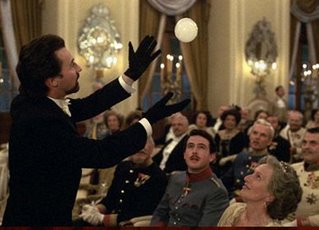
In adapting Steven Millhauser's short story Eisenheim the Illusionist, he shows his hand far too early, spelling out the central mystery plainly in the first 30 minutes of the movie. Mysterious illusionist Eisenheim (Edward Norton) has brought his magic show to turn-of-the-century Vienna, interspersing his impressive effects and tricks with heady monologues about the nature of time and space. One night, he manages to impress the Crown Prince (Rufus Sewell), and only then realizes that His Highness' intended is Eisenheim's childhood sweetheart, Sophie (Jessica Biel).

Most of the action concerns the Prince's puppet, Police Chief Inspector Uhl (Giamatti), and his investigation into Eisenheim's background. A trick in which the illusionist seems to bring spirits back from the dead to speak with the audience becomes something of an obsession for not onyl Uhl, but all the citizens of Vienna. Eisenheim professes to be purely an entertainer, but if a known dead person appears on stage, how can anyone say it's simply a trick?

Saying anything else would give it all away. I fear I've said too much already. I'm tempted to still give the movie a passing grade because it looks so nice, but it would have been better served with developing the relationship between Eisenheim and Uhl or Uhl and the Crown Prince rather than focusing so intently on a twist gimmick that doesn't work. There's a lot of interesting subtext in this story, about commoners who serve and please the rich but cannot join their ranks. (Interestingly, the notion that Eisenheim is a Jew who changed his name, and that Uhl may be a Jew as well, is floated but never developed. This of course would add another fascinating layer to the relationship between these two talented but peculiar men whom fate has set into conflict.)

But the film just keeps driving on toward that silly climax, which honestly is so easy to guess that it's almost insulting. Seriously. There's a scene where the characters pretty much come out and announce the scheme that will drive the entire rest of the movie. It was so blatant, I assumed Burger meant for us to know this information, and only realized towards the end of the movie that he thought he was saving it for Act the Third. Not good.

Idiocracy

I root for Mike Judge. He's ahead of his time. You can tell because people never appreciate his work in the present. When "Beavis and Butthead" was on television, it was the shorthand phrase for the "dumbing down of America," representative of all that was wrong with media and youth culture. But of course, it was perhaps the most spot-on satire of that very culture available at the time. Ditto Office Space, Judge's live-action directorial debut, a film that made about $20 on its initial theatrical run but is now rightly hailed as a comedy classic.

So even though I knew that Idiocracy had been a troubled, endlessly postponed production and that the studio had basically refused to advertise it because of their total lack of confidence in its quality or marketability, I still held out hope that it might be funny. "Maybe no one gets it now, but in 10 years, everyone will remember it as the best comedy of 2006."

Nope. No way. Not going to happen. This thing sucks worse than that Jump to Conclusions mat. I did not laugh one single time in the entire 87 minutes.

You can tell the film has been retooled a bit since it was first shot. (It looks pretty cheap for a science-fiction comedy, too, but I wouldn't normally hold that against it if it worked otherwise.)

A narrator comes in frequently to fill in holes in the plot and provide background about the grim future in which the film is set. He tells us that, because smart people have priorities other than breeding while stupid people have dozens of offspring, in the distant future mankind has become extremely dumb.

So when Army private Joe Bowers (Luke Wilson) and prostitute Rita (Maya Rudolph) awake in the future from a scientific experiment gone haywire inour own time, they're easily the two smartest people alive. They find a chaotic world full of trash, in which everyone sits around and watches television all day and no one can speak properly.

Judge runs into many, many problems at this point. Mainly, he hasn't come up with any kind of actual narrative set in this future world. Joe and Rita wander around for a while, being chased by horribly inept police officers for no good reason. They meet an incredibly stupid lawyer named Frito (Dax Shepard). Joe wants to find a rumored time machine to get back home, but he's sidelined when tasked to save the world's crops, which will no longer grow, by the United States' loudmouth pro wrestling President (Terry Crews). But there's no real conflict. Judge has given himself total freedom from story, presumably because he wanted to focus on humorous observations and character bits. But notice that I said "presumably because," and not "because."

There aren't really any humorous observations, at least not about what it would be like to be the Smartest Person on Earth. Joe's predicament seems like pretty much what you'd expect. He's constantly frustrated because no one can keep up their end of a conversation. And almost by definition, there aren't any funny characters. How could anyone be funny? They're so dumb, they can barely speak! Frito, for example, says "fag" a lot, which I always find exponentionally more funny every time it is said in a motion picture. (For anyone reading this in the distant future, that was meant as sarcastic.)

Additionally, this future never comes alive because it's so inconsistant. What does Judge really mean by "stupid," anyway? For many characters, their retardation seems limited to poor vocabulary and an unhealthy diet. Others seem incapable of basic life functions on their own. Nevertheless, America continues to function. There is electricity and gasoline and television. There are elections and massive farms and functioning corporations. How can this be?
All this may seem like nitpicking, but it isn't. Because Judge didn't figure out what he meant by "stupid people" in the future, his movie lacks bite. Obviously, the whole thing is meant to satirize our own time. We're the stupid people of the future, watching TV all day and ignoring the consequences of our actions and hopelessly out of touch with our own history and culture. But his targets are so random and his jabs are so scattershot, it's hard to get a read on what Judge is really trying to say.

In fact, the tone started to irritate me with its lack of focus. It's like Judge is saying that we should all give up - people are dumb and they will just get moreso. Who cares?

Watching the film is sort of like having a conversation with an annoying libertarian. Not to say that there aren't principled libertarians with some amount of integrity. But a lot of the time, I get the sense that the philosophy is just an excuse for misanthropy. This person just dislikes other people and doesn't care what happens to them, so they just throw up their hands and say, "Oh well, it's a lost cause, there's nothing to be done, better to simply wash our hands of the whole thing."

That's kind of like Mike Judge's attitude coming in this movie. "Oh well, everyone's an idiot but me, humanity's fucked, might as well make a stupid comedy about it..." Right into despair, because it's so easy.

But personal philosophy aside, the movie's just kind of relentlessly pointless and obnoxious. Stale riffs on shows like "America's Funniest Home Videos" and the popularity of pro wrestling were tired when Judge was still working for Spike and Mike. And what is with any comedy spending this much time talking about growing crops? You're telling me that every single person in the future is a retard and the biggest problem they're facing is that the lettuce won't grow right? HOW DID THEY EVEN MANAGE TO PLANT CROPS IF EVERYONE'S SO STUPID?

My Morning Jacket at the Wiltern

Just returned from the sold-out My Morning Jacket show in K-Town. Fantastic. The band played a 100 minute set followed by at least a half-hour encore. And this wasn't some lazy Dismemberment Plan-style play-one-song-then-blather-for-20-minutes-about-stupid-crap-then-swap-out-every-instrument-then-perform-emergency-instrument-recalibration kind of set. We're talking over two hours of non-stop screechy guitar carnage. Lead singer/songwriter Jim James paused the show only once to compliment the Wiltern's baroque, gaudy interior design.

This was one of those shows that made me appreciate the band's recordings more. There are songs on the last 3 My Morning Jacket albums (I haven't heard their rarer early LP's), but I've never been a big fan or listened to their discs in heavy rotation. But all I could think about after this show was wanting to throw on Z and It Still Moves ASAP.

The show was exceptionally loud and intense, and the band is just fucking tight. Drummer Patrick Hallahan in particular was really kicking my ass. (The crowd loved this guy. Every time the spotlight caught him, the screaming began anew.) The live setting really showcased the band's crazy energy (particularly lead singer James, who flings himself around mid-song, seemingly at random.) The set is fairly elaborate, making it initially appear that the band is playing in the middle of the woods. A little Animal Collective for my tastes, but not too unfortunate. 2 solid hours of the strobe light effects, however, did get a bit jarring. Too much stagecraft and the whole thing gets a little "Spinal Tap."

Most of the evening's highlights came from Z, my favorite of their albums. "Gideon" ruled, ditto "Lay Low" and "Off the Record." I've never been that crazy about the sort of slow-motion jam that finishes out that song, but it made a lot more sense to me somehow in concert. As the band closed out the encore with "Anytime," it finally occured to me why I've always been partial to that song...It sounds like Guided by Voices with all the missing parts filled in, restored to anthemic luster.

The keyboards get emphasized so much on the band's albums, they end up sounding much more guitar-focused live. "Dondante," which closes the Z album, perfectly blended the piano with crunching guitar solos, and highlighted by a saxophone! Amazingly, James is able to match the recording's blistering falsetto vocal in concert.

I took some photos with my camera, but they're allf ar too blurry and embarrassing for publication. So you get no visual aids. Just let my carefully composed language paint a beautiful word picture in your mind.

Monday, January 01, 2007

200666

Happy New Year, everyone.

You guys (and ladies) get a load of G.W.'s New Year's Resolution? (h/t Firedoglake)

My thoughts are with the troops as we head into 2007.

People always ask me about a New Year's resolution -- my resolution is, is that they'll be safe and that we'll come closer to our objective, that we'll be able to help this young democracy survive and thrive and, therefore, we'll be writing a chapter of peace.

Seriously, he can't do anything right. Not a thing. He can't even give a proper New Year's Resolution.

See, the whole principle here (which isn't all that complicated), is that you change something negative about your own behavior, to make the next year more pleasant for yourself and those in your immediate vicinity. A common example would be resolving to lose weight, or to eat more nutritiously, or to get a better job, or to go back to school.

The President's had such a lousy, miserable year of fuck-ups and boondoggles, he doesn't really have to aim high to improve his 2007 behavior.

How about resolving not to molest fellow world leaders?

How about resolving not to continually violate the Constitution by arresting, holding and torturing alleged terrorists without due process?

How about resolving to be a better role model as a father, to teach respect for other people by example?

How about not telling the public little white lies all the time, designed to make you look more intelligent and capable.

Those would be some reasonable George Bush New Year's Resolutions, though I think we'd all like to see him resolve to no longer be President, along with Vice President Mammon Cheney.

But, no...Any of those would require even a teensy bit of self-reflection, of which the President has repeatedly proven himself repeatedly incapable. He can't analyze his own actions. Something about this fundamentalist mindset of his, or perhaps simply the pressure of being an authoritarian president in a republican nation. His staff dissuades him from publicly airing any doubts or uncertainty, and so over time, he has eradicated these very concepts from his conscious mind.

So instead, he does something perfectly ludicrous and resolves to do things over which he has absolutely no control. I mean, even if you think President Rock Strongo has made only correct decisions and has reshaped the Middle East for the better...you still must admit that he cannot personally keep the troops safe or enable them to succeed in their mission.

If such a thing were still possible (no, it's not), that would still be more in the hands of the troops, their leaders and the so-called insurgent enemy (really just the residents of these neighborhoods). Not George W. Bush, who will continue to look out upon the war, as he always has, from the Owner's Box.

There's a conspiracy theory brewing out there, by the way, that Bush used a storm system around Crawford to sneak out of the country and attend Saddam's funeral. There seems to be about a half-day in there that's totally unaccounted for, when Bush and few key members of his inner circle could have snuck over there to blow Saddam one last kiss and savor that sweet, sweet post-execution high. Who knows? Although they've certainly managed to sneak over to the Middle East without anyone knowing about it before...Recall those "surprise" visits to the troops?

But anyway, I think this is a terrific idea for improving the notion of New Year's Resolutions. Instead of steeling yourself to make difficult lifestyle changes, you should just dictate the future behavior of wide swaths of people over whom you have no real authority. So, instead of resolving to, say, read more in the following year, a typical American would resolve to track down all the Lost Tribes of Israel!

As for me, I like to keep my New Year's Resolutions nice and simple. My resolution is, that Ameican physicists will finally devise a Unified Field Theory. Or, failing that, at least solving the riddle of Cold Fusion. I will consider anything less a personal failure.

Thursday, December 28, 2006

Worst Films of 2006

To me, a list of the Worst Films of a given year doesn't necessarily have to contain the 10 or 20 least technically proficient productions. This would imply that the reviewer has seen literally every film that came out the previous year, and is then going through and picking out the most amateurish or sloppy in some kind of objective, calculated manner. Of course, no one does that, because it is impossible and pointless.

I see this list as my attempt at pushback. These are films that I disliked for some specific reason, ones that I have continued to hold in contempt for several months, in most cases. I can't be any more exact because I make an effort to avoid many of the worst films in any given year.

For example, here are some 2006 releases that may very well be among the year's least praiseworthy or significant, but I wouldn't know because they didn't rate 2 hours of my time:

The Nativity Story - Hey, I already know this story! And it doesn't strike me as particularly cinematic. Unless they threw in a couple of camel chases or give the baby Jesus a love interest. (She could be played by Dakota Fanning's creepy clone younger sister!)

Larry the Cable Guy: Health Inspector - I've spoken to this title's breakdown in logic before. (Is he a cable guy or a health inspector? Doesn't this just highlight the inanity of permanently identifying someone according to his or her profession?) I'm fairly certain this is the most intruiging subject raised by the film.

Grilled - Comic dynamos Kevin James and Ray Romano take a break from boring you with their lame, generic sitcoms to bore you with a lame, generic direct-to-DVD comedy about desperate meat salesmen! It's Glengarry Glen Ross meets...well, something really really stupid about meat.

The Last Kiss - Zach Braff and Paul Haggis join forces to ruin my life adapt an Italian comedy about love and relationships! There's sure to be plenty of frowning and staring off into the middle distance to the sound of this year's trendiest female pseudo-bohemian singer-songwriter!
The Shaggy Dog - Oh, look, that non-charismatic former cokehead turned into a dog. Now he is chasing a cat around. How droll...

Barnyard - Steve Oedekerk, the idiot man-child behind those retarded Thumb shorts and Kung Pow: Enter the Fist, helms 2006's 500,000,022nd computer-animated animal comedy. For just a hint at how stupid this movie must be, one need only consider that, in the commercials, obviously female bovines speak with male voices. Despite the presence of udders! Haven't been to many farms, eh, Steve?

Ron White: You Can't Fix Stupid - Apparently.

The Pet - Actual IMDB description: "A young woman in dire financial straights accepts an offer to be a wealthy aristocrat's human 'pet' for six months. Then ruthless modern 'pet-nappers' kidnap the woman to sell her on the GSM (Global Slave Market)." I guess Borat, buoyed by the massive commercial success of his American film debut, finally sold that pitch he'd been working on.

Tenacious D in The Pick of Destiny - Could Tenacious D be any more over? These guys make Lynard Skynard seem poised for a reunion. Seriously, this movie is, at best, 5 years too late. (The D's first and only album arrived in 2001.) I used to really like KG and JB's act, ages ago, but I found even the commercials for this tie-in squirm-inducing. The whole joke was that they were two overweight nobodies pretending to be rock gods. But now that Jack Black is massively famous and popular, and has been repeatding the same silly joke for over a decade, it's the complete 180 opposite of funny. It's like the cinematic equivalent of peppering your everyday conversation with Austin Powers quotes.

The Celestine Prophecy - Adaptation about James Redfield's best-selling novel about a man wandering around Peru looking for the secret of life, which turns out to be "Believe in Yourself." Thanks, Jimmy! This might be worth watching only if the Maya from Apocalypto swooped in at the end and sacrificed this merry wanderer to their gods.

Benchwarmers - Nerdy underdogs play baseball in what has got to be the most clever, elaborate high-concept comedy since Joe Pesci and Danny Glover's quintessential Gone Fishin'. Jon Heder has managed to squander all of his built-up Napoleon Dynamite goodwill with astounding speed. After this and School for Scoundrels, can the Surreal Life house be far behind?

The Covenant - An unholy hybrid of The Lost Boys and The Craft starring a bunch of half-naked twinks on loan from the Abercrombie and Fitch catalog and masterminded by the Patron Saint of Loud, Pointless Dumbassery: Mr. Renny Harlin. I'd rather watch my own leg gnawed off by a pack of angry meerkats than this film.

The Peaceful Warrior - Nick Nolte plays a spiritual guru who...actually, do I need to keep summarizing?

Road House 2: Last Call - A sequel! To Road House! Written by and starring Jonathan Schaech! Guys, seriously...When Patrick Swayze is passing on your feature film...it's time to retool. Also, I heard an ugly rumor that no one gets his or her trachea pulled out in this entry, which renders it unwatchable.

Tristan + Isolde - I hate movies that replace the word "and" with a plus sign in the title. I mean, use an ampersand if you must get fancy, but this movie is not about the sum of Tristan and Isolde. Perhaps if the movie was about their offspring, this would be technically correct. But it isn't. It's about the two of them, together, as separate entities. So that shit's not even correct. A possible correction might be (Tristan) + (Isolde) = Tristan and Isolde. But my algebra's pretty rusty. Also, this starred James Franco, who bugs me, what with his constant shitty pouty-faced acting.

Let's Go to Prison - Ha ha! Those guys went to jail and got buttfucked! Ha ha! Oh, man, that is soooooo funny. Because it's true! Men are genuinely sent to prison and then subjected to repeated, painful anal rape in this country, while we all either ignore it or laugh about it! Because nothing says "goofy comedic shenanigans" quite like reality-inspired sketches depicting violent sexual assault.

You, Me and Dupree - Owen Wilson needs to give it a serious rest for a while. I'm so sick of him, the dislike is starting to spread to other actors who are related to him or resemble him in some way. I can't even really tolerate his brother Luke, Wes Anderson movies or Steve Zahn any more. The other day, I caught myself cursing notable WWI poet Wilfred Owen under my breath. The Butterscotch Stallion made three, count 'em, three duds this year: this, Cars and Night at the Museum. Kevin Federline had more 2006 hits. It has gotten so bad, he's even calling Tom Cruise for career advice. "So, you're saying I should jump around on Oprah's couch, offer niacin to New York firefighters, insult Brooke Shields and then promise to buy Katie Holmes a comb and a cat? Got it!" Seriously, I'll sit through a stupid mainstream comedy, but I could never ever watch this movie. Even the guy's vacant expression on the box fills me with the urge to destroy.

Wordplay - With the success of Spellbound and Mad Hot Ballroom, prepare for the Invasion of the Pointless, Dull, Up-Its-Own-Asshole Documentary Film. A fucking feature-length examination of crossword puzzles? Oh, look, Jon Stewart enjoys a nice crossword! How enlightening! Guess what? Not every silly diversion enjoyed by the privileged is fascinating enough for its own documentary.

A Good Year - Russell Crowe faces that universal human dilemma: should I keep my high-paying job and luxurious apartment in the city or give it all up to live in my luxurious vineyard in the country? As a follow-up, Ridley Scott's going to make a searing drama about a man who must choose between two elite local country clubs before watching supermodels fight over which one gets to blow him.

Little Man - The second entry in the Wayans' Brothers presumed Bad Disguise Trilogy, following International Art House Sensation White Chicks. This time, they appear to have artificially placed Marlon's head on the body of a midget, who then disguises himself as a little boy. That seems like kind of a long way around to get a cheap laugh from some boob and doody jokes to me, but perhaps that's why I'm not getting any big pitch meetings. The trilogy winds up next year with Dirty Job, in which Marlon plays an FBI agent who, through the magic of special effects, goes undercover as a piece of doody to stop a potential janitor's strike at this year's Boob Convention.

The Texas Chainsaw Massacre: The Beginning - See how Leatherface began! I'm just going to go out on a limb here and guess that he worked in a slaughterhouse and then started brutally killing people? With the help of his family? Have I got it all? I mean, geez, thank goodness they finally made this film and solved all thsoe mysterious riddles that were already explained in the first movie, back in the '70s.

Okay, so I didn't see any of those films. They all may be as bad or worse than the 21 films I have seen and selected as The Year's Worst. (Particularly that crap with Larry the Cable Guy.)

The point is, none of this is definitive and it's based on nothing more than my specific tastes and perspective. These are the films that irritated me the most, not necessarily the ones that were the most poorly-made.

21. The Sentinel

This year's answer to Murder at 1600. Director Clark Johnson gets points for casting TV's Sledgehammer, David Rasche, as the President, but those are about the only points he scores for the duration of this utter waste of celluloid's seemingly-endless 100 minutes. It's not just because all the actors save Michael Douglas regularly appear on hit shows that this thriller about dueling Secret Service agents feels like a made-for-TV movie...It's Johnson's flat, anonymous direction, hampered further by an immediately-apparent lack of funds.

20. Beowulf and Grendel

A revisionist update on a staple of English 10A, Beowulf and Grendel turns the famed Viking legend into an Old English version of Grand Canyon. Why can't these humans and these Neanderthals just get along? This is the Medieval version of white liberal guilt.

In addition to the goofy modern flourishes, like the proto-feminist witch played by Sarah Polley with all the subtlety of Valerie Solanas' "SCUM Manifesto," screenwriter Andrew Rai Berzins fatal error of contemporizing much of the language. If you've ever wanted to see Stellan Skarsgaard in a fake beard skulking around a cabin cursing out "these fucking trolls," we may have found the movie for you. Otherwise, avoid as you would a beast's vindictive, possibly mythological, mother.

19. Brick
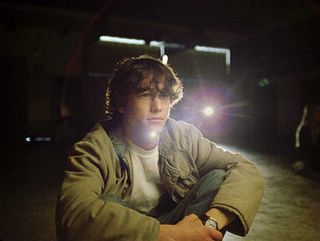


Proof that a clever premise doesn't equal a clever movie, Brick spends far too much time eulogizing a dead genre and not enough time telling a compelling story or developing an original idea. Yes, we all love noir movies. Yes, it's somewhat amusing to dress up Lukas Haas as an old-timey gangster with a cape and a cane and to give him antiquated "criminal" dialogue. But did anyone really think this one-note gimmick was worth developing into a feature? Wouldn't it be possible to tell the same joke, get the same laugh, and then go about constructing a mystery that's interesting on its own merits?

18. Scoop

Atrocious. Woody insults his fans with this movie by churning out such apathetic, transparent piffle. Mass audiences turned their backs on him long ago. He's no longer courting the mainstream. No, when he releases something that so obviously isn't working, a relatively simple comic premise that can't even hold itself together logically, he might as well open and close the movie by facing the camera straight-on and flipping the viewer the bird. Several Woody fans have defended this film to me recently, but to do so requires such rhetorical contortions and diminished expectations, they wind up sounding more dismissive of Woody and his remaining talents than me.

17. An American Haunting

Based around a so-called "true story" from 19th Century New England, An American Haunting features a highly dubious variation on the traditional ghost story. One might almost call it "soul-shatteringly stupid." The combined talents of Donald Sutherland, Sissy Spacek and the esteemed director of Dungeons and Dragons, Courtney Solomon, can't save this hackneyed dreck.

16. Stay Alive

Bring It On launched this obnoxious trend of teen movies with imperative titles. Stay Alive. Step Up. Take the Lead. Stick It. Strap It On 4: Fem Doms.

Hey, you know what? Fuck you. I paid my $10, let's see you idiots step up. I'm going to remain comfortably seated.

Anyway, this braindead teen slasher opens with the question, "What if, when you died in a certain video game, it killed you in reality?" The obvious answer, that you'd stop playing that game, presents an immediate obstacle to ongoing horror movie mayhemn. So the filmmakers devise a ridiculous cheat that invalidates the whole movie: if you stop playing the game, it starts playing for you! Then why not just abandon the stupid "game" concept altogether and just make a movie about a disembodied spirit that thirsts for teen blood?

Also, if star Frankie Muniz wants to be taken seriously as an actor, he should probably go with Frank Muniz. It's a bit tougher, innit? Like Rick Schroeder or Bow Wow.

15. Lucky Number Slevin

"Hey, I know, let's get together a whole bunch of stars and make a crime movie!"

"Okay. What should it be about?"

"Who cares! We're going to get some stars to be in it! Oh, and they should all spout self-aware, pop-culture inspired dialogue all the time, like in a Tarantino movie!"

"Isn't that a bit familiar at this point?"

"The kids will love it! And the best part is, it doesn't even have to make sense, or have any kind of personality of its own! And even the name doesn't have to make sense! Because it will have big stars!"

"Who's going to want to watch this if it doesn't have a personality and it doesn't make sense, and the name is something odd and hard to remember and nonsensical?"

"You know...assholes!"

"Hey, there's millions of them! We'll be rich! You're a genius!"

"I'll go ahead and get Ben Kingsley on the horn. You know he's in."

14. Art School Confidential

Hey, have you ever wondered about all the outrageous, funny stuff that really goes down at art school?
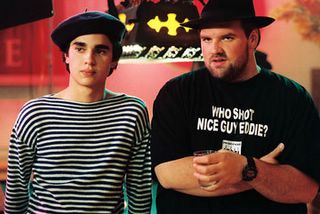


Yeah, me neither. And even if I did, I still wouldn't have liked Terry Zwigoff's and Daniel Clowes' execrable ode to hipster cynicism and Randian egomania. No comedy this pleased with itself could ever have a chance of being funny. Watching it is like helping Donald Trump prepare an acceptance speech just in case he's ever awarded the coveted Nobel Loud, Ostentatious Prick Prize. (Awards banquet hosted by Bill Maher!)

13. Night Watch (Nochnoy Dozor)

Back in 2004, this fantasy-horror epic broke all Russian box office records, becoming the country's most popular film of all time. (Over there, it has already spawned 2 sequels, but only hit American shores in 2006.) The Russian people, post-Eisenstein, and I clearly don't enjoy the same kind of movies. I don't, as a rule, like to watch films that cut between dark, ugly, computer-enhanced images with lightening speed, rendering all on-screen action and characters indiscernable and conferring onto the viewer a massive headache. But, hey, that's me.

There are virtuoso moments here, but they are always simply that - individual moments designed to show off. The camera follows a bolt as it flies off a passing jet and hurtles towards an apartment building at fantastic speeds. It looks impressive (if a bit artificial and "animated"), but belongs in a promo reel or a music video, cause it just breaks the reality and kills the momentum of a film.

12. Date Movie

Date Movie may be the laziest comedy ever made. Plenty of comedies come out that just aren't funny, and some are even what I would consider "creatively bankrupt." That is, they begin with nothing - not even one single genuinely funny set-up or idea. But even in an unfunny, failed comedy (like, say, Scoop), you can usually detect some effort. In fact, that's often what kills a comedy, when you spend enough time not laughing to notice the director, writer and actors trying really hard to make you laugh. This is what typically ruins Kevin Smith movies for me. He's a funny guy, but I always notice him and his actors trying to be funny, which is strange for a dude who's so relaxed and casual in front of an audience on a stage.

But the entire parody genre has become a barren wasteland, a reliable risk-free way to bank on an easy $30 million or so. The films making up this bastard Scary Movie franchise (Epic Movie lands with a thud in 2007) are soulless, empty "products," made without anything approaching craft or effort. Director Aaron Seltzer and writer Jason Friedberg don't even bother mock a wide variety of movies. They pretty much stick to a scene-by-scene recreation of Meet the Parents (already a comedy! and only a mediocre one at that!) with passing references to other recent films. Please note, I said "references," not jokes. For example, Tony Cox plays a character named Hitch based on Will Smith from Hitch. They didn't even bother to make up a fake name to goof on the name Hitch! Even MAD Magazine does that!

11./10. The Wicker Man/The Omen

Neil LaBute's puzzling remake of The Wicker Man indicates a lack of basic understanding about what made the original work. He's taken out all the entertaining stuff (the sex, the camp, Christopher Lee, the satire of sanctimonious religiocity) and replaced it with slack horror movie cliches.

Conversely, John Moore's remake of The Omen hews far too tightly to the Richard Donner original. Why redo a movie at all if you're going to recreate it scene-for-scene, making a few vestigial or ill-conceived changes? Though it's a solid horror film, Donner's original is by no means a flawless, definitive version of this sort of story. Why not try keeping the essential elements but reimagining the actual machanizations of the plot, to keep it fresh for the millions of people who have seen the first film?

I lump these films together both because they are both horror remakes and because they use the same tired, egregiously thin device: supernatural dream sequences that end with a jolt. Not only that, but they botch these scenes in exactly the same way: by letting you know too early that it's all a dream, thus killing any potential suspense that might have built up.

9. Ultraviolet

I don't think it's hyperbole to call this the worst-looking American film of the year. The production company went bankrupt before the effects were completed, explaining the film's awful effects and Playstation cut-scene ambience. But with the guilty party responsible for Equilibrium, Kurt Wimmer, at the helm, this comic-book-style update of a British mini-series never really had a chance.



All the Wimmer trademarks from Equilibrium are here - the theatrical, poorly-choreographed fight scenes; the cheesy dialogue; the wooden performances; the '70s camp vision of the future. New to this entry are Milla Jovovich, a long way from her breakthrough in the similarly annoying but far more visionary The Fifth Element, and child actor Cameron Bright, who worked on more bad films this year than Deluxe.

8. Friends With Money

Writer/director Nicole Holofcener and her four leading actresses are all far, far better than this. A navel-gazing, pseudo-comedy about a woman searching for a rich man so she can compete with her bitchy friends, Friends With Money is every bit as offensive as I have just made it sound.

It's not that Holofcener starts with an insulting central conceit or anything. Her movie explores how people can easily detect the problems of others, but lack the ability to self-diagnose until it's too late. Okay, fine. But on her way to an overly pat, tidy conclusion, she fails to create any likable, realistic characters. Significant talents like Frances McDormand and Catherine Keener are saddled with paper-thin, predictable types, while Jennifer Aniston essentially recreates her character from "Friends," only without the great apartment. And the outlook here is just so superficial. Money equals happiness. Poverty is bad when it happens to attractive white women. People who smoke marijuana are loser burnouts. Dating an overweight man is pathetic, unless he's rich, in which case it's acceptable as a last resort. It gives the whole film the feel of late-era James L. Brooks - sappy, elitist, condescending bullshit.

7. Superman Returns

Bryan Singer's turgid, joyless Superman Returns feels more than anything else like a failure of nerve. Rather than risk pissing off long-time fans or young toy purchasers, he essentially reshoots the Donner/Lester classics with modern effects and calls it a day. Okay, that's not entirely fair - he replaces Gene Hackman with a mincing Kevin Spacey, who apparently thought he was starring in a touring production of "Superman on Ice," and he gives the Man of Steel an adorable moppet to take care of. Because we all know how well that worked in Dick Tracy and The Mummy Returns. Singer pulls off a few solid action sequences, and the bright crisp digital photography looks great, but his seriousness of purpose clashes with the inherent goofiness of Superman's world. This overlong, dry retelling of the essential superhero myth puts the "blow" in overblown.

6. The Pink Panther

A remake of a classic comedy is always going to be difficult to pull off, but a remake of one of the most famous comedies in history, boasting the most iconic role from one of the screen's most beloved comedians, might not even be possible. Has any actor ever been more immediately identifiable with a character than Peter Sellers and Inspector Clouseau? Even with a brilliant script and a fresh take on the story, it would be impossible for Steve Martin (particularly at his age) to match Sellers' perfect timing and prodigal talent for physical comedy. Unfortunately, Pink Panther has neither of those things, floundering laugh-free, through a series of predictable set pieces that lack any of the spark or demented genius of Pink Panther Strikes Again or A Shot in the Dark. This one's right down there with that travesty starring Roberto Benigni, which at least had the grace and humility to make its lead Clouseau's son rather than recasting the part.

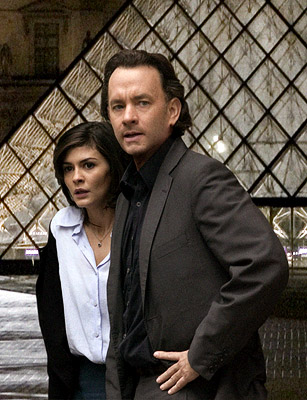
5. The Da Vinci Code

Ron Howard makes my Worst Films list pretty much every year he makes a film. And with good cause. The guy represents all that is evil about soulless corporate filmmaking. His movies don't simply lack style and originality, they studiously avoid them. Mediocrity is not a bug in Howard's system, it's a feature. He's aiming for maximum gross each and every time, and you don't move units at Wal-Mart by pushing the envelope or subverting expectations. This is why a controversial religious-themed conspiracy thriller represents the worst of all possible subjects for Opie to tackle.
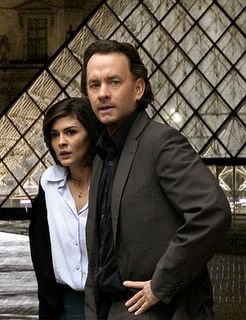


Howard and Ridley Scott should have swapped 2006 projects - Rid could bring his taste for the macabre and his strong visual sense to a twisty Catholic chase movie and Ron could bring his glossy, empty-headed bluster to bucolic shots of Russell Crowe sipping white wine. In fact, it doesn't have to be Ridley Scott. Seann William Scott could have directed a more interesting version of Da Vinci Code than this. I mean, the book is stupid in the first place, but it's at least a quick and painless read. Watching the film's such an ordeal, anyone who gets through it should be nominated for sainthood. I never thought I could hate a movie about an albino assassin who whips himself for absolution, but here we are...

4. Thank You For Smoking

Writer/director Jason Reitman doesn't know much, but he knows he's smarter than you. Not just you, but everybody. Jason's "satire" of the Tobacco Industry uses ridicule as a dodge. He has no perspective on tobacco one way or the other. It's bad for people, sure, and the companies that produce it will use any means necessary to ensure that they get to keep selling it for profit. Other than that, he's got nothin'. (And as the film is based on a novel by Christopher Buckley, one can only assume that he's also got nothin'.)

So in place of insight, the film's filled with wall-to-wall snark and bile. Reitman presents lame caricatures and strawmen - the overeager girl reporter, the ludicrous New Age movie executive, the shamelessly self-promoting politician - and then takes great delight in tearing them down, as if mocking clueless Senators and shallow film industry types requires any kind of skill. Throw in a couple of gooey, faux-heartwarming scenes on loan from Jerry Maguire and you've got a recipie for the year's most smug, unlikable indie hit.

Perhaps festival crowds felt flattered by the film - they were in on the joke, laughing along with Reitman at all the stupid Americans who aren't sophisticated insiders, already cynical about everything they see, hear and read. I found the film's callousness and air of elitist superiority decidedly off-putting.

3. Nacho Libre

When I first saw this reprehensible Jack Black "comedy" in June, I was certain it would be the worst film released in 2006. The fact that not one but TWO films would top it indicates just how woeful a year this really was for American film. Anyway, in the comments to my original review, a lot of people have objected to my characterizing the film as "racist."

So I'd just like to reiterate that characterization and explain myself further. Nacho Libre is racist because it presents a singular, and inaccurate, view of Mexicans and their nation as subordinate and inferior to the whites who made the film. Mexico is an extremely diverse country, both culturally and geographically. But in this film, it is uniformly brown, ugly and despoiled, and filled with stupid, ugly peasants. (Pretty much everything about Mexicans, from their cuisine to their music to their physical appearance, is mocked during the course of the film.)

Napoleon Dynamite director Jared Hess either finds the mere appearance of Mexicans to be inherently funny or simply could not derive any other kind of humor from his thin, sophomoric premise. The idea of Jack Black playing a Mexican wrestler is funny, but nothing in the movie truly capitalizes on this idea, or even approaches it on anything but the most superficial level. Black's character is theoretically funny because he looks ridiculous in a wrestler's outfit. No further attempt is made to endear him to the audience or invest him with any kind of inner life or soul, basic requirements for any comic protagonist.

Instead, Hess mines for the inherent comedy in overstated Mexican accents, obese children and old people with missing teeth. I liked his low-budget debut, but I'm wondering whether or not Hess will even get a chance to direct another movie after this Braffsterpiece.*

2. United 93

My case against United 93 is long and involved. I suggest you go here to the original review to get a clear idea of why I hate this movie the way that I do. It's possible that my least favorite (or second-least-favorite) movie of the year will win the Best Picture Oscar two years running. (Last year's winner, Crash, being my Worst Film choice for 2005.)

Watching Paul Greengrass' film is like reading Osama bin Laden's resume. Like the Worst's Most Fearsome Terrorist Mastermind, Greengrass is using 9/11 to demonstrate his own technical prowess. (George W. Bush prefers to use 9/11 to demonstrate his expansive penis size.) Accordingly, he never allows the event itself to intrude on his recreation. This is a film about nothing except Paul Greengrass' ability to accurately depict. It is a black hole of history - real events disappear within Greengrass' fictional patchwork, becoming nothing more than disconnected images, scenery for him to shoot.

Just ask yourself - why recreate 9/11 on film? United 93 doesn't tell a story about that day, something inspirational, tragic or otherwise. This is not World Trade Center, a well-meaning if occasionally misguided depiction of the heroism exhibited by rescue teams on 9/11. Instead, it's an exercize, as disturbingly cold and inhuman as any film I have ever seen, like a film directed by a moviemaking robot that has been given instructions to "put 9/11 to film." The argument that it's exceedingly well-made does nothing to convince me of its value, any more than a really expertly-crafted electric chair or a custom-engineered new strain of SuperAIDS.

1. Lady in the Water**

Earlier this year, before Lady in the Water hit theaters, I won a contest by submitting the most creative guess as to how the film would end. Here was my guess:

Okay, so obviously, we know that M. Night will eventually get around to revealing that "it's all a story," possibly being read by Cleveland to a little girl or some crap like that. I'm thinking he might take the notion one step further this time, sensing that everyone's catching on to his little tricks. Soooo....

We pull back to reveal Cleveland reading the entire film's plot, as a bedtime story, to a little girl.

THEN

We pull back to reveal Peter Falk from "The Princess Bride," reading the film's plot as a bedtime story to Cleveland

THEN

We pull back to reveal M. Night Shyamalan reading the film's plot as a bedtime story to Peter Falk

THEN

We pull back to reveal God reading the film's plot to M. Night Shyamalan

Because, let's face it...The guy's divinely inspired.

I was joking, but it turns out that I was right! Not about the whole movie being a bedtime story (although that's not too far off), but about Night believing himself to be divinely inspired. That's pretty much the whole point of the movie - the writer Night plays himself is told by an angelic figure that his work will inspire generations and change the world for the better.

I'm not sure if any other filmmaker in history has made a movie that's this egomaniacal. (Though the more I think about INLAND EMPIRE, the more I think the entire final scene is set inside David Lynch's brain.) The only other way to even come close would be to use special effects to 69 yourself on screen. I think the image of a director and his clone blowing one another might edge out Lady in the Water in terms of self-love, but it's hard to say without actually seeing something like that.

On top of that, it's just boring and poorly put together. Once upon a time, Shyamalan demonstrated a precocious, natural ability to frame shots, build suspense and write characters. He fumbles around this half-formed narrative like a rank amateur, frequently inserting long expositional monologues where they don't belong and repeating himself endlessly. And the special effects on the film's villainous wolves come in just after Ultraviolet as the spottiest of the year. They look like cartoons chasing after Paul Giamatti, not real wolves made of branches. (Yeah, they're supposed to look like wolves made of branches...I didn't pick it as the Year's Worst Film on a whim...)
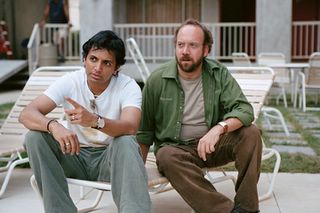


Night's film is the perfect metaphor for 2006. So enraptured of itself, so invested in its own power and ability, the movie forgets to actually entertain, to do anything that fantastical bedtime stories stories are supposed to do. Like our nation's foreign and environmental policy, it's centered around an essential delusion: George Bush and Night know what they are doing and have it all under control. (Night and Bush also share the same phony, dewy-eyed, mock spirituality, when they clearly know nothing of the humility and reverence for all human life preached by religion.)

The thing is, Bush hasn't a clue about how to do anything but cover his own ass, and Night has lost whatever ability he previously had to make films or judge his own work. I've heard better bedtime stories from Glenn Danzig.

*Braffsterpiece: (1) Any film that, in some way, resembles the work of writer/director Zach Braff, (2) a horrible film, (3) a nickname for Braff's debut film, Garden State.

**A special award goes to Guy Ritchie's Revolver, the worst movie I actually saw in 2006. Unfortunately, it is so bad, no one will release it in America, making it ineligible for an actual spot on the list.


Wednesday, December 27, 2006

You Don't Have Gerald Ford to Kick Around Any More


I usually headline the eulogizing posts with "RIP..." and then the name of the person who died, but I'm not doing that for Ex-President Ford. Not because I bear him any specific ill-will. I don't think he was a great, or even particularly good, President, but he also doesn't seem to be as massive an asshole as the other men who have held the position of late. It's because, maybe he should do a little thinking rather than going immediately into the rest phase.

I think, amidst the usual gamut of mistakes, Ford made one unforgivable error: pardoning Nixon. Not just because the guy deserved to be punished for his crimes against, well, everyone. And not just because it sets a horrible precedent to let a power-mad delusional psychopath get off scott free to open his own library in Yorba Linda.

Because the guys who worked under Nixon, many of whom rose to prominance during Ford's Administration, are our current crop of power-mad delusional psychopaths. We're talking about When Dick Met Don here, people. This is the beginning of the Iraq Wars prequel trilogy. (I'd make up a joke title, but you really can't do any better than Episode I: The Phantom Menace.) If someone had done something about then then, we wouldn't be worrying about them invading places now.

This is obvious.

Any more, it's just assumed that powerful guys will get away with shit. Henry Kissinger can't even land in the airport of most countries, for fear of being arrested for war crimes on sight. Here in America, he pops into CNN's Situation Room with impunity to play elder statesmen and give his expert opinion on world affairs! That's like having Tara Reid on to give her 5 favorite beauty tips! Why would you do that?

Tuesday, December 26, 2006

Children of Men

I've always said that it would be nice to die in a cataclysmic disaster that takes the life of all humanity. The worst part about dying, to me, has always been the idea that exciting, interesting things will happen the day after you're gone. A new movie will open that next Friday, and it will be the first of many you'll never have a chance to see. But if you die in the Apocalypse, well, that's it. No more anything. So, you know, you don't miss out on much.

Of course, it's highly unlikely there will ever be an Apocalypse like that, one that comes and goes quickly and painlessly. If humanity's going to die out (and it's bound to happen eventually), it will probably be a brutally slow procession of horrors - famine, war, rioting, anarchy, disease, you name it - that we'd all have to suffer through together. The hell with that.

The crumbling civilization of 2027 presented in Alfonso Cuaron's stark, harrowing new sci-fi film Children of Men strikes me as a highly probable representation about our own future. The film's central conceit - that one day, all of humanity will be rendered suddenly and irreversibly infertile - doesn't seem too likely. But as a reproduction of a modern Western society dissolving, shot through with a documentary-style realism, Cuaron's vision is frighteningly relatable and natural on screen.

It's this vision of a world on the edge of annihilation that makes Children of Men so compelling. The story, based on a novel by P.D. James, sets Cuaron up to explore one of Hollywood's favorte, fallback themes. As Homer Simpson would say, "When there's nothing left to believe in...believe in hope." The inability to reproduce stands in for any existential threat from which there can be no escape. (Global warming pops immediately to mind). This is something that will end our way of life, no one has come up with any solution, and this realization causes the masses of people on this planet to collectively lose their shit and destroy the world. Yet even in the midst of near-complete despair, there are people who continue to believe. And when the miraculous finally does happen, they are the ones who are ready to lay down their lives in the service of the future.

Like I said, blah blah blah. Nothing new to see there. Cuaron, the extraordinary talent behind Y Tu Mama Tambien and by far the best entry in the Harry Potter series, Prisoner of Azkaban, has an extremely subtle touch, so the film never descends completely into sentimentality. But Cuaron still lingers too long in Frank Darabont Land, milking moments of emotional resonance for every last morsel of sweet, life-giving pathos.

Where his film excels, indeed where it stands out from just about any other film released in 2006 that I have seen, is in the intricate, detailed and carefully-considered conceptualization of 2027 England on screen. A disc jockey plays an oldie from 2003, referring to it as a relic from a better, more innocent time, when we were still free to ignore the various lethal threats to our species. Cuaron couldn't be any more frank about sending his audience a wake-up call: He's talking about us, right now, watching the movie. We're contributing to this grim, dystopian nightmare-world. It may already be too late.


Theo (Clive Owen), a nihilistic beaurocrat, has made his peace with extinction. He doesn't even seem that sorry to see humanity go. He gets high with his friend Jasper (Michael Caine), a goofy recluse living in an isolated cabin with his traumatized, mute wife, and does his best to ignore the fact that England has become an authoritarian police state. Looking the other way as illegal immigrants (called "fugees" in the film) are rounded up and sent to camps is easy enough. Theo even manages to dodge the occasional explosion in his favorite coffee shop. But once his radical activist ex-wife Julian (Julianne Moore) captures him and recruits him into the service of the underground, he can't avoid trouble any longer.

Julian's group of extremists have found a young pregnant woman, Kee (Claire-Hope Ashitey). They want Theo to use his (limited) political influence to get Kee a licence to travel across the country, in the hopes of meeting up with a mysterious group known as The Human Project that will transport her and the baby to safety. Soon enough, the reluctant Theo finds himself roped into a grand journey, transporting Kee out of the grimy fortress of London, away from various groups of rabid ideologues who desire Kee's baby for their own political purposes and into the protective hands of the Human Project.

Obviously, the choice to focus on the neo-fascist British government scapegoating illegal immigrants, rounding them up and depositing them into camps, has great relevance to modern-day America. Basically, we are already doing this, and we are driven by a far less severe threat than the society in the film. Cuaron soberly observes people turning to a dictatorship out of fear. He explores how a clever despot can channel hate against the oppressed and powerless into ensuring continued dominance and how mass media has been corrupted into an establishment propaganda machine.

A double-dealing collective of subversives, fronted by the self-serving Luke (Chiwetel Ejiofor), likewise showcase the fallibility of ideologues, even the well-intentioned. Neo-Marxists seeking to use Kee's baby to spark a People's Revolution, they become a greater threat to Theo's mission than even the strongarm police force hunting him down at every turn. Though I'm not certain I agree with the implication that radical leftists present as great a danger to humanity's future than the fascist-sympathizing corporatists represented by the film's Ministry of Homeland Security, political observations in Children of Men are, on the whole, remarkably astute.

Beyond the overarching political perspective of the film, dozens of careful, specific details in Theo's environment really bring this far-out, improbable scenario into perspective, inviting a contemporary audience into this world and giving us clear points of reference and comparison. Advertisements for the euthanizing drug Quietus are ubiquitous on the streets and trains around London; gossip spreads around town that the effects are painless and even enjoyable. (Kee describes it using the common future-slang term "suave.")

I previously mentioned the 2003 "classic rock" song on the soundtrack, which highlights the clever devices Cuaron employs to fill the film with music from our own time. (The Dude-esque Jasper, still a fan of the music of his youth, bumps Radiohead while he enjoys his afternoon j.)

At one point, Theo gazes out a train at graffiti reading: "Would the last person alive please turn off the lights." It's a perfect, succinct expression of the commonly-felt desperation. If no one will be around in 50 years to see what we've done, if nothing matters and everything that will ever happen has already happened, why continue living at all? Particularly when to keep living requires such tremendous exertion?

This hopeless, consequence-free world has become an unpredictable, ugly and exceptionally violent place. Cuaron and his long-time collaborator, cinematographer Emmanuel Lubeszki, use exceptionally long takes to build suspense before unleashing fast, propulsive bursts of bloodshed. Employing handheld cameras to get close up to the action, Cuaron and Lubeszki have shot the most intense, exciting and brutally realistic action sequences of the year. These are scenes that more closely resemble riot footage on the news than the typical Ridley Scott circle jerk. A seige by raiders on a compact car driven by Luke commences breathlessly within a single take. An amazing single shot finds Theo hiding from armed guards as he checks a variety of vehicles' ignitions for working keys. The final leg of the journey, an extended chase through a city-sized refugee camp undergoing a fiery insurrection, makes full use of Lubeszki's roving camera and the remarkably immersive sound mix to jolt and unnerve.

Bullets, shattered glass, missiles, grenades and assorted debris rains down on Theo from all directions, blocking his visibility, spinning him around in circles and causing him to trip repeatedly and slice his leg. The disorientation and panic comes fast once the gunfire gets heated, but Theo himself never turns violent or runs amok. He never even handles a gun. He just protects Kee and runs for his life, the ultimate survivor in a world filled with no one but survivors. The entire set piece ranks among the most inventive and memorable sequences of 2006.

So, what I'm saying is that this movie's good. Very good. Worth seeing. But Children of Men is not without its problems. For such a beautifully-made film (the whole thing is probably the best-shot movie of the year, and among the best-directed) with so many winning little details and penetrating observations, it doesn't end particularly well. Cuaron wraps up the film on a note of optimistic uncertainty - something has happened that seems positive, but we're never told what the implications of the film's action will be, and the pat "hope is all you need" homilies didn't really do it for me. Anyway, perhaps the director and I are just at odds about the fate of humans on this planet, but the build-up here's much better than the pay-off.

Monday, December 25, 2006

INLAND EMPIRE

String Theory postulates the existence of many more dimensions than are discernible to the human eye. (Currently, majority opinion sets the number at 11, if memory serves.) This includes the three dimensions in which human beings operate, plus the 4th dimension of time, plus a whole bunch of other indescribable, unknown planes of being located right on top of our own.

I believe INLAND EMPIRE may be David Lynch's attempt to bring this notion into the world of cinema. He has directed the world's first and only 11-D film.

The good news is, the physical strain of viewing the film's full 3 hours won't give you a headache and you don't need special glasses. The bad news is, the mental strain of viewing the film's full 3 hours may give you a headache, and you'll need patience.


Though typically referred to as "surreal" or incomprehensible, many Lynch films have a relatively simple "key" that, once detected, translates all the apparently random action into a rational text. Once it becomes clear that the first half of Mulholland Drive is a dreamed recollection of the second half's events, the pieces fit together remarkably well. Lost Highway becomes significantly less distant and puzzling once the mobius-strip end-is-the-beginning-of-the-end mindfuck wears off.

INLAND EMPIRE has a single scene that serves as something of a signpost for where all the overlapping, confused stories are headed. Actress Nikki Grace (Laura Dern) invites a new Polish neighbor (Grace Zabriskie) into her lavishly appointed home for coffee. The strange woman takes a peculiar interest in Nikki's hopeful new project, a Southern-set romantic drama called On High in Blue Tomorrows. Unbeknowst to Nikki, the film is an adaptation of an obscure Polish gypsy legend, one that inspired an never-finished, doomed German production several years earlier. The new film's director, Kingsley Stewart (an unctuous Jeremy Irons) and his needy screenwriter (Harry Dean Stanton, who gets the film's best monologue) warn their stars that both of prior film's leads were brutally murdered.

The first half-hour or so of INLAND EMPIRE coherently follows Nikki and her co-star Devon (Justin Theroux) as they rehearse and film scenes from the movie. It's something of a Tennessee Williams knock-off in which Nikki's married character, Susan, carries on an affair with Devon's character, Billy. A behind-the-scenes romance between Nikki and Devon begins to mirror the on-screen pairing. Like her character, Nikki suffers in a loveless marriage to a possessive, fearsome brute (Peter Lucas) who will kill her and Devon if he finds out about the infidelity.

Once Nikki and Devon consummate their illicit love, Lynch's film departs from this vague storyline for about 150 minutes of madness. Like our universe's 11 nebulously connected dimensions, several of the film's key sequences of events unfold on top of one another, throwing all notions of chronology and continuity out the window.

Nikki and Devon seem to swap places with their characters. The story of INLAND EMPIRE and the story of On High in Blue Tomorrows coalesce into one sequence of iconic, repeated events - characters who should not fall in love do so anyway, they split apart, they get back together, they get caught and then Dern's character is brutally beaten. Additionally, we cut to Lodz, Poland, to see sequences that could be taken from the unfinished German version of the story or the tragic behind-the-scenes romance that shut down the production in the first place. Then there are scenes in which Nikki appears to be a Hollywood prostitute wasting time with a chorus of wily hooker cohorts. And then, there are the clips from an intensely unnerving sitcom starring actors in rabbit costumes. Scott Coffey, Laura Harring and Naomi Watts from Mulholland Drive star in these deeply disturbing sketches based on short films Lynch had made for his website.

The key, I think, is to watch for beams of light. For the first time, Lynch has shot an entire film on digital video, using a Sony DSR-PD150 to give the film a muddled, grainy look that he punctuates by sporadically bathing everything in bright, all-concealing white light. The film opens with one such beam of light, streaming in front of the side of the screen and looking very much like the product of a film projector.

Of course, with that first image of a projected beam of light, Lynch starts off by adding layers to the cinematic artifice (much as Bergman did in Persona by opening the film with a shot of film spooling into a camera). At other times, flickering light (again, reminiscent of a dark theater while a film is projected) interrupts the on-screen action, often cueing an abrupt change in time, location, subject or all three. The overall aesthetic, with its muted or absent colors, eerie lighting, blatantly artificial mise-en-scene and moody atmosphere, closely resembles silent films, both those of the German Expressionists whom Lynch previously referenced in the classic Eraserhead and some of the abstract neo-silent work of Canadian Guy Maddin.

We're watching a movie begin within the movie that has already begun, and the film will just continue to pile on more "cameras," more "audiences" and more levels of "reality" as it continues. Characters watch TV's on which characters look through windows that reveal movie screens that contain mirrors in which the reflections of the original character's faces can be made out. Nikki describes her state of mind as akin to a darkened theater with images passing by on a screen, then later she finds herself in just such a theater, watching her own story play out in front of her like a movie. (Could INLAND EMPIRE be a genuine attempt to catalogue her mental process in cinema form?)

At one point, Nikki's invisible Polish counterpart shows her how to use a cigarette to burn a hole in a silk sheet, through which she can pierce the fabric of space-time and behold the future. As Lynch's camera swoops through the hole itself, we're confronted with a difficult question: are we seeing Nikki's point of view? Is this her future? Or did we just zoom in for a close-up on a silk sheet before cutting to the next scene? The film gets so bewildering because there's no correct answer to these sorts of questions.

Consider, as well, the conditions of the shoot. Lynch worked without a script and without permits. He would pick his actors, give them their dialogue for the day on the way to the shoot and then just begin wherever and whenever he pleased. Live performances are captured in the moment with as little mediation as possible, and no rehearsal. (The awkward rehearsal scenes Kingsley orchestrates for On High in Blue Tomorrows give you a sense for Lynch's attitudes towards actorly preparation.)

Therefore, what you are constantly seeing not just the realities of Nikki and Susan collapsing on one another, but Nikki and Susan and Laura Dern, all at once, occupying the same space but not necessarily the same body. (After all, through the use of artful cutting, Laura Dern can sometimes disappear from the shot while Nikki appears to remain.)

It all begins to feel intentioanlly repetitive because Lynch's characters are stuck in a feedback loop. They observe things and then relate anecdotes about the observations in a way that makes sense to their experience, but they cannot escape the endless cycle of watching and then retelling, watching and then retelling. Could this be the curse placed on this old gypsy story? Once it has been told, it must be retold continually until the storyteller dies?

In one reality, a bruised Nikki/Susan relates a series of sad stories about personal abuse she has suffered at the hands of different men to a cold, unfeeling bureaucrat with crooked glasses. In another, a weeping girl (Karolina Gruszka) watches earlier scenes from INLAND EMPRIE, and the anthropomorphized rabbit sitcom, from a hotel room. In another, a dying Nikki/Susan coughs up blood on Hollywood Boulevard while transients discuss the fastest route to Pomona via public transportation.

So the light comes in and illuminates one small portion of the story at a time, as a spotlight turning on as Nikki tip-toes through a room transforms her from a stalker into the center of attention. Focus is thus taken away from all the other concurrent events that influence the action but don't make up its center.

The light all emanates from a single source, Lynch's camera, but by the time it is done turning corners and invading nooks, all kinds of oddities have turned up and thus have been folded into the finished film. The credits play out over a house party that includes most of the film's characters, as well as actress Laura Harring playing herself out of the bunny suit and Nastassja Kinski. Cause they were there.

If I had to offer my overall theory as to the film's plot, it would be based around this notion of inclusion. We are seeing the effect that filming this story has on Nikki the actress. By investing so much raw emotion into this cursed story of woe, she allows it to invade her own private life, and in the process becomes unstuck in time. (Almost like Billy Pilgrim in Slaughter-House Five.) Hence the film's constant shots of Dern wandering down poorly-lit corridors, hallways and alleys. She's constantly struggling to "right herself," to wind up back in the normal world of the present day by purging this evil from her mind, but she can't ever get re-settled.

Thus she experiences the trauma suffered by the original German cast of the first film, the present-day pain of her own failed marriage and the worrisome future affair with Devon/Billy all at the same time. This constant, grinding sadness and frustration, the utter inability to reconcile herself to a single state of being or come to full terms with her inner pain, comes through with striking clarity in the Laura Dern performance. It's clearly one of the year's best, made all the more remarkable considering Dern was given no time to study the material beforehand and so little insight into conceptualization and tone of the finished film.

I'll probably need some more viewings to put this structure together completely, what with the sitcom rabbits, the prostitutes who randomly break into the Loco-Motion or Nina Simone lip synchs and the creepy subplot with Julia Ormond as a reluctant assassin armed with a screwdriver. (There's three hours of this stuff, folks...Be prepared.)

But I'm pretty sure it all has something to do with the effect of Stories and Drama on the way people perceive the world, how our minds view us as characters in our own story and dictate behavior accordingly. Fictional stories are written and films made that pretend to foretell future events, but they have such an impact on their audiences in the present, they eventually influence that future in a host of unpredictable ways. Jules Verne's stories, in other words, didn't just predict the future, but directly influenced its development. Lynch's story could be rendering this concept more concretely - an old gypsy legend weighs on a woman in the present, possibly even (to borrow a friend's hypothesis) possesses her body, in an attempt to continue recreating itself.

Mulholland Drive, composed of a series of scenes that are entertaining and accessible if taken on their own terms, didn't necessarily make immediate sense when fit together. But it becomes more or less clear after a few viewings. That was a story that didn't quite make complete sense. INLAND EMPIRE, on the other hand, is a film that abandons traditional narrative to take a closer look at the mechanics of storytelling itself.

The experience of actually watching such a film will be draining for most audiences, I suspect. (Several people walked out of tonight's screening at the Sunset 5). In addition to being trippy and non-narrative and long, the movie is fucking frightening. INLAND EMPIRE is an intense, heady experience, almost confrontational in its desire to provoke and disturb. The imagery, lighting, the musical cues and the performances inspired direct emotional, visceral responses in me that I did not anticipate. One shot, presumably taken from the perspective of a corpse, has several members of the slut chorus peering directly into the camera, asking one another "Who is she?" For some reason, having Jordan Ladd's huge head peering at me made me extremely uncomfortable. The way these inhuman faces are made-up and lit just feels worng, somehow. Uncanny.

Ditto the talking rabbits, who speak non-sequiturs in monotone yet seem constantly on the verge of doing something shocking, unnatural and violent. Another image, of a maniacally grinning Dern running toward the camera on an isolated desert road, will give me nightmares tonight GUARANTEED.

After the film, my friend (the one with the good theory) leaned over and said to me that, should Lynch ever decide to make a straight-ahead horror film, it would be the greatest of all time. I'm inclined to agree, even though I think, at this point, that would be a waste of the guy's tremendous talents. He's already made the year's scariest film, but it's so very much more than that.